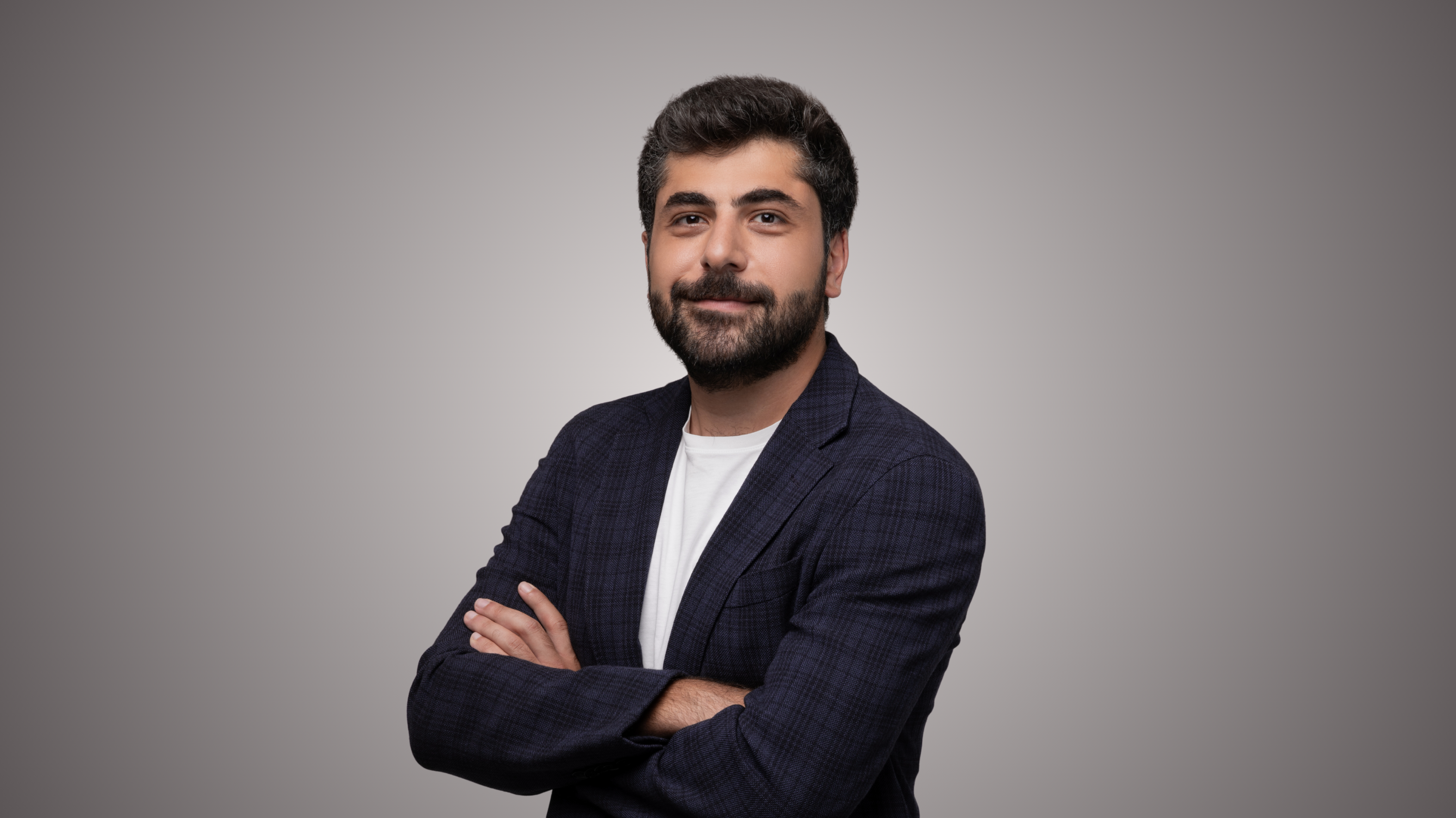


Dino De Vita, President of Global Family and Private Investment Offices (GFO) at Northern Trust—winner of the Best Private Bank for Family Office Services award—discusses how operating models must keep pace with the growing complexity of client needs.
Global Finance: As wealth demographics change, how are family office relationships evolving across generations?
Dino De Vita: Professionalization is accelerating. Family offices are shifting from ad hoc decision-making to a more intentional operating model that reflects the sophistication of the wealth they manage. Without it, transferring wealth across generations can quickly become a source of strain rather than stability.
Rising-generation family members increasingly expect transparency, well-defined roles, and a more collaborative relationship with the professionals who support their family’s financial affairs. To meet those expectations, family offices need strong governance, the right mix of talent, and technology that provides a unified view of the family’s situation.
GF: The private-banking model is largely asset-based. With advisory needs expanding, do you foresee the business’s economic model changing?
De Vita: Ultra-high-net-worth (UHNW) families increasingly expect support that goes far beyond portfolio management. They want planning, oversight, operational coordination, and specialist advisory that resembles the capabilities of a sophisticated in-house office.
Our strategy reflects that shift. We start by building deep, long-term relationships with clients, then deliver solutions that align with how families live and invest. Family Office Solutions is a prime example; it brings single-family office rigor to UHNW families by combining the scale of GFO, the fiduciary and planning expertise of wealth management, and the technology capabilities of asset servicing.
This integrated model reduces complexity and operational burden for families while expanding the value we can provide, moving client relationships toward a more holistic advisory framework rather than a purely asset-based one.
GF: Many firms are reevaluating whether to expand more profoundly into the $10 million-to-$25 million tier. Do you believe moving downstream is strategically necessary, and can firms deliver full family-office services profitably at that level?
De Vita: The opportunity is real, but it requires discipline. True family office support is resource-intensive. Without scale, experience, and the right operating infrastructure, firms can easily dilute quality and create inconsistent service.
The reality is that families don’t sit at binary endpoints. There’s a large and growing continuum where they require more than a traditional advisory relationship provides, but aren’t ready to stand up their own office. Our approach is designed exactly for that space.
We’ve deepened our capabilities for UHNW families while making them modular enough to support clients who need specific elements, including consolidated reporting, fiduciary expertise, private-market access, and bill pay. We see strong demand for these fractionalized capabilities, and they can be delivered profitably when done with the same standards and controls we apply to our family office relationships.
GF: As the virtual or multi-family office model becomes more common across the industry, how does the client decide between a true family office and a multi-family office or outsourced model?
De Vita: The decision depends less on wealth alone and more on the complexity of a family’s assets and priorities.
A single-family office offers deep control and customization, but it also requires an investment in people, systems, and infrastructure. It can become an enterprise itself, with governance, technology, and compliance needs that resemble those of a midsize company. Many families consider whether the benefits of full autonomy are sufficient to offset its costs and responsibilities.
Multi-family office and outsourced models, by contrast, provide access to institutional-grade platforms, peer insights, and aggregated reporting without the same overhead. These structures can deliver efficiency and scale, though families may need to trade some independence for shared services. It comes back to the question of what their priorities are, what work they want to have done, and by whom.
Increasingly, we see families blending the two approaches, where, for example, they keep philanthropy close to home while outsourcing functions like investment oversight, tax coordination, or cybersecurity. Whatever the model, a strong governance framework is essential to help families revisit priorities and ensure their chosen structure continues to serve them well over time.