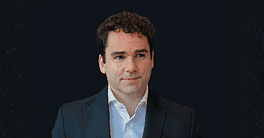


Nitesh Sharan has served as CFO of SoundHound AI since September 2021. The company, a leader in voice and conversational AI, went public on April 28, 2022. Before joining SoundHound, Sharan held senior finance roles at Nike, including Treasurer, Head of Investor Relations, and CFO of Global Operations, as well as leadership positions at HP and Accenture.
Global Finance: What stands out as your main achievements leading finance at SoundHound AI?
Nitesh Sharan: When I joined SoundHound, it was still private and at an inflection point—preparing to scale truly breakthrough voice AI technology. SoundHound is a next-gen technology company founded 20 years ago by Stanford PhDs and computer scientists who believed that one day, humans would communicate with technology through natural conversation, just like they talk to one another.
Taking the company public in 2022, during one of the most challenging years to do so, was certainly a defining milestone. It brought complexities of sustaining growth, managing liquidity, and scaling fast while navigating market headwinds. Beyond going public, my focus has been on building and scaling the finance function from the ground up, putting in place the systems, talent, and processes to help us operate with both speed and agility. We’ve raised capital, entered new markets, and introduced new pricing and revenue models that better align with our strategic vision.
Our mission is simple but also ambitious: to change how people interact with technology and make it accessible to everyone. We’re not repaving old roads—we’re building new ones.
GF: Besides a high level of organic growth, SoundHound AI has also carried out several acquisitions. Why?
Sharan: Until 2024, the company’s growth was entirely organic. Since then, we have acquired four companies: SYNQ3, Allset, Amelia, and Interactions. Each brought unique capabilities and established customer relationships. We knew the world was changing rapidly, and we didn’t believe that only looking internally for great ideas was a good idea. There are incredible teams out there doing great work, and we saw real opportunities to combine strengths and accelerate innovation together.
GF: Will you buy more in the future?
Sharan: Possibly, yes. We remain open—and we have to be. We evaluate every opportunity through a strict lens, with strategic, operational, and financial considerations. Ultimately, we are trying to change how humans interact with technology, and every acquisition has to support that mission.
GF: There are concerns that AI investments are too costly. Would you agree?
Sharan: I disagree. Every era of fundamental disruption—from the railroad to electricity to the internet, cloud, and mobile—has seen some skepticism. Growth and change don’t happen linearly; they ebb and flow, but the overall trajectory of the AI industry keeps rising. Having witnessed many inflection points in my career, I believe this may be the biggest yet. And we’re still in the early days.
Right now, we’ve only scratched the surface. Across industries—from education to healthcare and financial services—the potential of generative and agentic AI remains largely untapped. From a broader view, this transformation is just beginning, and collectively, we’re not investing enough across the breadth of ways to utilize these technologies.
GF: Are you using AI tools inside the finance team itself, and how have they changed your day-to-day work?
Sharan: We are using the technology ourselves, and the impact is becoming visible across the company—getting twice as much done with our existing staff. Within my broader function, spanning finance, strategy, HR, and legal, we are seeing green shoots of efficiency and innovation.
That said, things are evolving quickly. New tools are emerging every week, and while we’re exploring many of them, we’re intentional in our approach. In accounting, for instance, we’re cautious about full automation but already leveraging AI for research and documentation. We’re also testing AI tools in planning and payables to scale more efficiently. So, we’re experimenting broadly, staying open-minded, and I expect we’ll have even more to share a year from now.