



After months of tariff-led uncertainty, trade opportunities are re-emerging, but friction remains.
The rules that once governed global trade and investment are changing.
The UN Conference on Trade and Development (UNCTAD) recently warned that the world economy is at a crossroads, as rising tariffs, record debt and growing mistrust slow development. Global FDI fell 11% last year, marking a second straight annual decline and a deepening slowdown in productive capital, according to UNCTAD’s World Investment Report 2025. The World Bank echoed these concerns in October, warning that lingering uncertainty, coupled with subdued global investor appetite and a tightening supply of external finance, could constrain growth.
Against this backdrop, global markets are repositioning for a new world order.
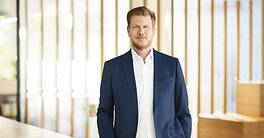
Global investment flows have become more selective and risk sensitive, says Arno Daehnke, chief finance and value management officer at South Africa’s Standard Bank, as the “geography of opportunity” shifts.
Africa, long viewed through the lens of volatility, is increasingly being recognized for its structural potential. With limited exposure to the US, Daehnke argues Sub-Saharan African economies are well-positioned to weather higher US tariffs, maintaining growth amid global uncertainty (the US accounts for roughly 5% to 7% of the region’s imports and exports).
Yet vulnerabilities persist. Debt distress risks are still elevated across the region and international capital remains hesitant despite a considerable infrastructure gap.
For Daehnke, while energy and infrastructure stand out as two of the most compelling sectors for long-term investment in the continent, they embody both a challenge and an investment opportunity, whether through public-private partnerships or sovereign-linked investors.
“The estimated annual infrastructure financing need for Africa ranges between $130 billion and $200 billion, he notes. “Bank balance sheets alone cannot absorb this funding requirement, and we will therefore need to play a unique role in mobilizing capital from different sources to close the gap.” Standard Bank Group has committed to mobilize over R490 billion in sustainable finance between 2022 and 2028.
More widely, over the medium term, Daehnke anticipates a shift in how funds are moving across the globe.
Africa is an important destination for capital from the Gulf Cooperation Council states, for instance: a signal of their global ambitions in an increasingly multipolar world. The GCC has plenty of firepower for investment; four of the world’s top 10 sovereign wealth funds are located there, with a combined $3.5 trillion of assets under management.
China is a longstanding partner in African infrastructure development, Daehnke adds, noting that “at the 2024 Forum on China-Africa Cooperation, China committed to invest $51 billion over the period 2025 to 2027, including infrastructure, energy, and industrial projects in Africa.”
Brazil offers another compelling case study in how emerging markets are shifting their financing strategies. Despite tightening international flows, infrastructure investment remains robust, although increasingly domestically driven.
“Infrastructure investments in Brazil are not significantly influenced by international flows,” observes Hugo Assunção, CFO of Perfin Infra, a São Paulo-based investment management firm, “as most of the investments are still made by local players and financed through local capital markets and development banks.”
This localization reveals both constraint and opportunity. Brazilian firms continue deploying capital at scale; toll-road concessions auctioned this year account for over $15 billion in contracted capital expenditure while the power sector will exceed $7 billion in solar plant investments alone. Sanitation maintains a steady $4 billion a year.
Yet Assunção sees untapped potential in attracting international capital: “This shows a strong potential for growth driven by international investors who are increasingly active in the country, including multilateral banks, development finance institutions, and sovereign investment funds.”
As a commodities exporter, Brazil could benefit as global supply chains reconfigure.
“Global perception concerning tariffs, geopolitical risk and value chain bottlenecks tend to benefit infrastructure investment in Brazil,” says Assunção, pointing to opportunities for international players to leverage their expertise and lower funding costs in transportation assets including ports, railroads, and terminals.
Services Shift
As capital flows adapt, trade itself is transforming. Beyond tariff mitigation strategies, developing economies are seeing another major structural shift: the rapid ascent of services trade as the new engine of commerce, and an additional adaptation lever.
Over the past decade, services have grown faster than goods trade, with global services exports rising by an average of 5.3% a year from 2014 to 2024: more than twice the pace of goods, according to UNCTAD, which sees significant potential. “Progress depends on strengthening the regulatory and business environment, investing in skills and technology, and building stronger linkages between services and other productive sectors,” the organization notes.
Yet obstacles remain. Most developing economies lack the statistical infrastructure to track services trade in sufficient detail. “Fewer than 15 regularly report services trade data by partner country, an important input for effective policymaking,” UNCTAD notes. To address this, the organization has launched a new Primer on Data for Trade in Services and Development Policies and is providing support in Caribbean small-island developing states to help economies better use trade-in-services data.
From Chaos to Clarity
With uncertainty over US tariffs beginning to calm, clearer parameters are starting to restore corporate confidence. Across Asia, final tariff numbers are being set, giving companies visibility after a turbulent year.
A big cloud, though, is a case before the US Supreme Court that could invalidate the tariffs Trump has already put in place. A ruling could come as soon as the end of this year.
Still, the legal uncertainty hasn’t frozen activity. “Right now, more and more countries are at least negotiating a final number,” says Richard Bolwijn, head of investment research at UNCTAD. “They might not all be equally happy with what they get, but at least investors know what they have to deal with.”
That clarity may unlock projects stalled for much of the year. With long-gestation investments awaiting better conditions, firms are preparing to move.
“Things that have been sitting in the pipeline for the last eight months or so might get the go-ahead,” Bolwijn says, adding that the fourth quarter could see an uptick in project announcements and deals.
For Naresh Aggarwal, associate director, policy and technical, at the UK-based Association of Corporate Treasurers, the two major trends are focused on intra-regional trade and exports from emerging markets to the US.
“There’s significant activity focused on trade within regions, with China and India increasingly supporting their domestic economies,” he observes. “For businesses expanding in Southeast Asia and other emerging markets with a focus on regional trade, there’s considerable interest and activity. However, from conversations in Dubai, there’s a sense this volatility won’t ease soon.”
Aggarwal points to a bifurcation in the markets. While some companies have decided they can’t wait indefinitely and are reinvesting in existing facilities, others need greater clarity before committing capital.
“I’ve spoken with some pharma companies who took a wait-and-see approach over the summer, knowing their products initially weren’t caught by tariffs but recognizing that exemption wouldn’t last,” he notes.
Redrawing The Map
Yet even as firms adapt, trade diplomacy is moving on its own trajectory.
US trade policy, paradoxically, has accelerated free trade agreements outside the US. This “new world order” will itself help rebuild the trust that is so integral to progress, Aggarwal argues. For example, the EU-South America trade agreement, stalled for decades, has recently been concluded. Once these foundational agreements are established, expanding them to include additional sectors and partners becomes progressively easier, creating compounding benefits, including trust.
“From a business perspective, we need sufficient macroeconomic predictability to justify investments in capex and people,” Aggarwal says. “While the US represents a distinct challenge, companies operating in other jurisdictions … will find conditions improving.”
Rather than prompting widespread reshoring, Bolwijn contends that tariff developments are redrawing efficiency maps.
“Labor-intensive industries that once concentrated in Southeast Asia, for instance, are shifting toward lower cost destinations such as South Asia and Africa,” he says.
Meanwhile, the resilience agenda that began during the pandemic continues to shape global strategy.
“Whereas policymakers in 2021 were thinking pandemics and canal blockages, now when they hear ‘resilience,’ they’re thinking ‘tariffs,’” Bolwijn says. “The effect on investment is the same: diversification, regionalization, and in those countries that can do so, stronger local supply networks. These are corporate responses as much as they are policymakers.’”