


Qatar’s financial sector is powering up for the next liquified natural gas boom. But other fast-growing sectors are looking to benefit from the new wealth inflow as well.
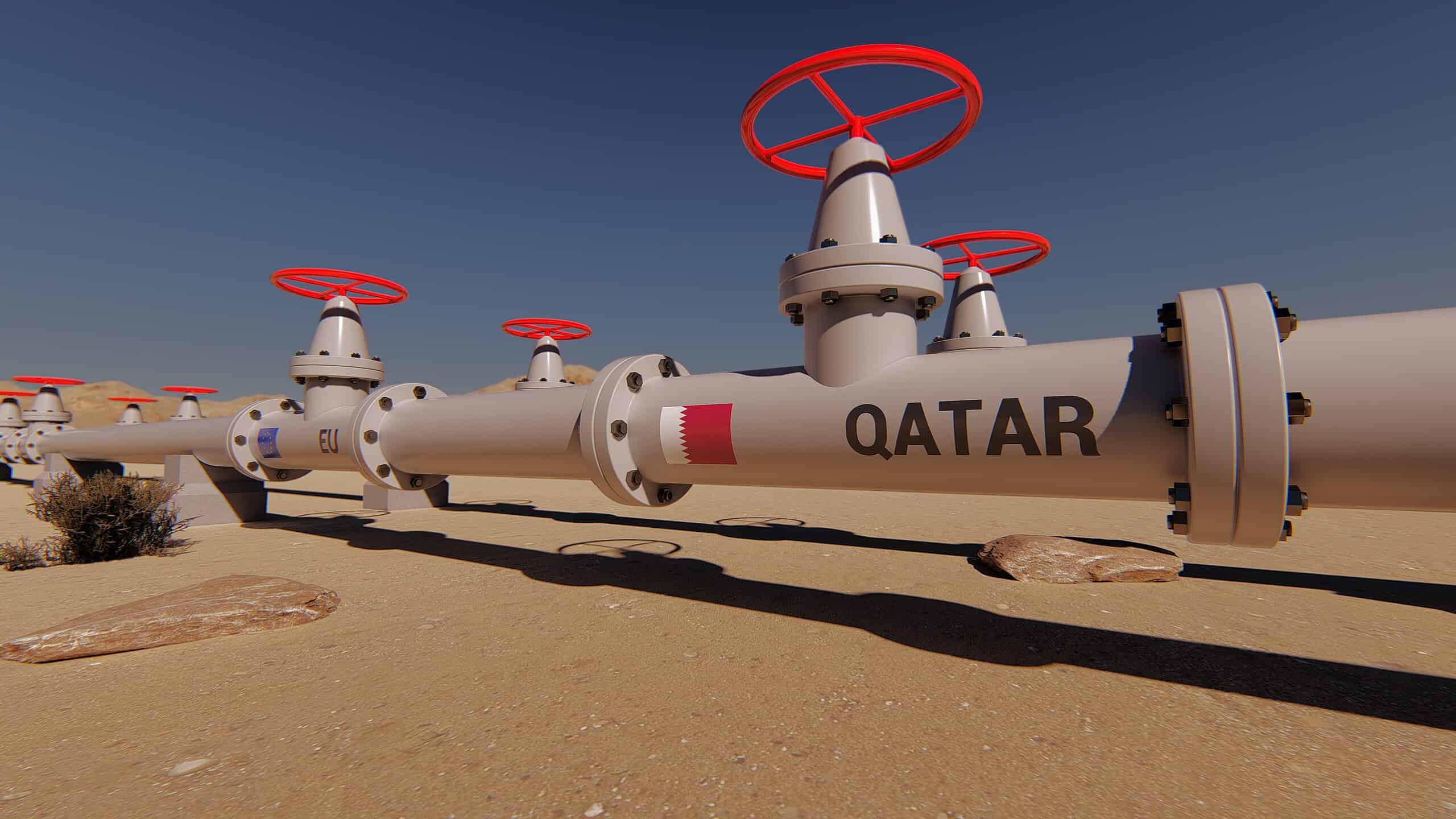
As Qatar moves to double its liquified natural gas (LNG) production capacity from 77 million to 142 million tons per annum by 2030, the country’s economic landscape is entering a new phase of transformation.
The North Field expansion—one of the largest in the global energy industry—is set to drive record infrastructure investment in the emirate, push GDP growth above 5% starting next year, and deepen liquidity across the financial system.
Volumes coming online “generate a sustained flow of investments not only in energy infrastructure but also across ancillary sectors such as shipping, logistics, warehousing, engineering services, construction, and supply-chain management,” says Dimitrios Kokosioulis, deputy CEO of Doha Bank. These industries in turn will create new demand for project finance, working capital, trade finance, cash management, and treasury solutions, he adds.
For banks, “this translates to mid-single digit system credit growth supported by government and large corporate demand, with deposits expected to expand in line as energy receipts and private sector activity flow through the system,” Kokosioulis predicts. “Independent commentary and market data suggest private sector credit growth around 5% to 6% in 2025 as rate cuts ease funding costs. While margins may tighten, the sector is pivoting toward fee and commission income, deeper transaction-banking penetration, and enhanced digital capabilities.”
Qatar expects the first phase of the North Field East project to come online mid-2026. That’s when the first of its cooling units used to turn gas to liquid form for transportation by ship—known to industry experts as mega trains—is ready to go. However, it is still uncertain how the additional volumes will be marketed, who will buy them, and at what price. For now, about 75% of the new output remains uncontracted, leaving state-owned QatarEnergy with decisions that will have huge implications on global markets.
Traditionally, the biggest buyers of Qatar’s LNG are Asian countries on long-term contracts, and this trend is expected to continue as economies in China, India, and Southeast Asia grow. Qatar signed a 27-year deal with China’s Sinopec in 2023 and renewed a 20-year contract with India’s Petronet in 2024. As well, QatarEnergy is securing new partnerships across Asia, including a 15-year deal in coordination with the US’s Excelerate Energy to supply Bangladesh and a smaller agreement with PetroVietnam.
Looking west, the picture is more complicated. The US is rapidly scaling up its own LNG capacity while Qatari shipments to Europe have been declining despite additional demand created by the war in Ukraine.
The EU’s 2024 sustainability rules, which require companies operating in the bloc to identify and remedy human rights and environmental issues in their supply chains or face fines up to 5% on global output, have further dampened Qatar’s enthusiasm for European markets. There is “no way” Doha will do business there on such conditions, Minister of Energy Saad al-Kaabi told the media in October.
Banks Gear Up
However, the market dynamics unfold, the North Field expansion will significantly boost Qatar’s export revenues. Qatari banks, already some of the region’s biggest, are positioning themselves to finance major energy projects, support diversification goals, and manage liquidity amid shifting global energy markets.
Qatar National Bank (QNB), the biggest bank in the Middle East and North Africa (MENA) with over $357 billion in assets and a 30% domestic market share, is expected to be at the forefront of this next phase.
“QNB is strategically positioned to support this growth by providing tailored financing solutions for energy projects, including infrastructure development and sustainability initiatives,” says Abdulla Mubarak al-Khalifa, group CEO. “We are also focusing on fostering partnerships with companies in the energy sector to ensure that we are aligned with their financial needs, thus playing a pivotal role in facilitating this next phase of economic growth.” QNB has already financed several LNG-related infrastructure projects, including production trains, storage tanks, pipelines, and downstream projects such as carbon-capture schemes and petrochemical ventures.
Doha’s other lenders are gearing up as well.
“The expansion of Qatar’s gas production marks a pivotal phase in the nation’s economic trajectory, and the financial sector is well positioned to serve as an enabler of this growth,” observes Omran Sherawi, senior assistant general manager and head of Asset and Liability Management at Commercial Bank of Qatar (CBQ). “Banks are expected to play a critical role in financing large-scale infrastructure projects, supporting supply chain development, and facilitating foreign investment inflows.”
LNG-driven revenues could also create positive synergies and spillovers across the economy and accelerate diversification efforts.
“Following this investment to grow Qatar’s LNG output, the government is increasingly prioritizing growing the non-hydrocarbon sectors to create a more balanced and long-term sustainable national economy,” notes Mohammed Ismail Al Emadi, CEO of investment bank Lesha. “The financial sector will be critical in providing capital and expertise to enable businesses and entrepreneurs to flourish, further supported by the stable regulatory environment that we see today.”
Supporting Local Champions
Non-hydrocarbon activities including financial services, education, tourism, and hospitality have already posted strong gains. Over the years, several Qatari companies have grown into global leaders in these sectors, with local banks actively supporting their expansion and international reach. By investing Qatar’s wealth in these local champions, the country hopes to extend its economic influence far beyond LNG exports.
In May, Qatar Airways announced a record 28% year-over-year (YoY) increase in profits to $2.15 billion. The following month, the national carrier raised a $1.2 billion loan facility from a consortium of local lenders including Ahlibank, Commercial Bank, Doha Bank, Dukhan Bank, Qatar International Islamic Bank, and QIB, led by QNB.
Telecommunications group Ooredoo, similarly, aims to build on its recent success. The company posted a strong first nine months of 2025, earning $5 billion in revenue—up 3% YoY—and profit of $850 million—up 6%—with 150 million customers across nine markets, including Oman, Kuwait, Algeria, Iraq. and Indonesia. As a result, Ooredoo will apportion a bigger slice of profits to its shareholders, raising its dividend payout to 50% to 70% of profits.
But Ooredoo is also investing in digital infrastructure like mobile towers, data centers, undersea cables, 5G networks, and cloud services to grow beyond its core telecom business. Last year, the company signed a $550 million financing deal with QNB, Doha Bank, and Masraf Al Rayan, a Qatar-based Islamic bank, to modernize and grow its data centers: the biggest transaction ever in the emirate’s tech sector.
Adapting To New Means and Needs
Qatari banks are already showing solid fundamentals, with total assets rising to over $580 billion in July, up 6.5% YoY on strong profits.
“From the perspective of an investment bank, Qatar’s banking sector is in an extremely strong position,” says Lesha’s Al Emadi. “The banking sector is simultaneously growing and innovating, which means we can depend on banks to be reliable financing counterparties while also being creative to tailor products that suit our needs.”
But rapid change also poses challenges that Qatari banks must navigate carefully to stay relevant.
“Financial institutions are adapting their frameworks to accommodate the capital-intensive nature of energy-sector projects while diversifying their portfolios to ensure balanced exposure across industries,” says CBQ’s Sherawi.
Competition is intensifying as local and international players jockey for position in the market. “This evolution is setting the stage for a more robust and diversified banking environment that can better serve the needs of individuals and businesses alike,” observes QNB’s al-Mubarak; the bank recently upgraded its own security systems to meet rising standards.
Qatari banks understand digital transformation is key, however—and that having extra liquidity to invest in innovation is a critical advantage.
“Banks are enhancing operational efficiency through advanced technologies such as AI, data analytics, and automation,” Sherawi notes, “while strengthening risk management and compliance frameworks in line with international standards. AI-driven insights are increasingly being leveraged to optimize customer experience, detect fraud, and streamline decision-making.”