

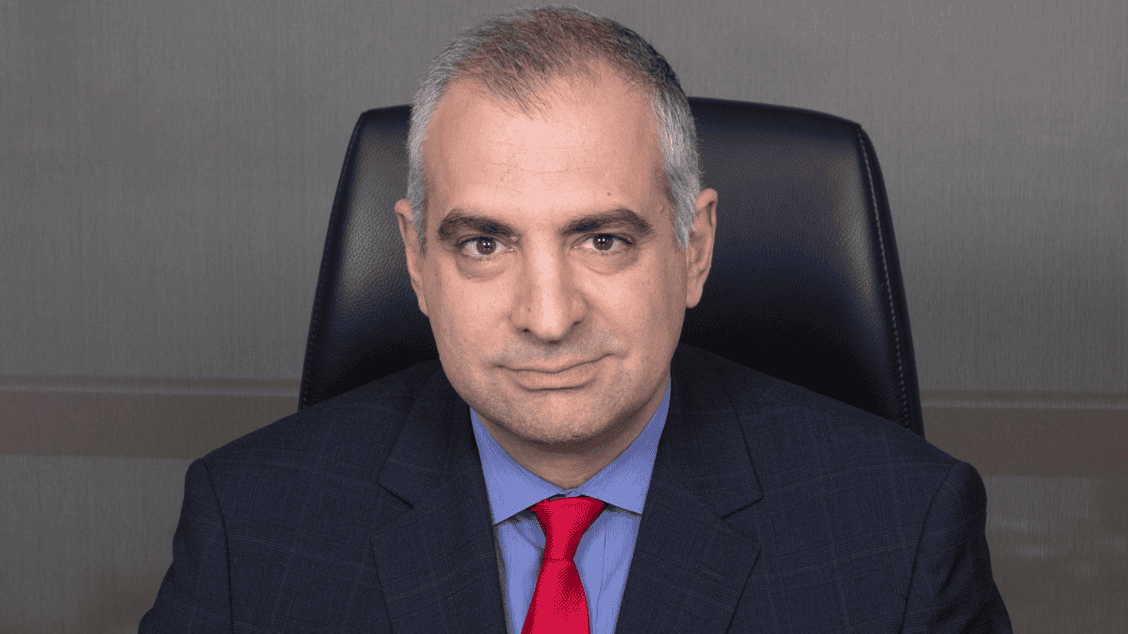


The Deputy CEO of Doha Bank, one of Qatar’s leading commercial banks and a digital banking pioneer, speaks with Global Finance about how Qatar’s banks are pursuing capital-light expansion and aligning with national innovation and sustainability goals.
Global Finance: How would you describe the current evolution of Qatar’s banking sector?
Dimitrios Kokosioulis: The banking sector has evolved from traditional balance-sheet growth towards innovation-led transformation. Over the past few years, Qatari banks have prioritized three sectors: measured asset growth, tighter asset quality, and end-to-end digital transformation. Sector analyses highlight strong capitalization and improved risk governance, with banks comfortably exceeding minimum regulatory standards while modernizing payments, onboarding, and analytics capabilities. The Qatar Central Bank’s forward-looking initiatives, including the FinTech Strategy, e-KYC framework, Open Banking and AI guidelines, have further catalyzed partnerships with fintech and accelerated the digital transformation agenda.
Asset quality has marginally improved despite isolated sectoral pressures, reflecting disciplined underwriting and prudent credit risk practices. Meanwhile, digital investments (instant payments and data platforms) are transitioning from proof-of-concept to scale, enabling personalized and lifestyle-oriented banking. These developments align with broader national priorities for a diversified, innovation-driven economy.
GF: Which products and services hold the strongest growth potential in the coming years?
Kokosioulis: The banking industry has matured into an innovation-led industry with digital-first models. Self-service banking platforms and API-enabled cash management solutions are scaling rapidly across retail and corporate segments. The integration of advanced analytics and AI is reshaping customer acquisition, improving satisfaction, and deepening cross-sell opportunities, as banks harness data to deliver personalized predictive experiences. The ESG practices are gathering momentum.
The regulators are promoting ESG and responsible banking practices. The growing issuance of green and sustainability-linked bonds, coupled with increasing investor demand, is making sustainable finance mainstream. Banks are rapidly integrating ESG risk assessment into credit processes, aligning with Qatar’s national emissions reduction targets. A younger, digitally native customer base is redefining product design. Lifestyle-driven product propositions including payments, micro savings, subscriptions, travel/loyalty and gamified financial wellness. That shift is evident in product launches, where user experience, personalization, and instant fulfillment are now standard expectations.
GF: What is your strategy outside of the Qatari market?
Kokosioulis: Outside the home market, Qatari banks are leaning into selective, capital-light growth: fee-based transaction banking, trade corridors, wealth and cross-border cash management solutions; often via partnerships rather than heavy balance sheet commitments. The strategic logic is to monetize network effects from Qatar’s outward investment flows and trade links while maintaining tight compliance and cost discipline. This mirrors Global Finance’s portrayal of Qatar’s broader diversification strategy and the financial sector’s role as a conduit for international capital and know-how.
GF: What are some of the key challenges or risks facing the sector, and how are you addressing them?
Kokosioulis: Cyber resilience and business continuity remain at the forefront of the sector’s risk agenda as digitization accelerates. Banks are hardening defenses through zero-trust architectures, advanced fraud analytics, and ongoing customer awareness programs while testing recovery playbooks to ensure payments and client services remain uninterrupted. Sector analyses highlight the need for continuous investment in financial crime prevention and data protection as threats evolve.
Earnings mix and margin pressure are the next headwinds. As policy rates normalize, net interest margins are compressing while provisioning remains elevated in select sectors. Banks are responding by expanding fee income (cash management, FX, trade, wealth), by optimizing balance sheet composition, and disciplined cost management through automation and process redesign. Independent outlooks for 2026 echo this playbook: stable operating income with a tilt toward non funded revenues and tech driven efficiency gains.
Finally, geopolitical and market risks require diversified portfolios and strong capital/liquidity buffers. Qatar’s macro resilience—anchored by LNG leadership, sovereign assets, and prudent regulatory framework supports bank stability.