

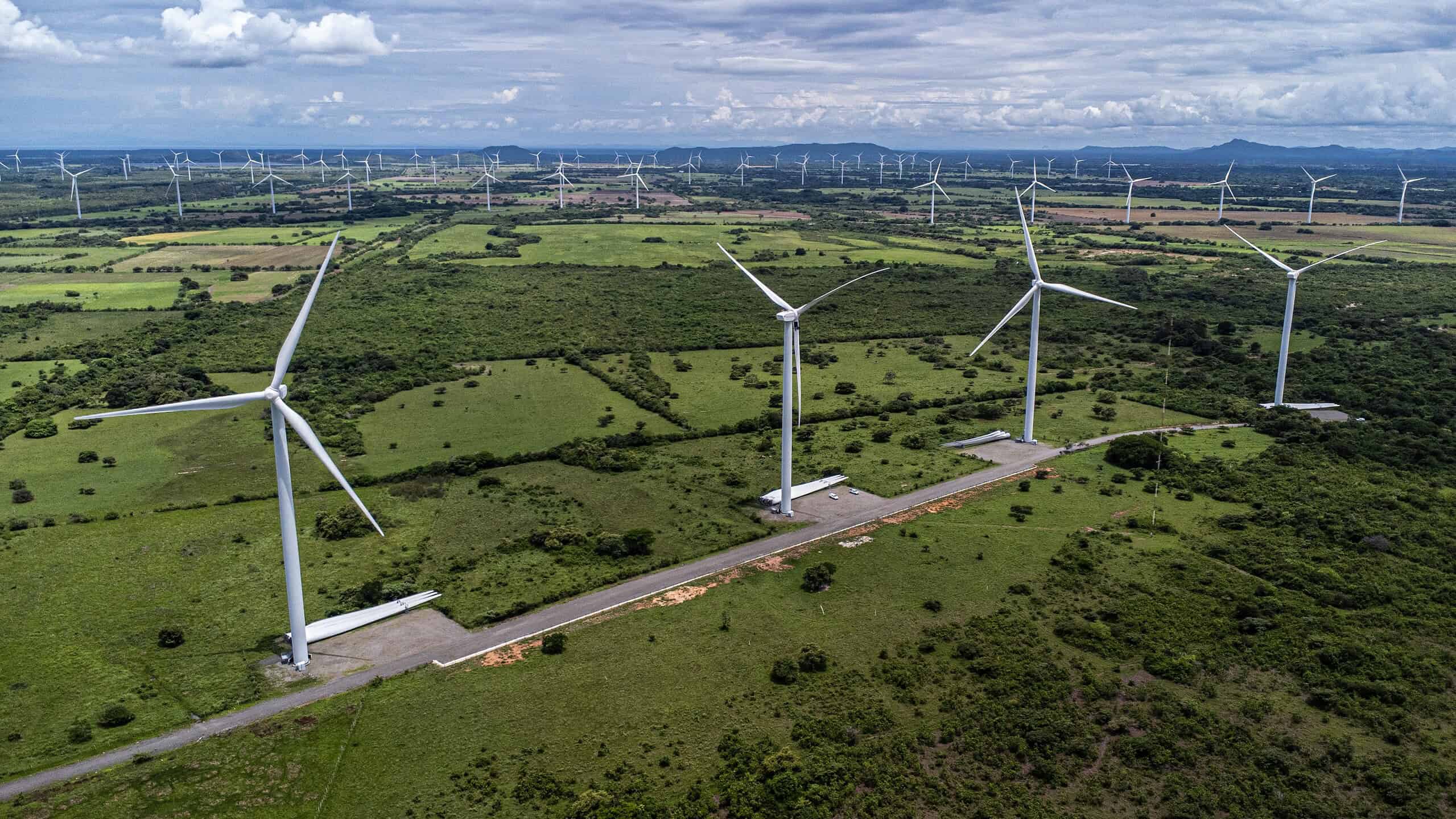


This year's regional winners advanced sustainability by issuing green, blue, social, and transition bonds while funding renewable energy projects across LatAm.
There has been steady progress in Latin America toward a sustainability agenda. Since the region’s first green bond was issued in 2014, over $164 billion has been raised in international markets, according to the UN Economic Commission for Latin America and the Caribbean. Despite these gains, a $650 billion annual funding gap needs to be closed to meet the UN’s SDGs by 2030. Currently, only 23% of these goals appear likely to be achieved, and the remaining goals are stagnating unless accelerated progress is made.
According to the World Economic Forum, 70% of the region’s electricity is supplied by renewables, including solar, wind, and hydropower. Even so, many economies still export fossil fuels and minerals while importing refined fuels and gas, creating a complex landscape.
The region is also becoming a global leader in blue-finance markets, with prominent Latin American banks issuing some of the largest blue bonds and developing frameworks for blue loans, both of which fund clean water and sanitation projects. To enhance the blue economy within the region, the Development Bank of Latin America and the Caribbean plans to invest $2.5 billion in the blue economy through 2030 to boost conservation efforts and encourage economic growth.
Many of this year’s winning banks work with clients to support the transition to clean energy. In this spirit, these banks continue to innovate as Latin America becomes a more sustainable region.
BTG Pactual
Best Bank for Sustainable Finance
Sustainable Finance Deal of the Year (EcoRioMinas – Green Transition Bonds)
Best Bank for Sustainability Transparency
Brazilian-based BTG Pactual is one of the more innovative banks within the sustainable-finance market. In 2020, the bank committed to a tenfold increase in the volume of ESG bonds issued by 2025 and achieved this goal in 2023. Despite high interest rates and corporations revisiting ESG strategies, BTG Pactual structured about $2 billion in eight labeled green, blue, sustainability, and green transition bonds.
Brazil’s infrastructure is increasingly challenged to demonstrate measurable climate commitments, and the rapidly evolving transition-finance market advances credible long-term decarbonization strategies into reality while providing investors with transparency and accountability regarding emissions. BTG Pactual worked with EcoRioMinas to structure one of the first green transition bonds in Brazil.
This 540 million Brazilian real (about $104.4 million) issuance finances transition-oriented projects, like renewable-energy facilities, LED lighting systems, paving-material reuse, and reforestation and landscape restoration initiatives. This transaction addresses a highway’s environmental footprint by expanding energy efficiency and reusing existing resources to reduce consumption.
BTG Pactual also raised 542 million reais for an impact-investing fund for private equity investments in SMEs. The bank launched an ESG bond fund and intends to raise $100 million that will be dedicated to sustainable finance. BTG was also selected to manage the Espírito Santo Decarbonization Fund seeded with 500 million reais from Brazil’s sovereign fund to finance low-carbon projects.
BancoEstado
Best Impact Investing Solution
Best Bank for Sustaining Communities
BancoEstado aims to generate long-term value and help advance Chilean commitments on climate change. Specifically, the bank is working toward net-zero by 2030 for operational emissions and by 2050 for financed emissions.
The bank empowers citizens through its Social Leaders Academy, which provides training to leaders so they can teach communities how to access housing and support microentrepreneurs. This educational model improves living standards throughout Chile by strengthening the right to adequate housing.
BancoEstado’s Impacto Verde initiative promotes inclusive economic development by connecting MSMEs with large corporations. These relationships ultimately bolster Chile’s business ecosystem by strengthening supply chain standards and expanding MSMEs’ access to banking services. The program also promotes shared growth between corporations and MSMEs and offers startups tailored products and services better suited to small businesses.
In its work to sustain communities, the bank has provided financing for infrastructure through transition- and sustainability-linked products. These products have financed electric buses for new public transportation fleets and nonconventional renewable-energy plants, for example. These ESG loans are aimed at companies that measure socioenvironmental factors, and the loan rate is adjusted based on compliance with these indicators. These factors focus primarily on reducing water use and greenhouse gas emissions.
Itau BBA
Best Bank for Sustainable Infrastructure/Project Finance
Best Bank for Blue Bonds
Best Bank for Transition/Sustainability-Linked Loans
Itau BBA recently published its new ESG strategy anchored in climate transition, diversity, development, and sustainable finance. The bank set a new goal in 2024 to mobilize 1 trillion reais in sustainable finance by December 2030. This is aligned with the green taxonomy of the Federation of Brazilian Banks, Febraban, and integrates internal ESG criteria and leading international frameworks.
The bank partnered with Bracell, a global producer of specialty cellulose, in a sustainability-linked loan with targets that must be met by 2030 or a financial penalty will be applied. These targets include a 28% reduction in greenhouse gas emissions, a 19.3% reduction in water usage, and an 81.8% reduction in landfill waste. This loan helps Bracell meet broader commitments to reduce its carbon footprint, increase operational efficiency with cleaner technologies, and support biodiversity. This partnership works to highlight an initiative to foster industrial practices that drive economic growth while contributing to environmental preservation.
The bank also acted as joint bookrunner on Aegea’s $750 million blue bond issuance, one of the largest in the international market. The funds are earmarked for infrastructure for water supply, sewage collection, and protection for marine ecosystems. This transaction aims to provide access to water for 99% and sewage systems for 90% of the population by 2033.
Bradesco BBI
Best Bank for Green Bonds
Best Bank for Social Bonds
Best Bank for Sustainability Bonds
IBradesco BBI has been recognized for its diversity, respect and racial equality. The bank initially set a goal to mobilize 250 billion reais in sustainable finance by 2025 and has since increased that goal to 350 billion reais over the same period. This was achieved in September 2025. During the year, the bank completed 17 ESG transactions that included nine green bonds, two social bonds, and five sustainability bonds.
Bradesco has also worked to establish innovative programs, like the Eco Invest Program that is led by the Brazilian National Treasury and aims to attract foreign investment for the country’s ecological transformation projects. The bank and the power utility Neoenergia, Iberdrola’s Brazilian subsidiary, completed one of the first green bond issuances under this program, raising 1 billion reais in transactions. The proceeds will be used to modernize the power infrastructure within Brazil.
This work will include installing smart grids; burying lines underground to protect them from climate risk; and upgrading substations, transmission lines, and distribution networks. Re.green secured 80 million reais from Brazil’s Climate Fund in a landmark biodiversity-labeled transaction in which Bradesco provided a guarantee letter and ESG advisory services. Re.green is focused on restoration efforts that boost an ecosystem’s recovery when that area has been damaged, destroyed, or degraded. These funds will be used to reforest 15,000 hectares in priority areas.