


A surging stock market, lower inflation, and strength in key sectors are powering the Turkish economy. But political risks remain.
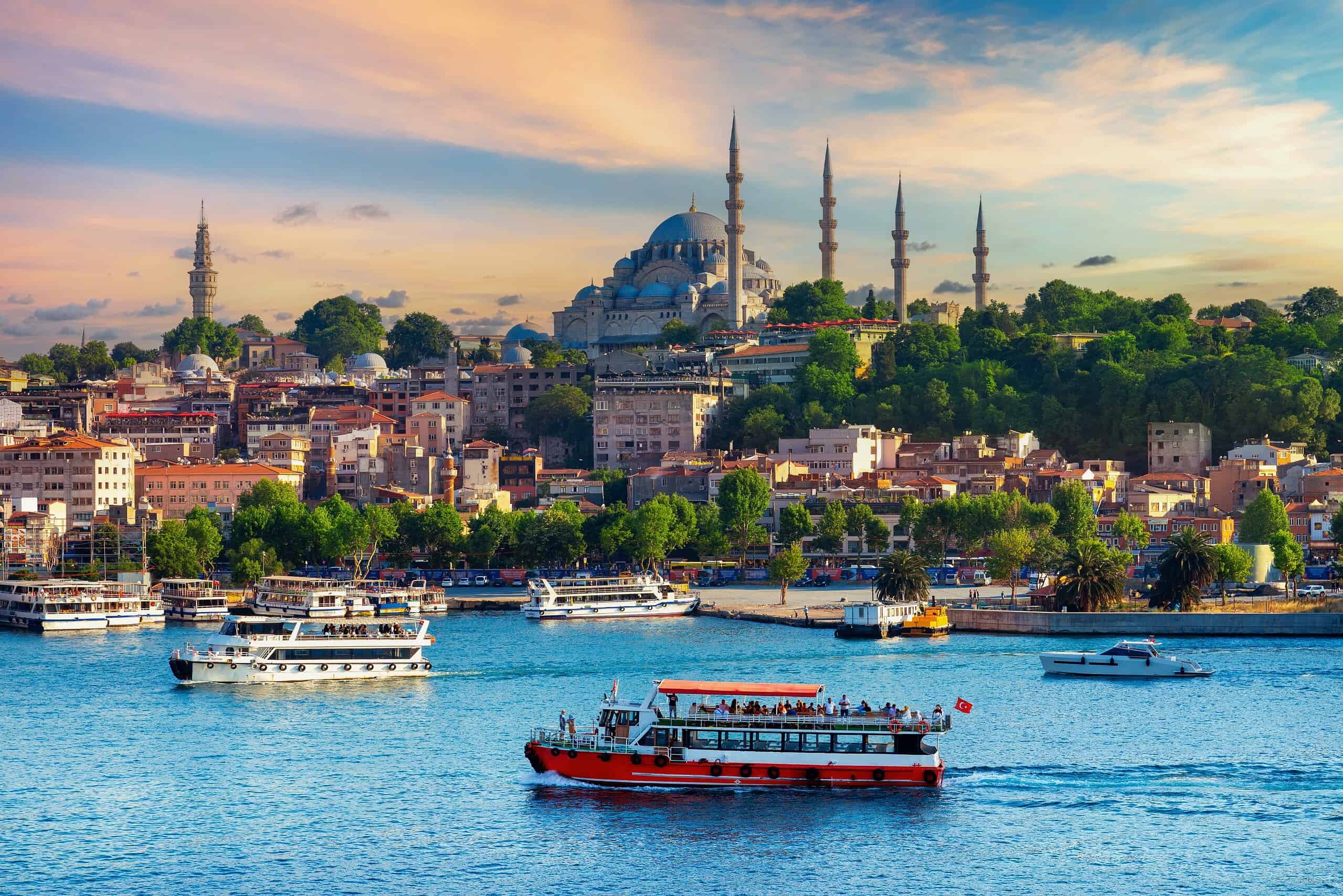
New year 2026 got underway amid unprecedented geopolitical uncertainty. But the vibe in Turkey—hardly located in the world’s calmest region—has been surprisingly upbeat.
The stock market is booming—the BIST 100 index hit a record 13,867 points in early February—delighting investors. Amongst other factors, it was buoyed by a 100-basis point interest rate cut by the Central Bank of the Republic of Türkiye in January, to 37%, marking the start of what the CBRT says should be continued easing on the back of falling inflation.
Elsewhere, the Treasury in Ankara raised $3.5 billion from two eurobond issues, one of which—for $1.5 billion on a 12-year maturity—demonstrated that investors view the country more positively than they have for many months.
In a call with investors, Türker Tunali, CFO at Akbank, said the institution was “continuing to see high interest and demand from institutional investors for our various financial instruments.”
Foreign exchange reserves, meanwhile, stood at $218 billion last month, well past their level of $100 billion in late 2023 and even though $224 billion of Turkish debt comes due this year, well over half of this—$109 billion—in bank debt.
Ratings agencies reflect the upbeat mood. Fitch Ratings raised its sovereign outlook on its BB- rating from Stable to Positive at the end of January and followed with a similar upgrade to 13 leading Turkish banks and 11 non-bank financial institutions (NBFIs), citing a generally improved operating environment and outlook.
“A vital part of the change in our rating outlook was the assumption there won’t be a return to the highly unorthodox and ultra-loose policy of a few years ago,” says Douglas Winslow, Turkey analyst at Fitch. “We think the leadership has learned some lessons and is less likely to take such a gamble with stability.”
Economic news also was better than expected at the end of last year, with inflation at around 30% versus 44.4% at end-2024. While GDP growth has accelerated leading ING Bank to raise its 2025 full-year forecast from 3.4% to 3.8% due to increasing GDP growth. Other institutions have done similarly.
Good news on the political front—despite continuing concerns about democracy, freedom of expression, and governance—has also boosted positive sentiment. Although Istanbul Mayor Ekrem Imamoğlu remains imprisoned on what most say are false charges, the courts in October threw out a legal challenge against Ozgur Ozel, leader of Imamoğlu’s Republican People’s Party, saying it was “without foundation.”
Meanwhile, Ankara has stepped up peace talks with the Kurdish nationalist group PKK, with senior government figures suggesting its jailed leaders, Abdullah Öcalan and Salahattin Demirtaş, should be released and Kurdish mayors removed from office over a year ago, reinstated.
An end to the 43-year Kurdish conflict, which has cost thousands of lives and billions of dollars in material damage, would be a boon for Turkey and for President Recep Tayyip Erdoğan personally. Since Devlet Bahçeli, leader of the far-right Nationalist Movement Party who is spearheading the peace talks, made calls for the releases, it suggests that Erdoğan—whom many believe will call early elections next year—is serious about allaying any nationalist concerns regarding Kurdish rapprochement.
Staying The Course
The president reinforced the positive mood in a speech to mark the start of the year: “We have achieved uninterrupted growth for 21 quarters in a period when ambiguities have increased in the global economy, trade wars have escalated, and tensions have prevailed in our vicinity and the world.”
To the relief of investors who lived through the controversial growth-at-any-cost policies that cut interest rates but pushed inflation toward 90% in 2022, policymakers say they will not change course from the current tough anti-inflation program.
That said, in a year when Turkey will play a big role on the global stage—in July it hosts the NATO summit, in the fall the annual summit of the Organization of Turkic States, and in November the COP31 global climate summit—the country wants to show its best face to the world.
In economic terms, the priority will be to boost and maintain non-inflationary growth. This means fine-tuning, as evidenced by the 1.5% interest rate cut to 38% carried out in December and January’s additional 1% cut.
This year is also expected to see new projects and investments, reflecting Erdogan’s ambition, driven by the 2024-2028 Development Plan, to boost Turkey into one of the world’s top 10 economies. Ankara is targeting GDP growth of 4% to 5%, which Fitch Ratings’s Winslow believes is within reach, especially with an early election in the cards.
“A reasonably favorable trend growth rate of around 4% is a strength of the rating, helped by a fairly dynamic and resilient private sector,” he says, noting that low household debt and wealth effects from record gold prices are also helping insulate consumers from high real interest rates.
The further aim is to boost foreign direct investment to 1.5% of the global total and 12% of regional FDI as Turkey continues to transform national infrastructure and increase investment in the key aerospace, automotive, construction, and energy sectors.
“FDI inflows have somewhat improved but remain low relative to the size of the economy,” says Konstantine Kintsurashvili, associate director, Economics and Policy for Turkey and Caucasus at the European Bank for Reconstruction and Development (EBRD). “An existing pipeline of investments in renewable energy grids, energy efficiency, industrial decarbonization, social housing, and connectivity infrastructure can support growth if these come to fruition. The upside potential to growth from increasing FDI is significant.”
Ahead of COP 31, sustainable energy looks likely to be one of the most active sectors. The EBRD sees significant untapped investment potential in the energy sector and beyond.
“Positive regional developments put Turkey into a favorable position to benefit from investments in connectivity and reconstruction and to access growing markets,” says Kintsurashvili.
Turkish Airlines has just unveiled eight major projects worth $2.2 billion, reflecting the country’s tourism success and its plan to become the world’s number one national airline by 2033. In early January, China’s Dongfeng Motor announced it was in talks to start producing passenger cars in Turkey, in a major new investment.
Construction is also lively; one of the best performers since February of last year on the Istanbul Stock Exchange is international engineering and building firm Enka Insaat Ve Sanayi, whose value has risen more than 100% over that period. The firm, which spent $253 million on a new London office last October, announced a new $1 billion project that month with TotalEnergies in Iraq, going on to announce a contract for the construction of a $158 million, 456-megawatt power plant in Mozambique.
The nature of the economy itself is changing, however, along with the geopolitical environment. Evidence of this is fast-growing Aselsan, which produces sophisticated defense technology—including drones—satellites, and radar equipment as well as land and air missile systems. Over the past year, Aselsan’s share price rose almost 250%, reflecting record demand for its products from NATO members and other customers.
Staying Alert To Potential Risks
What can investors expect into 2026 and 2027? While the mood right now is positive, Winslow and other observers say it is important to remain alert to potential risks, including a “high degree of policy unpredictability and the possibility of a lurch backwards to unorthodoxy,” which he says constrain Turkey’s sovereign rating. “Similarly, the potential for domestic political events triggering market volatility on the scale that followed March 2025’s jailing of Imamoğlu has declined, but sizeable risks remain ahead of the election,” he adds.
Hande Küçük, economist at Bank of America in London, is somewhat more upbeat, anticipating a gradual improvement in consumer expectations supporting domestic demand and reflecting a gradual move to disinflation ahead of a 2027 early election. She expects inflation to drop to 24% by the end of this year, a CBRT central policy rate of 30%, and GDP growth rising to 4.3%.
“However, high inflation will remain a key voter concern and a focus for government policy ahead of the next election,” she notes.
With no likely structural or labor market reforms before the election, Turkish business leaders have acted on their own.
On January 31, DEÍK, the Foreign Economic Relations Board, with the leaders of Turkey’s 26 EU business councils, published an open letter to EU leaders proposing “a paradigm shift in Turkey-EU relations.” The authors suggested that “the time has come to reconsider the current unproductive methodology which stalls Turkey’s accession process. Giving Turkey a clear and unambiguous perspective on becoming an EU member … would restore strategic clarity and mutual confidence.”
It would likely benefit investors, markets, and FDI, making a return to policy unpredictability and political volatility much less likely.