

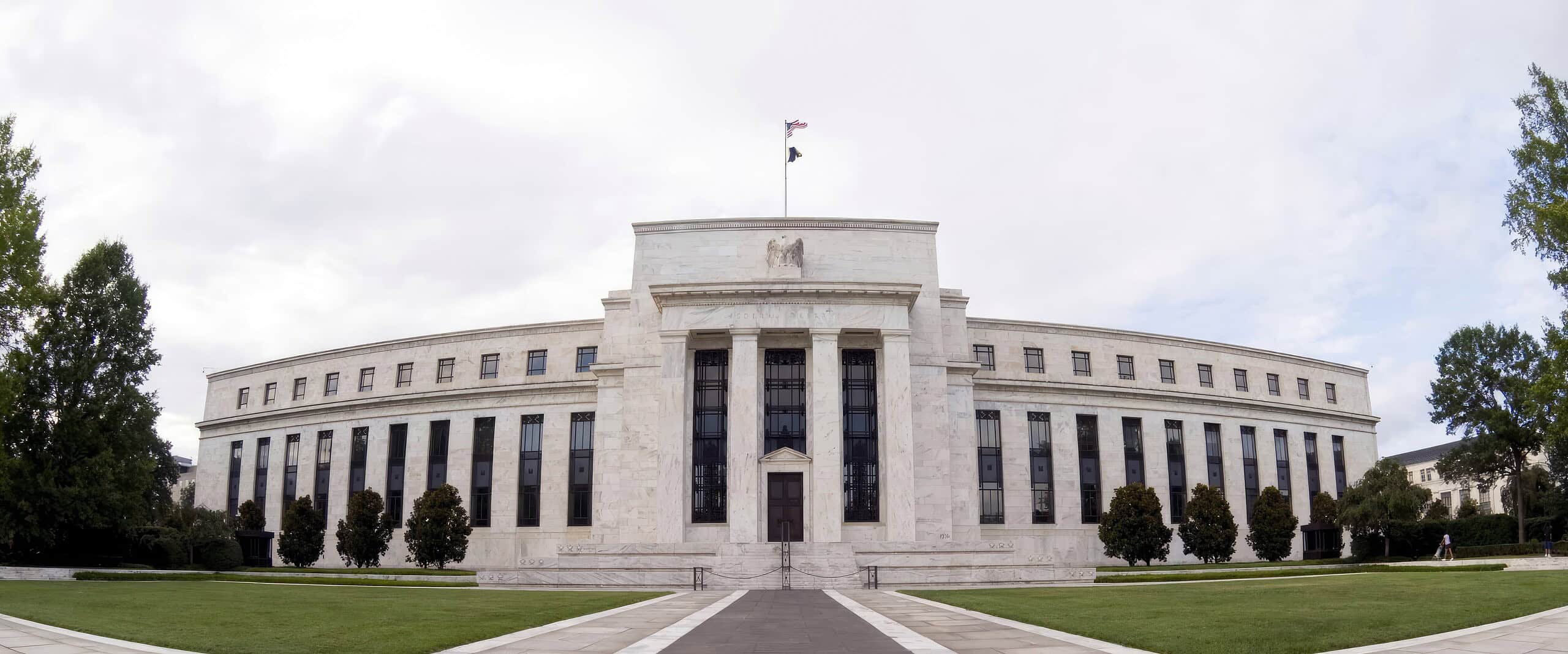


A June interest rate pause comes with an abrupt policy change that strips away long-term market clarity.
The Federal Open Market Committee (FOMC) omitted forward guidance from its June rate statement, leaving the federal funds target range unchanged.
“It’s a bit shorter, a bit simpler, and it dispenses with some of the older language,” Federal Reserve Board Chair Kevin Warsh said during the press conference following the statement’s release. “That statement just gives you the facts as best as we can judge it. Absent also is so-called ‘forward guidance,’ which we agreed was not well suited to the current policy conjuncture.”
That’s a significant departure from previous Fed policies, said Derek Tang, CEO and co-founder of independent research and analysis firm MPA Macro.
“This is a sea-change from what previous chairs have done, which was to give the market as much of a ‘heads-up’ as they could if they were going to change direction or consider a change on the horizon,” he said. “Whereas, for Warsh, he’s not shy about wanting to keep the element of surprise as a tool in his back pocket.”
Warsh’s move will certainly introduce more market volatility, Yelena Shulyatyeva, senior U.S. economist at The Conference Board, told Global Finance. The impact on corporate finance will be significant, as investors may require higher compensation to account for increased uncertainty, Tang explained.
“That can be balanced out if the Fed is becoming more credible on inflation expectations, and has the potential to lower longer-term rates,” she said.”So that’s sort of a trade-off they have to make.”
One Less Dot
Warsh’s tight-lipped plans for the Fed concerned many Fed watchers before his confirmation. They worried that the Fed would discontinue its Summary of Economic Projections (SEP), or at least the SEP’s “dot plot,” the anonymized federal funds rate projection of each Fed governor and bank president.
Like his first FOMC statement, which was less than half the length of his predecessor’s last statement, June’s dot plot is a bit smaller. Warsh decided not to contribute his own projection.
“For me, it’s not helpful in the conduct of policy,” Warsh explained.
“The key takeaway from the FOMC statement and SEP is that half the participants who submitted the dots—nine out of 18—saw at least one rate hike in 2026,” said Shulyatyeva. “The hawkish dot plot was complemented by the Committee’s statement pleading to ‘deliver price stability.’ An upward revision to core [Personal Consumption Expenditures Index] amplifies the hawkish tilt. Certainly, creates an upside risk that the Fed will hike this year.”
More Changes Ahead
Warsh provided some guidance when he laid out a comprehensive plan to re-examine Fed policies.
In the next few weeks, it will launch five task forces that will examine the Fed’s communication methods, balance sheet, use and reliance on existing data sources, and inflation frameworks. The fifth will look at productivity and jobs in an era of AI transformation.
“These subjects are timely, consequential, and in my view, worthy of a fresh look,” said Warsh. “My colleagues and I discussed them with energy and purpose over the last couple of days. For each of these independent task forces, I’m enlisting some of the very best minds both inside and outside the economics profession.”
Contact the author at rdaly@gfmag.com