

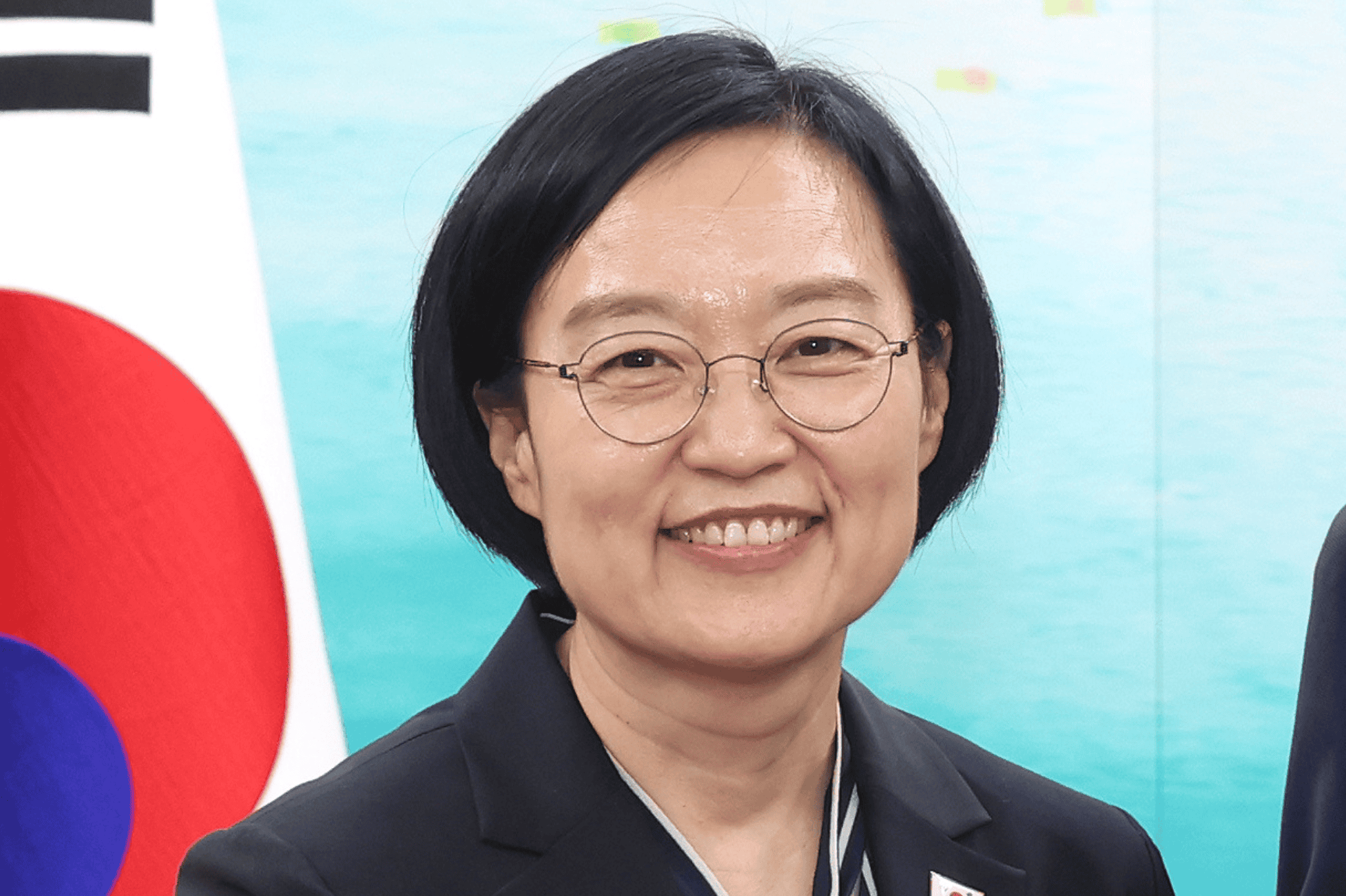


From journalist to CEO to PM: Han Seong-sook breaks barriers to lead Korea's AI revolution.
The National Assembly — South Korea’s parliament — has confirmed former Naver CEO Han Seong-sook as the country’s new prime minister. The 59-year-old will be only the second woman to hold the position in South Korea. The first female prime minister was Han Myeong-sook, who served from 2006 to 2007.
After President Lee Jae-myung’s Democratic Party dominated June’s local elections, he nominated Han as prime minister. She had previously served as minister for small businesses and startups.
Han began her career as a technology journalist, then joined a search startup, and later rose through Naver’s senior ranks. She was the first non-engineer CEO of a major South Korean technology company and, at the time, the only woman outside the chaebol families — the dynasties that control the country’s large industrial conglomerates — to lead a top-100 firm.
During her five-year stint at Naver, Han pushed the company beyond search into shopping, payments, and content generation, cementing its position as the country’s top internet group. With a reputation for hands-on communication, she gave up the top-floor suite for a mid-level office to be closer to staff. When she entered government last year, she became the richest public-office nominee in Korea’s post-1993, post-autocracy history.
Driving South Korea’s AI Growth Agenda
“I think one can interpret the nomination of Han Seong-sook as a deliberate signal to markets: a former CEO rather than a career politician is being installed to place a credible tech operator at the heart of Lee’s AI-led growth agenda,” says Hannes Mosler, chair of East Asian Social Sciences at the University of Duisburg-Essen. “The promise is continuity in the semiconductor export boom and a pledge to recycle those gains into AI and a sturdier social safety net.”
Yet, Han’s nomination remains clouded by suspicion.
Mosler notes: “The controversies are real, but mostly the standard Korean confirmation gauntlet: multiple-home ownership that sits badly against Lee’s anti-speculation line, a data breach in her own ministry’s startup program, and family property dealings. None look good on her, nor do they look disqualifying, even though you never know.”
The harder question, Mosler argues, is not so much her confirmation, since Lee’s party holds the majority in Parliament, but rather her ability to deliver.
“Korea’s premiership is largely administrative,” he points out, “so Han’s real influence depends on whether President Lee genuinely lets a technocrat drive industrial policy or keeps her as the public face.”
Luca Ventura is a contributing writer based in Italy.