

Global growth holds steady, but rising debt and borrowing costs leave governments less room to weather shocks.
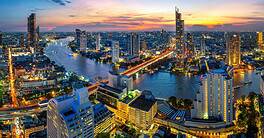
At the Queen Sirikit National Convention Center in Bangkok, you can eat, grab a refreshing Oliang, pick up a few toiletries, or fill a prescription without ever stepping outside. The food court, aptly named “Food Street,” is a cleaned-up version of the local street-vendor experience, with spotless stalls serving local dishes similar to those found a few hundred yards away at the chaotic Khlong Toei Market.
In fact, there’s little reason for an attendee at the IMF and World Bank annual meetings to venture beyond the multilevel venue’s air-conditioned confines. Outside, Bangkok is hot, humid, and noisy—constantly in motion. But inside, the best of the city has been recreated in a more comfortable form, with most of the city’s everyday inconveniences eliminated.
It’s a remarkably complete bubble. Someone could spend days here and experience surprisingly little of the city hosting the meetings.
Growth Holds, but Costs Rise
According to IMF data released this week, the global economy faces a similar contradiction: It keeps moving, but the cost of maintaining that momentum keeps rising.

The Fund expects global growth of about 3.1% this year, down from 3.4% in 2025. The energy shock stemming from the conflict in the Middle East is weighing on economic activity, though investment in artificial intelligence is providing some relief. So far, the global economy has proved resilient despite a succession of geopolitical and climate-related shocks.
But such resilience can mask vulnerabilities hiding beneath the surface.
At the Fund’s fiscal policy briefing on Wednesday, Rodrigo Valdés, director of the Fiscal Affairs Department, warned that global public debt is projected to approach 100% of GDP by the end of the decade. Higher interest rates are gradually affecting government budgets as existing debt comes due and must be refinanced. Era Dabla-Norris, deputy director of the Fiscal Affairs Department, added that G7 sovereign yields have risen about 120 basis points since the end of February.
Markets aren’t refusing to lend. In fact, as IMF Managing Director Kristalina Georgieva pointed out, “Markets are functioning.” The real crunch is higher borrowing costs, which sap governments’ fiscal flexibility when the next crisis hits.
And that pressure isn’t evenly distributed. While emerging markets have shown resilience, supported in part by stronger policies, domestic investors, and longer debt maturities, countries with high debt, large refinancing needs, and limited fiscal flexibility are more exposed. Even without a shift in investor sentiment, higher borrowing costs can strain already fragile budgets.
Emerging Markets Need New Medicine
The IMF’s prescription of handing out money to countries in need is familiar, but governments face mounting pressure to improve tax collection and design, make public spending more effective, and rebuild fiscal buffers. When energy costs require government support, targeted, temporary assistance is preferable to subsidies. As Valdés put it, “Protecting people is not the same as protecting the price of fuels.”
None of this will be easy. Governments face competing demands for defense, healthcare, pensions, infrastructure, and climate investment. Cutting spending or raising revenue requires political choices, often when households and businesses are already under pressure. But waiting for markets to force those choices can leave governments with fewer options.
Outside the convention center, Bangkok carries on—vendors serve lunch, traffic inches forward, and the city’s daily ebb and flow endures as heat and rain blanket the area like a warm, wet wool blanket. All the activity is reassuring, yet it reveals little about the pressures people and institutions face just to keep things moving.
The IMF is not predicting that the global economy is about to grind to a halt, but it’s flashing subtle warning signs.
Paul Curcio is the editor of Global Finance Magazine. Contact him at paul.curcio@gfmag.com