

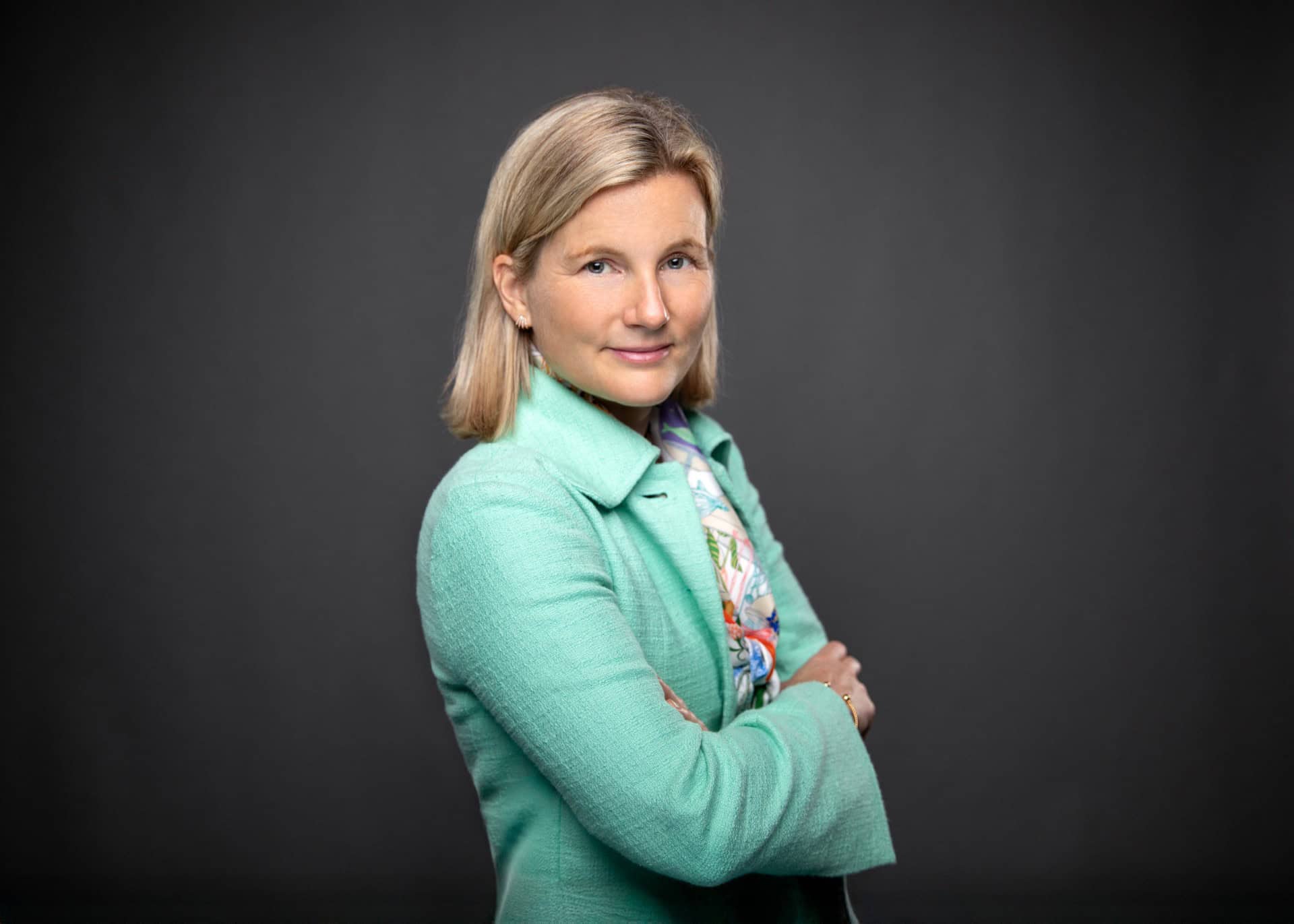


Stephanie Larivière, managing director and global head of Fixed Income, Currencies, and Commodities (FICC) Sales at Scotiabank—which was Global Finance's Global winner of Best Foreign Exchange Derivatives Provider, and Best Canadian FX Bank for the third year in a row—explains how a client-first philosophy and advanced structured solutions enable businesses to proactively manage uncertainty, effectively diversify risk, and maintain agility amid fast-moving currency markets.
Global Finance: Last year began with elevated G7 foreign exchange volatility driven by election results in the US, followed by spiking volatility based on the Trump administration’s tariff announcements. Implied volatility eventually subsided. Against this backdrop, how has client demand evolved for structured FX solutions and derivatives that combine FX with interest rate and other exposures?
Stephanie Larivière: Turning to 2025, tariffs and the resulting uncertainty around international trade were top of mind for clients throughout the year. In the first half of 2025, the US Dollar Index vaulted back toward the highs we saw during the pandemic, and there were fears that it would be driven even higher as we grappled with the prospect of a global recession, given the US administration’s push for increased global tariffs. We saw increased interest in hedging and the need for structured solutions from clients in these early months as US dollar buyers worried about a sustained surge in the index and the impact on their cash flows. The outlook for exports into the US remains no less murky moving forward. As a result, client demand for structured FX solutions has only increased.
GF: Have you observed currency diversification strategies or increased activity in non-dollar crosses from your customer base?
Larivière: The uncertain outlook for international trade and dissenting views on the Federal Reserve Open Market Committee have led to increased demand from clients to protect against further potential dollar weakness. As we settle into a lower volatility regime, we have seen an interest in expressing some views in non-dollar crosses, as well as some rotation into international and emerging-market equity exposure.
One example was a strengthening Mexican peso as clients returned to expressing views via carry trades. We have also seen a weak Canadian dollar versus other majors, resulting from ambiguity around Canada’s budget and the size of the Carney government’s deficit, as well as questions around how the new US and Canadian administrations will work together. That said, the reality is that the US dollar is still the dominant base currency in most commodities and currency trading.
GF: OTC interest rate derivatives volumes have surged, nearly doubling for euro-denominated contracts and rising significantly for yen and sterling. How are clients adapting their strategies in response to this increased activity?
Larivière: There are a couple of factors at play here. Greater volatility in rates has caused volumes to surge. Central banks were also more in play over the second half of last year, which further contributed to this phenomenon. Both factors are a response to an overexposure to the dollar and a shift to hedge against some of that exposure. We could see this continue to increase as larger institutional names adjust their exposure to the US.
GF: Are clients’ expectations changing around reporting transparency, multi-currency liquidity, and access to customized derivatives products?
Larivière: Clients are looking for bespoke hedging solutions derived from a full suite of derivatives products across asset classes. These customized solutions are tailored to their unique requirements, allowing clients to express views on markets while hedging underlying exposures. Along with the increased flexibility that these products provide, clients expect proactive advice that leverages expertise from sales, trading, strategy, and structuring teams.
At Scotiabank, we strive to provide thoughtful, well-coordinated ideas and a wide range of hedging solutions that help clients navigate the uncertainty of operating global businesses across borders in an unpredictable international trade environment.
GF: What trends do you expect will shape FX and derivatives markets this year, particularly regarding volatility, market structure, and regulation?
Larivière: The Fed has embarked on a cutting cycle, although it is unclear how deep its cuts will be. If yields continue to decrease, we expect to see increased pressure on the dollar, leading to higher volatility. The FX market typically experiences growth during periods of volatility; the shift away from yield enhancement strategies toward a pickup in volatility should drive an increase in FX volumes in 2026.
Another theme we are watching is the shifting regulatory landscape of digital assets. Regulatory changes that favor these assets will facilitate more interest and investment in these emerging products.