
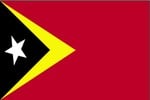
Includes historical data for Timor-Leste’s Gross Domestic Product growth, debt-to-GDP ratio and more, as well as information on trade, banking and financial sector leadership.
High Poverty, High Economic Potential
Also known as East Timor, since gaining independence from Indonesia in 2002 after years of conflict, Timor-Leste has pursued policies to bolster its economy and advance living standards for its 1.4 million citizens. While poverty levels remain high especially among the youth, great progress has been made in improving infrastructure and governance, and attracting foreign investment.
Predominantly an agrarian economy, the recent development of offshore oil and gas resources has greatly supplemented government revenues. Additional strengths include great tourism potential, the total dollarization of the economy as a stabilizing monetary factor, and the financial buffer provided by the Sovereign Wealth Fund. In 2025, the country also achieved a historic milestone by becoming the 11th full member of ASEAN.
However, the economic landscape still faces considerable obstacles, with an outsized role of the state in business matters, regulatory burdens impeding private-sector growth, heavy dependence on imports, and vulnerability to natural disasters.
Macroeconomy & Sovereign Data
| Type of Government | Semi-presidential republic |
|---|---|
| Capital | Dili |
| Sovereign Ratings |
S&P: Not rated Moody’s: Not rated Fitch: Not rated |
| Total Population | 1.4 million |
| Median Age | 21.7 |
| Adult Per Capita Income (PPP) | 8,665.44 |
| Total GDP (2025) | 2.1 billion |
Timor-Leste GDP & Economic Overview
Most Recent Content
Timor-Leste
Sorry, no posts matched your criteria.
Banking & Finance
Trade & Investment
| Total Exports | USD 32.7 million (2024) |
|---|---|
| Leading Exports |
Crude Petroleum Natural Gas Coffee Scrap Iron Telephones |
| Total Imports | USD 932.7 million (2024) |
| Leading Imports |
Refined Petroleum Rice Cars Plastic Products Trucks |
| Source: | IMF, CIA The World Factbook |
Timor Leste Leading Companies
| Banco Comercial de Timor-Leste | Financials |
|---|---|
| Timor GAP | Energy, Oil & Gas Exploration & Production |
| Timor Telecom | Telecommunication Services |
| Be Tilor | Consumer Staples, Food Distribution |
| Air Timor | Transportation, Airlines |
Major Trade Partners — Import
| Indonesia | 33% |
|---|---|
| China | 14.1% |
| Singapore | 10.3% |
| Other Asia | 9.01% |
| Australia | 6.65% |
Major Trade Partners — Export
| China | 46.55% |
|---|---|
| Singapore | 19.08% |
| Australia | 16.83% |
| Indonesia | 7.19% |
| Japan | 2.96% |
Global Finance Rankings & Awards

Data Sources:
UN World Population Prospects
World Inequality Report
S&P Global Ratings
Moody’s
Fitch Ratings
IMF Direction of Trade Statistics (DOTS)
UN Conference on Trade and Development (UNCTAD)
CIA The World Factbook
World Bank’s World Integrated Trade Solution
Forbes Global 2000