



AMSC expands globally beyond renewables, targeting grid resilience, AI data centers and defense, leveraging diversification and M&A to accelerate growth.
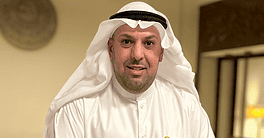
Daniel McGahn, President, CEO, and Chairman of American Superconductor (AMSC), led the company’s global expansion, pivoting beyond renewables to grid resilience, industrial power, and defense markets.
Global Finance: What is your global expansion strategy?
Daniel McGahn: That’s a good way to kind of kick this off. Last year, about 75% of our business was in North America, and this year it looks like it’s closer to 60%. We’ve been growing at roughly 20%-25% annually over the past half a dozen years or so. We’ve grown revenue over that time by about six times. So, that has been principally focused on North America. But over the past year, we have seen more contributions from outside North America. Now we’re seeing stronger contributions internationally, with exposure in India, Europe, and Southeast Asia, and most recently an expansion into Latin America, specifically Brazil. We’ve tried to hone our capability here at home, and we’re now extending our broad power portfolio into global markets.
GF: How are AI-driven data centers and rising defense spending reshaping your business?
McGahn: That shift in scale is what’s driving our business, and we’re also capitalizing on the geographic shift in demand. The landscape looks very different from what it did a few years ago, with heavy local investment in capacity across industries that all depend on electricity. The primary bottleneck, however, is the grid—and secondarily, construction timelines. You can only build physical infrastructure so fast.
In data-driven industries, growth can happen virtually overnight in the digital world, but it has to be matched with real-world grid capacity and equipment, which takes time. That disconnect creates an opportunity for us. One of our competitive advantages is that we’re small and fast, which aligns well with the urgency around electrical infrastructure spending.
In defense, speed matters, but scale matters even more. We often prove out our longer-term technologies in military environments, which builds credibility with commercial and utility customers. While the military represents less than 20% of our business, increased investment by the US and NATO in Europe presents a whole new opportunity for us. Longer term, it is kind of where we’re headed with the company.
Right now, we’re trying to bring more capacity online, whether traditional or renewable energy. It could be for the material space from copper to steel, from carbon to molybdenum and rare earths. Across the West, there’s a broad push to invest in the feedstocks that power computation and electrification, which underpin our growth.
GF: Is the industry underestimating how quickly this demand is accelerating?
McGahn: There’s a clear disconnect. The data economy operates on a timeline of months, while the grid runs on five-year capital cycles. You’re trying to solve a fast-moving problem with a system that isn’t built for that speed. That’s where we come in—because we lower risk. We understand the technology. We do a lot of engineer-to-engineer explanations to utilities to say, “Well, this is why this end customer needs these capabilities. And guess what? We can offer that solution.” And if we can offer it, we have partners that we can bring in to accelerate deployment so somebody can build their next semiconductor fab, data center, or mining project.
GF: Has the pullback in clean energy funding affected your strategy—and does it create M&A opportunities?
McGahn: We didn’t react to the policy shift; we were ahead of it. Seven or eight years ago, 70%-80% of our business was renewables. Today it’s closer to 20%-25%, largely in Europe. We deliberately diversified into traditional energy before the US changed its policy, and that’s worked to our advantage.
We’re seeing similar dynamics in Brazil, where the focus is on building capacity and competing globally. Brazil is the largest market in Latin America and significant by almost any economic or electrical measure. The scale of demand rivals—and in some cases exceeds—what people in the US appreciate.
Our acquisition of Comtrafo fits that strategy. It expands our product portfolio, deepens customer relationships, and broadens our geographic reach. Over time, it could more than double our total addressable market. Near term, we’re ramping production in Brazil to meet strong local demand. Longer term, the opportunity extends across Latin America, and eventually into North America as we introduce those products here.
GF: Do you expect renewables to become a larger share of your portfolio again?
McGahn: No. A significant amount of renewable infrastructure has already been built, and while markets like India—where we generate 10%-15% of our revenue—still have room to grow, we’ve deliberately decided to stay diversified. We’re building an intergenerational company with long-term growth prospects that go even beyond my time leading the charge here. Diversification protects us on the downside and the upside. I don’t want to ever concentrate on one market. It’s a common question I get from a lot of investors: What’s the one thing that’s going to drive your company? If only one thing drives us, then I’ve, to some extent, failed. If data centers or any single segment began to dominate, we will have to find ways to invest in other ideas and markets to keep pace, so we never reach a point where we have either high customer or market concentration. Take that volatility out, you’re worth more to your customers, because they don’t want you to be dependent on one thing. Being a one-trick pony doesn’t satisfy any of the masters here.
GF: Was that shift driven by regulation?
McGahn: No. It was primarily about risk management. At one point, we were overly concentrated, with a single customer accounting for more than half our revenue. Electricity and public policy are closely linked, and when policy shifts—as it did in India—revenue can swing dramatically. We experienced that firsthand: India moved from being a very large contributor to a much smaller one, and now it’s growing again.
Several years ago, we made a strategic decision to expand through grid-focused solutions to diversify our customer base and end markets. Our wind segment has grown roughly 20–25% year-over-year and is about double what it was a few years ago. It remains a growth driver—but within a broader portfolio.
That diversification benefits our renewable customers as well. Because we’re no longer dependent on a single market or policy regime, we can invest consistently in product and service development even when specific regions experience downturns. Today, most of our renewables exposure is in Europe and India. Even before US policy changes, our domestic renewables exposure was limited.
Our wind strategy focused on developing markets: pairing Western technology with local manufacturing partners to serve domestic demand. We didn’t relocate US jobs; we built capacity alongside local partners in response to their country’s renewable energy mandates.
Ultimately, reducing concentration risk has made us stronger, more resilient and better positioned for long-term growth across energy segments.
GF: If growth isn’t coming from renewables right now, what’s your biggest lever?
McGahn: In the near term, growth is being driven by traditional energy and materials. Longer term, I expect renewables to regain momentum—particularly in the Americas. We’re already seeing pockets of that in places like Brazil, where the company we acquired has a meaningful solar presence. It’s not a large percentage of our revenue yet, but the opportunity is there.
Energy tends to move in cycles. The pendulum has swung away from renewables for now. It’s gone in one direction. At some point, it will come back. But I think what we’ll find is the answer we should have had all along: you need a diversity of feedstocks. Renewables are a critical part of that solution, but not the only one. We’ve now positioned our company to benefit from a variety of power-generation options.
GF: Should we expect you to pursue M&A in additional markets?
McGahn: We tend to favor family-owned businesses because of their cultural fit. We operate with the structure and resources of a larger public company, but we’ve worked hard to preserve a familial culture. That alignment makes integration smoother and positions us to grow those businesses meaningfully once they join us.
We’ve demonstrated our ability to scale acquired companies significantly. So, we’ll continue to be opportunistic. That said, M&A requires willing buyers and sellers, and the price has to be right. It takes two to tango.