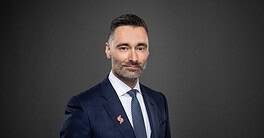

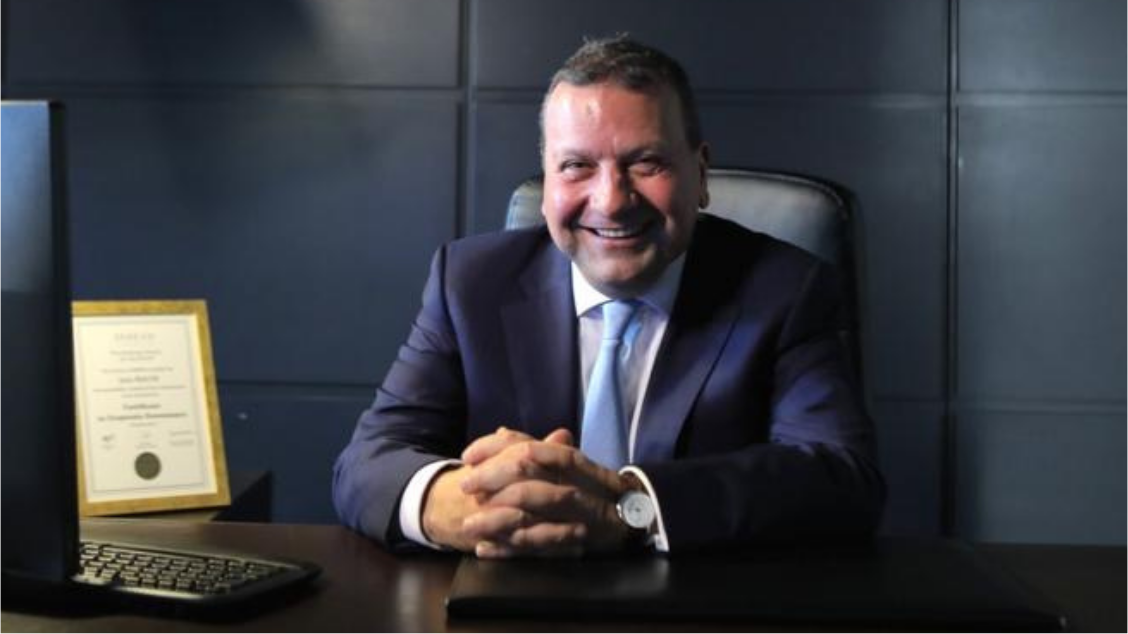


Jean Riachi, CEO of I&C Bank in Lebanon and FFA Private Bank in Dubai, discusses the Lebanese banking sector’s prolonged crisis, impact of the current war in Lebanon, and the challenges that lie ahead.
Global Finance: How is the current conflict affecting the region’s financial sector?
Jean Riachi: This conflict will hurt the economies in Lebanon and in the Gulf Cooperation Council (GCC). In the GCC, it is going to be mitigated by the fact that oil prices are higher. But the effects will not be short-lived, because something about confidence was damaged. For Lebanon, it’s another setback. We are going to have more destruction, more costs to the economy. We already have over a million displaced people, many of whom have lost their homes, and there is no money to rebuild.
GF: In 2019, Lebanon plunged into one of the worst financial crises in contemporary history. Where do you stand now?
Riachi: Before the war that started in March, Lebanon was on the path to implementing some reforms requested by the international community: the restructuring law and the gap law.
GF: The financial gap law aims to restructure the industry by distributing the sector’s losses among various stakeholders. Losses are estimated at between $70 billion and $80 billion. What’s holding it up?
Riachi: There were a lot of issues with the gap law. Many stakeholders were not happy with it. Depositors said they weren’t getting enough compensation. Banks said they couldn’t afford it. The Central Bank of Lebanon was worried about the cost as well. There was also a lot of talk that the state should contribute, but that means more taxes. So, it’s a kind of catch-22 situation. We were not going anywhere, even before the war.
GF: Is there a way out?
Riachi: In my opinion, the key is the central bank’s $50 billion in gold reserves. If we don’t use the gold one way or another, there is no solution, but it’s a taboo in the country. Some feel that it will be a Pandora’s box, opening an appetite to feed other needs of the country.
GF: Given the circumstances, how are Lebanese banks faring?
Riachi: Lebanese banks are doing very well. If you don’t ask them to pay their depositors, there’s no reason why they wouldn’t do well! It’s crazy, but it’s a fact. Today, banks don’t have to pay their depositors. It’s as if you had transformed deposits, which are a short-term liability, into perpetual zero-interest liabilities.
GF: How do you see the future of the Lebanese banking system?
Riachi: For me, the Lebanese economy does not sustain 50 or 60 banks. It should have a handful of big banks and some niche banks. The business model before the crisis was that 70% of the revenues of banks would come from interest from state-issued eurobonds, or CDs from the central bank. So obviously, this business model doesn’t work anymore, and the number of banks should shrink.
The new gap law should make sure that only banks that have the right business model and the ability to raise new capital will survive. Some Lebanese banks do have real value; they have goodwill, they have clients, they have good systems, they will be able to survive in the future.
GF: How is I&C Bank adapting to the situation?
Riachi: Our bank was historically focused on investment and private banking, so our balance sheet exposure was relatively limited. However, as a deposit-taking institution, we were still exposed to the Lebanese market.
Starting in 2016, we began to sense that something was not right, and gradually reduced our balance sheet, returning deposits and liquidating positions with the central bank and in eurobonds. As a result, when the crisis hit in 2019, our exposure to Lebanon was limited. We had no exposure to the state or the central bank, leaving us with positive equity: unlike most banks in the country. This situation prompted us to adjust our business model last year. While maintaining our core activities in private banking, capital markets, and investment banking, we expanded into commercial banking by launching what we call personal and business banking, targeting individuals and businesses, particularly premium clients rather than mass retail.
GF: Let’s talk a bit about post-war Syria. Is it an interesting market for Arab banks?
Riachi: We’re seeing a lot of Arab banks interested in entering the market. Syria, politically, now is very close to the Gulf countries, and I think they have a bright future in terms of the economy. The Arab banks will be welcome there.
GF: What are your next projects?
Riachi: Trying to survive this landmine of a crisis! In Lebanon, we are improving our core banking systems. We are working with a fintech to offer digital banking to a wider category of clients. It’s going to be under our bank license, but through a platform that we do not operate.