
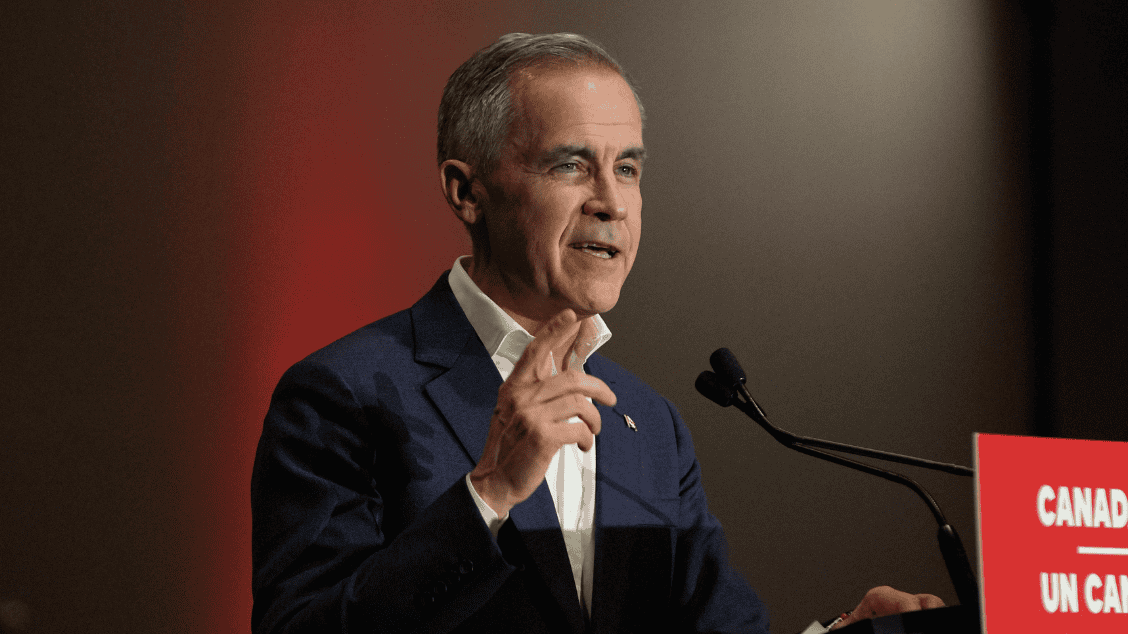


It’s a cliché as old as time: Canadians are polite. And yet, at last month’s World Economic Forum gathering in Davos, Switzerland, Canadian Prime Minister Mark Carney mic-dropped his way into US President Donald Trump’s consciousness (again).
Amid US demands—since walked back—for sovereignty over Greenland, Carney delivered not-so-thinly-veiled comments on “the rupture in the world order, the end of a nice story, and the beginning of a brutal reality where geopolitics among the great powers is not subject to any constraints.”
Carney mentioned no country or world leader by name, but global leaders and billionaires—and others not attending his speech in person—knew to whom his words were directed. He mourned the death of a rules-based world order that, he allowed, was enforced asymmetrically and yet provided orderly methods for international trade and dispute resolution.
“Great powers have begun using economic integration as weapons,” he charged. “Tariffs as leverage. Financial infrastructure as coercion. Supply chains as vulnerabilities to be exploited…. The multilateral institutions on which middle powers have relied—the WTO, the UN, the COP—the very architecture of collective problem solving, are under threat.”
Carney was already looking to diversify Canada’s trading relationships away from the US, long its dominant partner. Just prior to his trip to Davos, the prime minister stopped for trade talks in Qatar and China. Carney is expected to go to India in March with the aim of increasing bilateral trade by about $50 billion by 2030, according to reports. In a break with Washington, Canada agreed to drop its 100% tariffs on Chinese electric vehicles to secure new markets for Canadian canola products, among others.
Prior to Davos, the mercurial Trump had encouraged Carney to pursue trade negotiations with China, saying, “If you can get a deal with China, you should do that.”
After Carney’s speech, the president’s tone changed.
“I watched your prime minister,” he said. “He wasn’t so grateful. They should be grateful to us, Canada. Canada lives because of the United States.” He later declared he will impose a 100% tariff on all Canadian goods if Canada concludes a free-trade deal with the Chinese, referring to the prime minister as “Governor Carney.”
Carney hastened to say that Canada does not intend to sign a deal with Beijing that would compromise the USMCA free-trade pact, and that the new US tariffs, if they come, will not affect his agenda.
“The impact of American tariffs will be on American affordability, not Canadian affordability,” he said.