



A buoyant 2025 has given way to a precarious 2026 marked by geopolitical instability, including a major global oil shock.
For investment bankers, 2025 ended on a high note.
“It is an exceptional time as 2026 launches,” Barclays declared in January. Global M&A volumes exceeded $5 trillion in 2025, and the London-based bank articulated what all its peers seemed to be thinking: “All signs point to the momentum in M&A continuing well into 2026.”
Wrong.
Global M&A activity slowed in the first quarter of 2026, according to Dealogic’s preliminary data. Total deal value fell to about $1.08 billion and deal volume dropped nearly 28% to 7,740, down from $1.15 billion and 10,760 deals in Q1 2025. Deal pros who spoke to Global Finance expect the downtrend to continue.
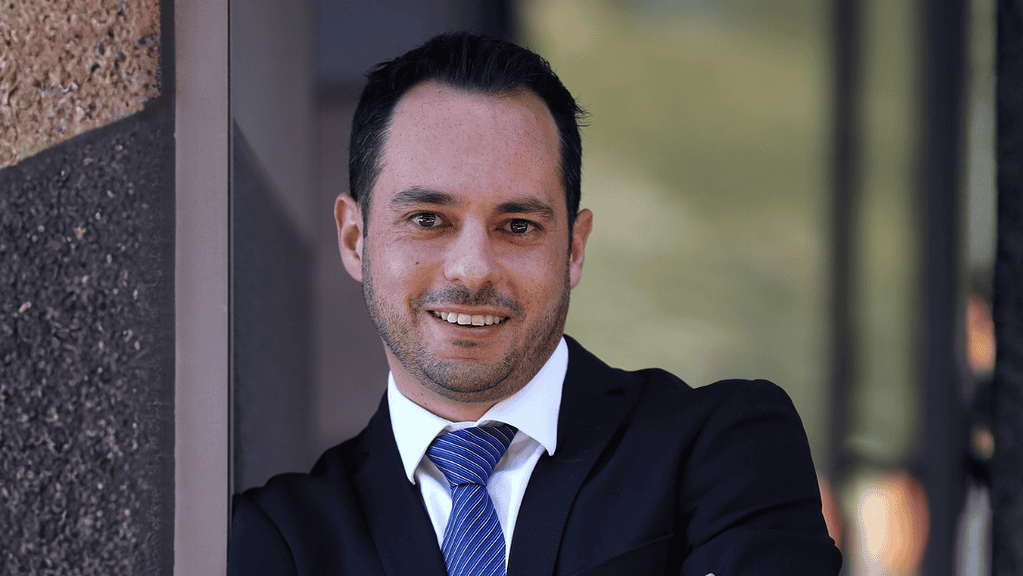
“This year started on a reasonably upbeat note,” says Amit Thakur, managing partner at Amax Capital, “but I believe the overhang of the geopolitical events of the recent weeks will depress both broader business sentiments as well as deal volumes.”
Those “geopolitical events” were the launch of the US-Israeli war against Iran in late February, which triggered spikes in oil prices as supply disruptions increased with a nearly complete shutdown of shipping through the Strait of Hormuz. At last check, crude oil futures are up over 73%, year to date.
But oil prices are only one element of the story, Thakur argues. Higher energy costs and market volatility typically are prompting corporate buyers and financial sponsors to adopt a more conservative approach. Elevated interest rates and risk aversion linked to the Iran conflict’s economic effects can further constrain financing. As a result, investment banks must reckon with prolonged conflict‑related uncertainty worldwide.
“The disruption in the Gulf Cooperation Council region, many of whose sovereign funds were significant contributors to deal and investment volumes in 2025, is expected to dampen deal flow meaningfully,” Thakur says. “How long and how much this will stay impacted is not a question anyone is willing to engage with at this point.”
“Boom” And Gloom
After several quiet years when corporates hesitated to make big moves, many bankers anticipated a surge in deal-making. Banks tempered early expectations due to the impact of Trump-era tariffs on global business, but by last May, the Financial Times had coined and popularized the acronym TACO: Trump Always Chickens Out. The term encapsulated market resilience despite confusion around back-and-forth trade policies.
“Luckily, [tariff] uncertainty didn’t hold back the boom for long, and the latter end of 2025 saw the surge that all the pent-up inactivity beforehand had suggested,” says Rick Smith, founder and managing director at Forbes Burton. “Buyers just needed the right impetus for market movement, and AI seemed to be just the thing to capture the imagination of many.”
Corporates announced more than 600 AI-related M&A deals globally last year, according to data compiled by 451 Research, a segment of S&P Global Market Intelligence, up from 489 in 2024. By the end of 2025, IBM’s $11 billion offer for Confluent capped a full-fledged boom that filled investment banks with a renewed confidence. In a way, the mood was akin to 2021, when global M&A volumes roared back from the Covid-19 crisis, topping $5 trillion for the first time ever and eclipsing the previous record of $4.55 trillion set in 2007.
As Smith puts it, 2025 was “a roller-coaster year.” But the thrill didn’t last.
“That surge doesn’t seem to be bleeding into 2026 as we might have expected,” he says. “And it’s easy to understand why.”
Time and again, the deal economy has proved vulnerable to international events. The pandemic essentially created a “pause” in dealmaking that contributed to pent-up demand and the surge in M&A activity observed in 2021–22 as markets began to stabilize. But the Russian invasion of Ukraine prompted another notable slowdown in M&A activity, introducing geopolitical uncertainty, sanctions, and energy price volatility.
Those are only two examples that highlight “just how closely global incidents are entwined with business,” Smith says. “And the current conflict in the Middle East has potential to cause ripple effects far further than the current war zone.”
Trends, Noteworthy Deals
In March, the Bank of Canada highlighted how the ongoing conflict in the Middle East has intensified volatility in global energy prices and financial markets, creating significant economic uncertainty. Prior to the war, the Canadian central bank projected global growth at 3% in 2026, but rising oil and gas prices have fueled inflationary pressures.
Rising interest rates, inflation, and geopolitical instability are impacting investment banking, leading to fewer debt issuances, equity deals, IPOs, and M&A transactions. Bankers are likely to focus on more resilient sectors like defense, technology, or healthcare, and become more selective as to deal size and structure, observers anticipate.
The fallout is already manifesting in softer deal volume and a streamlining of investment banking workforces.
Last month, Morgan Stanley reportedly cut around 2,500 jobs—roughly 3% of its global workforce—across its investment banking, trading, wealth management, and investment management divisions. Citigroup was planning additional layoffs last month, following on some 1,000 cuts in January, affecting managing directors and senior employees across multiple business lines.
Despite these headwinds, several high-profile transactions are already making history this year. Deutsche Börse AG offered $6.19 billion to buy Allfunds Group plc in the largest deal ever for the Frankfurt Stock Exchange operator, surpassing its 2023 acquisition of SimCorp.
Similarly, Google completed its largest-ever acquisition early this year, the $32 billion purchase of cloud security platform Wiz: more than double its previous record of $12.5 billion for Motorola Mobility in 2012 and the largest enterprise security acquisition in tech history. The landmark deal signals Google’s strategic push into cloud security and AI-driven solutions, reflecting increasing demand for robust enterprise security as businesses migrate to cloud infrastructures.
Nuveen’s £9.9 billion ($13.5 billion) acquisition of Schroders, announced in February, is the largest European M&A deal of the year and the biggest in EMEA asset management history. The all-cash deal, set to close in the fourth quarter, will create a $2.5 trillion global asset management giant with broad public and private market capabilities.
Healthcare and pharmaceuticals are also driving innovation through strategic acquisitions such as Eli Lilly’s announced purchases of Ventyx Biosciences ($1.2 billion) in January and Orna Therapeutics ($2.4 billion) the following month, along with GSK’s $2.2 billion acquisition of Rapt Therapeutics—completed last month.
Meet The Winners
What’s Next
As we move through 2026, M&A activity is expected to remain focused on sectors where technology and innovation are the primary growth drivers. While cross-border flows have been marked by flux since early last year, Thakur notes clients’ concern, particularly in the US and Asia, about the need to adjust to the end of the old consensus on global value chains.
Companies—especially those with US-only sales operations in the US—are increasingly looking to establish manufacturing within other large consuming markets.
“Depending on how the geopolitical events pan out,” Thakur says, “we believe the rest of 2026 is going to be about this theme, even while AI and tech infrastructure—power included—continue to play a dominant role in M&A and investment flows. In any scenario, though, we do not expect 2026 to repeat the volume growth of 2025.”
Research
Research and analysis were executed by Thomas Monteiro, John Njiraini, David Sanders and Lyndsey Zhang, who reviewed entries as well as other information. Global Finance editors reviewed their assessments and made the final selections. Corporate Finance Editor Anthony Noto served as lead editor. The individual contributions of Monteiro, Njiraini, Sanders, and Zhang are indicated by their initials.
Methodology
Global Finance editors and researchers, with input from a range of executives, investors, and consultants worldwide, use a series of criteria to select the winners of these awards, including market share; number, size, and complexity of deals; service and advice; structuring capabilities; distribution network; efforts to address market conditions; innovation; aftermarket performance of underwritings; and market reputation. We score and select winners using information provided by banks, supplemented by additional research, and apply a proprietary algorithm.
The review process considers banks of all sizes, from smaller institutions in frontier markets to global leaders in the league tables. Many winners submit, in support of their applications, information and perspectives that may not be publicly available. Banks that do not submit entries can still be selected as winners through Global Finance’s review process. However, experience shows that banks submitting entries with detailed explanations of differentiation in services for corporate clients as compared with peers achieve better results. Global Finance adheres to journalistic best practices for protecting the confidentiality of information.
Executive Insights