

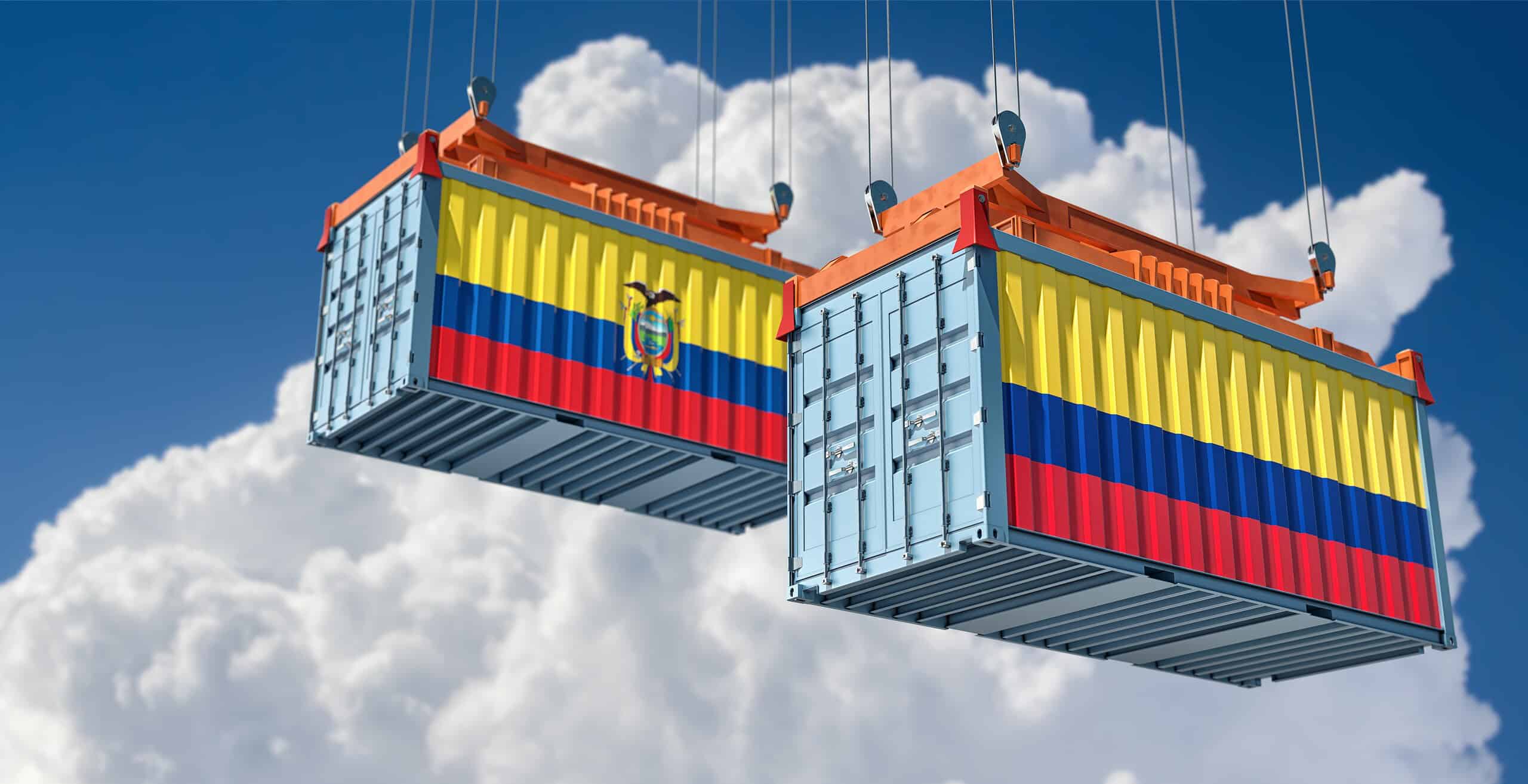


Ecuador slams Colombia with new levies, escalating border security and drug-trafficking tensions into a widening trade conflict.
Ecuador agreed to lower its “security tariff” on Colombian imports from 100% to 75% starting June 1, 2026.
The move, announced by President Daniel Noboa on May 4, signals a potential easing of tensions with Colombia and a push for greater bilateral cooperation on security and border development.
Ecuador originally doubled tariffs on Colombian goods to 100% beginning May 1, sharply escalating a trade dispute driven by border security tensions and drug-trafficking accusations between the neighboring countries.
An Ecuadorian government statement said at the time: “After confirming Colombia’s failure to implement concrete and effective border security measures, Ecuador is compelled to take sovereign action.”
In February, Ecuador raised tariffs to 50% from 30%. The country claimed Colombia was not doing enough to fight drug trafficking in the border region. The US, for its part, also raised both issues with the two countries.
In response, Colombia initially announced reciprocal tariffs through the trade ministry but President Gustavo Petro walked back the move. Instead, speaking on X, Petro said, “This is simply a monstrosity, but it means the end of the Andean Pact for Colombia. We no longer do anything there.”
Petro also suggested his foreign minister, Rosa Yolanda Villavicencio Mapy, should seek greater integration with Central America, the Caribbean and the Mercosur bloc in South America.
“The foreign minister must initiate the step in Mercosur to become full members and direct ourselves toward the Caribbean and Central America with greater force,” he added.
Additionally, he recalled his ambassador to Ecuador, María Antonia Velasco, back to Colombia for consultations.
Ecuador Claps Back
In April, Noboa fired back on X, “Unfortunately, agreements cannot be reached with those who do not have the same commitment to fighting narcoterrorism.” He appears to have put the issue to one side and would not return to it until August when Petro’s term finishes. Although leftist candidate Iván Cepeda currently leads Colombian polls dating back to February, he could face problems in a second-round run-off if rightist candidates’ team up.
In 2025, Ecuador was Colombia’s sixth-largest trading partner and second for non-mining and energy products at $1.5 billion. Ecuador exported $850.2 million to Colombia, its ninth-largest trading partner and representing 2.5% of total exports.
Ecuador’s decision affects 2,700 Colombian companies and makes trade increasingly difficult. Perhaps the most damaging outcome for Ecuador is that Colombia will no longer send electricity to it. Ecuador has suffered numerous blackouts recently and relies on a fragile system prone to outages.