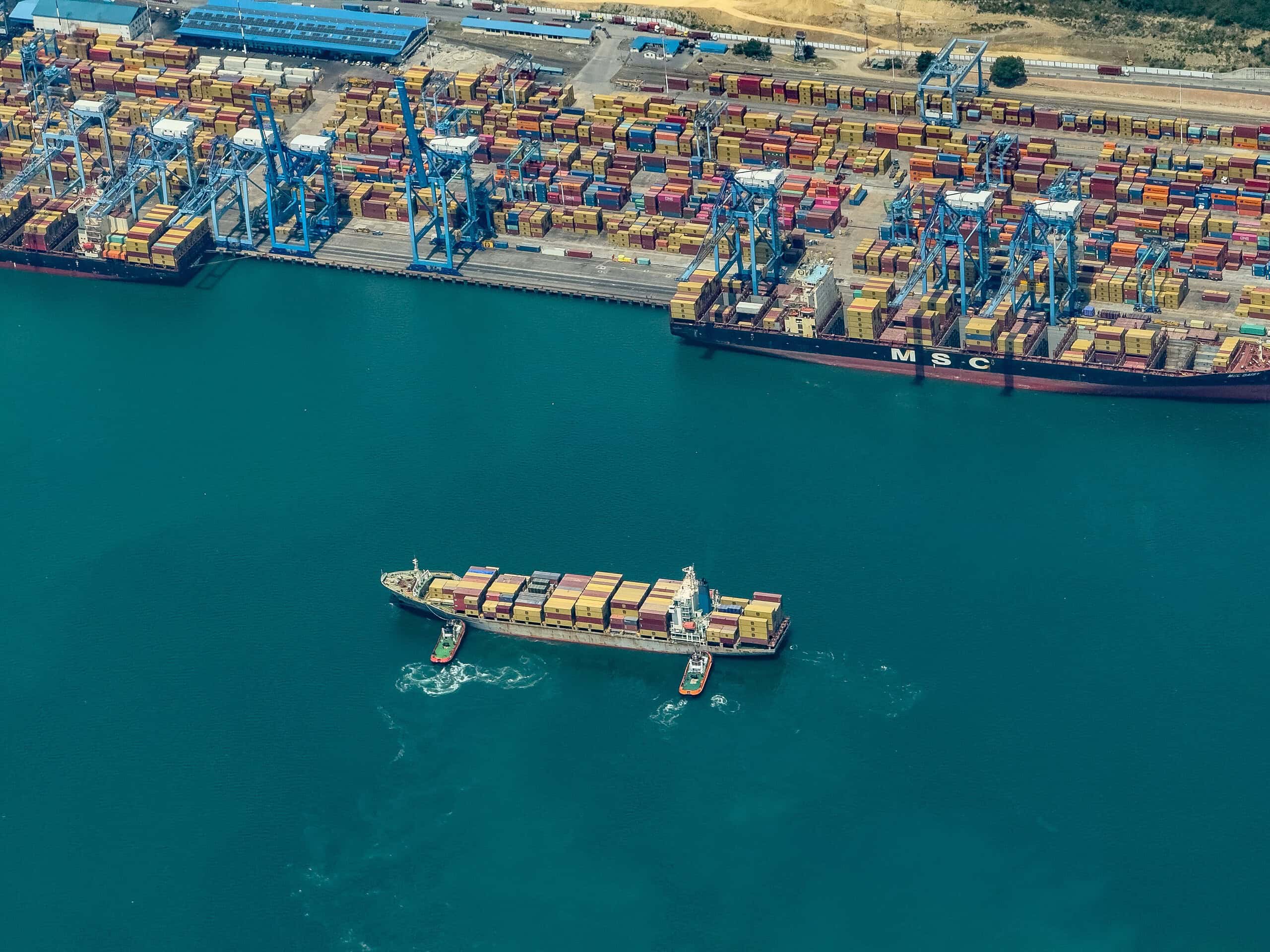


A planned industrial park near Mombasa could boost manufacturing, exports and trade across East Africa.
Capital from Gulf nations is expanding its economic interests across Africa, targeting ports, logistics, minerals, agriculture and energy. The continent is both a source of strategic resources and a growing market, with Kenya’s Port of Mombasa moving to the forefront.
“For the Gulf states, Africa isn’t some far away region — it’s right in their neighborhood,” says Stephan Roll, a senior fellow at the German Institute for International and Security Affairs, in an interview with Germany’s DW-TV.
The scale of that engagement is substantial. Gulf Cooperation Council states invested more than $100 billion in Africa between 2012 and 2022. Annual bilateral trade reached $121 billion in 2023, according to figures cited by the Atlantic Council.
In a June 2026 analysis, Turhan Hizli of Chatham House identified ports, logistics, agriculture, energy, and critical minerals as strategic targets for Gulf capital. He cautioned that African governments must negotiate stronger terms to ensure that investment generates domestic economic value rather than deepening dependence.
Mombasa, Kenya’s Indian Ocean port, is positioning itself within this expanding relationship. Its hinterland serves landlocked markets including Uganda, Rwanda, Burundi, South Sudan and eastern Democratic Republic of Congo.
Africa’s merchandise trade grew by 6.1% to about $1.5 trillion in 2025, according to the African Export-Import Bank’s African Trade Report 2026. Yet only 15%–17% of African trade occurs within the continent.

“For global operators, the opportunity is not simply additional quay capacity. It lies in connecting ports to inland demand, production centers, mineral and agricultural corridors, logistics services, and industrial development,” says Ehab Habib of Hamburg Port Consulting.
Africa’s ports remain uneven in performance. The World Bank’s 2025 Container Port Performance Index ranked Djibouti 53rd globally, Dar es Salaam 255th, and Mombasa 396th. The index measures the time container ships spend in port, rather than cargo volumes or a port’s broader economic reach.
Kenya Ports Authority reported that Mombasa handled a record 45.45 million tonnes of cargo and 2.11 million twenty-foot equivalent units, or TEUs, in 2025. Transit cargo rose 19.5% to 15.88 million tonnes.
Gulf capital is now targeting infrastructure around the port. DP World, a Dubai-based global ports and logistics group, announced its partnership with Kenya-based GulfCap Africa in August 2026. The companies formalized their joint venture through a Shareholders Agreement signed in Nairobi on Sept. 8, in the presence of President William Ruto. The agreement covers a planned 222-hectare industrial park and special economic zone near Mombasa. DP World does not operate the Port of Mombasa.
The project’s first phase covers 40 hectares. DP World and GulfCap say that more than 60 companies have expressed interest and that the project is expected to create more than 20,000 direct and indirect jobs upon completion. These figures are prospective, not confirmed tenants or jobs.
At the signing, President Ruto said the government would support the project by providing infrastructure to reduce production costs and help Kenyan goods compete in regional and global markets.
Paul Kent, senior vice president and managing director of ports and logistics at Monument Economics Group, says the proposed zone could attract manufacturing and regional distribution. He cautions that the job and investor interest figures remain preliminary.
“What is important for shippers is what I call economic distance, which is associated with the combined effects of transport costs, transit times, reliability, and administrative procedures, rather than physical distance alone,” he says.
For Mombasa, the test is whether investment delivers reliable power, efficient customs, competitive transport corridors and export capacity. That would make the port more than an entry point for Gulf goods: it could become a platform for African production and trade with the Gulf and the wider world.
Charles Wachira is a contributing writer based in Kenya.