



Asia-Pacific banks balanced falling rates, digital transformation, AI adoption, and resilient lending, while Japan’s megabanks surged on widening margins.
Due to last year’s shifting pressures, some of the Asia-Pacific region’s central banks eased policy rates to the general detriment of local net interest margins (NIMs), although profits remained robust overall. Not so in China, where a sluggish economy helped compress NIMs to historic lows and shave profits to the bone. By contrast, Japan’s banks were gifted higher policy rates. NIMs surged as a result, and the megabanks booked record net income.
Southeast Asia’s banks maintained resilient return on equity (ROE) and stable asset quality supported by positive loan growth. Current-account-to-savings-account (CASA) and cost-to-income (CTI) ratios improved among the best-run banks. Key themes included digital transformation, AI adoption, stronger regulatory focus on resilience, and adapting to lower-rate environments through diversification into fee income and noninterest revenue business lines.
Asia-Pacific
DBS

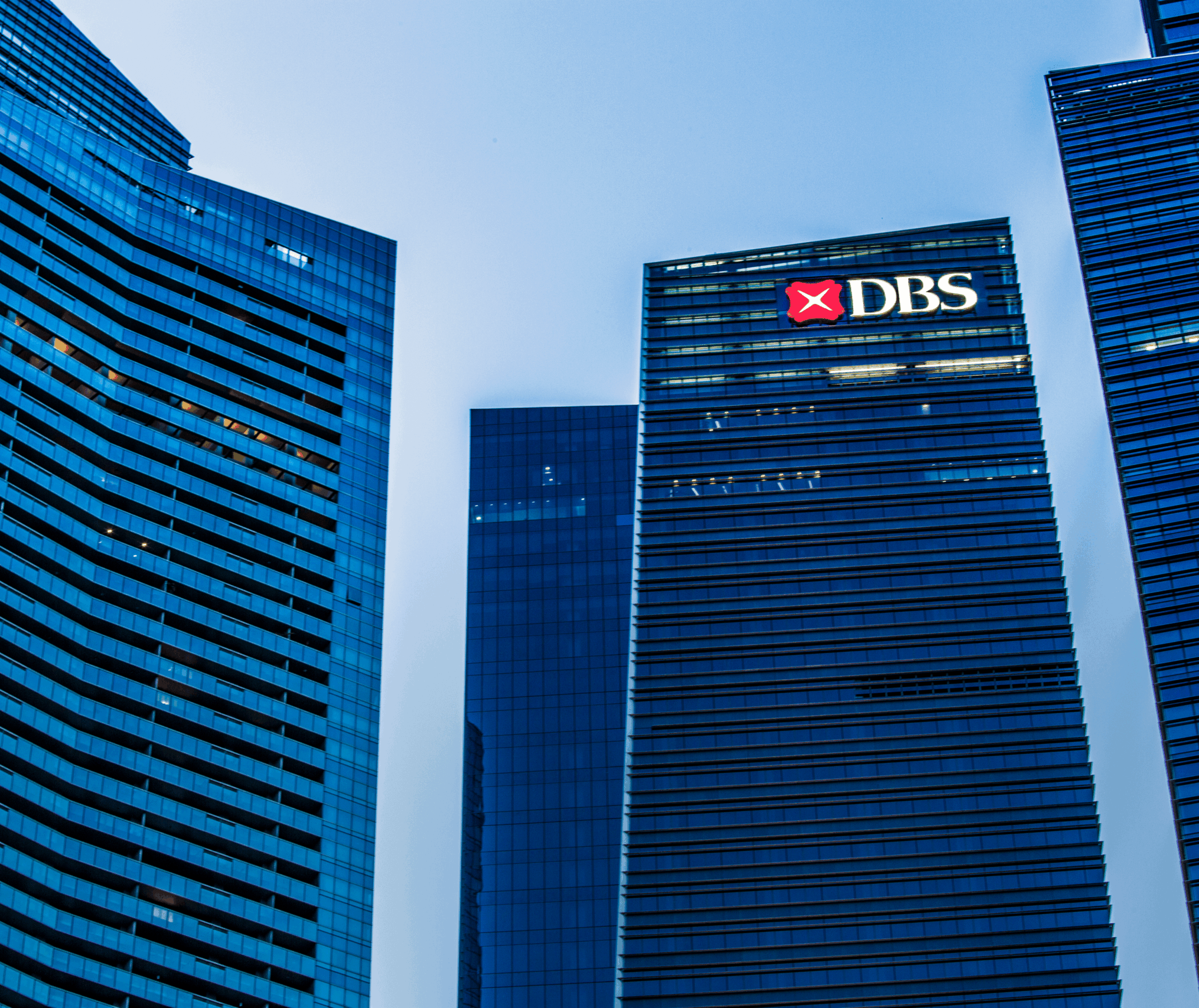
DBS Bank stood out as the best bank in APAC in 2025 as it reaped the rewards of a multiyear structural transformation, a focus on high ROE business lines, and the reach of its franchise in the region—despite geopolitical and trade headwinds and declining Singapore benchmark interest rates.
The bank delivered record total income of 22.9 billion Singapore dollars ($17.8 billion), up 3% year on year (YoY), and a historic profit before tax of SG$13.1 billion. This was supported by record deposit growth of SG$64 billion, up 12% YoY; a 29% surge in wealth management fees; and strong treasury results; while the CTI ratio was a controlled 40%. AI enhanced employee productivity—over 2,000 AI models were used last year—and DBS polished its ESG credentials with over SG$100 billion of new-money sustainable lending.
Shareholder returns were exceptional—last June, DBS became the first listed Singaporean company to cross the SG$100 billion market-capitalization threshold, reaching SG$124 billion at year-end—booking 35% including share-price gain and dividends.
Afghanistan
AIB
Afghanistan International Bank (AIB) remained the country’s leading private bank last year via its digital platform and unrivaled ability to secure international remittances.
AIB’s mobile app and agent network greatly improved rural access, while strong risk management ensured stability in a difficult environment. In 2025, AIB reported total assets of approximately $950 million and revenue growth of 13% to about $35.5 million.
Australia
CBA
Commonwealth Bank of Australia’s (CBA’s) position at the top of the country’s banking industry was cemented in early March with a Fitch Ratings upgrade—up a notch to AA, making CBA the highest-rated major Australian bank in Fitch’s ratings universe.
The agency cited CBA’s superior earnings profile, marked by strong profitability—profit rose 4% to a record 10.25 billion Australian dollars ($6.7 billion) in fiscal year 2025—allowing a historic high dividend payment. Market-leading NIM (up 9 basis points to 2.1%), robust lending growth, and disciplined cost control were cited as factors underpinning the upgrade. CBA also enjoys the largest capital buffer among its peers of qualifying junior debt and equity.
Highlights in 2025 included the provision of 140,000 tailored payment arrangements to ease cost-of-living pressures, returning AU$8 billion to shareholders—boosting superannuation schemes for around 13 million Australians—and a AU$900 million investment in cyber protection.
Bangladesh
City Bank
In Bangladesh, the City Bank (CB) continued its leadership in digital banking, serving retail clients via its Citytouch app—which recorded 35% revenue growth in 2025—and corporate clients via the CityCorp platform. Both apps have helped foster economic growth and enhanced the country’s financial ecosystem.
The bank was active in supply chain finance (SCF), arranging a 2 billion Bangladeshi taka ($16.8 million) deal for City Group in what represented CB’s biggest SCF transaction. CB’s financial-inclusion drive continued through the City Point “doorstep” banking model and via initiatives such as City Alo, the dedicated women-banking division of City Bank, which increased advances to women-led SMEs by 51% last year.
Brunei Darussalam
Baiduri Bank
Brunei Darussalam’s Baiduri Bank achieved robust financials, with net profit exceeding 100 million Bruneian dollars ($77.9 million), supported by steady loan growth, diversified income streams, and assets surpassing BND4.1 billion.
Asset quality stayed solid, with low NPL ratios, while strong capital buffers—a Tier 1 ratio above 25%—and liquidity provided resilience. Through advanced fintech platforms and digital innovation, the bank enhanced fee-based revenue and lowered CTI ratios.
Cambodia
ABA Bank
Advanced Bank of Asia (ABA Bank) continued to dominate Cambodia’s banking sector last year and bested the domestic competition with some stellar financial metrics, reflecting its unmatched scale and digital leadership in the country. ABA is Cambodia’s largest bank by assets, with total assets of 65 trillion Cambodian riels ($16.2 billion). ABA booked a handsome net profit of KHR1.5 trillion last year, for a 26% YoY gain and a 14.2% ROE. The ABA Mobile app drove strong user growth, serving over 5.1 million customers and advancing financial inclusion across the kingdom.
China
ICBC
In China, ICBC’s total assets reached nearly 53.5 trillion Chinese Yuan ($7.6 trillion) last year, establishing the bank as the first one globally to surpass $7.2 trillion in assets, thanks to a 9.5% YoY increase. Total loans grew 7.5% to ¥30.5 trillion—marked by strong support for key domestic industrial sectors—while the nonperforming loan (NPL) ratio improved by three basis points to 1.31%.
Profit numbers were muted, reflecting China’s relatively sluggish economy: Operating income rose 1.9% to ¥801.4 billion; while net profit increased 1% to nearly ¥370.8 billion.
Last year, ICBC focused its lending on manufacturing; high-tech innovation; green development; and micro, small, and midsize enterprises (MSMEs). Trade finance provided by domestic branches rose, as did international settlement volume—increasing by 35.4% and 18.5%, respectively. The bank actively boosted domestic demand, with personal-consumption loans increasing by 10.2% last year.
Meanwhile, in wealth management, personal financial assets hit nearly ¥25.4 trillion; and ICBC led the market with innovative products as well as its private banking and custody services.
Hong Kong
Bank of China (Hong Kong)
In Hong Kong, Bank of China (Hong Kong) stood out as the leading bank in 2025 via superlative financial metrics and forward-looking ESG integration. In the first half alone, attributable profit rose 10.5% to 22.2 billion Hong Kong dollars ($2.8 billion), with ROE climbing above 12.9%—an eight-year high—while maintaining an industry-leading CTI ratio of just 20.8%.
Customer deposits grew 5.6%, to nearly HK$2.9 trillion, driven by a surge in low-cost CASA balances. Asset quality remained solid, with an NPL ratio of 1%. Strong capital ratios underscored resilience amid market pressures—Tier 1 capital stood at a comfortable 23.7%.
The bank advanced green and sustainable finance through targeted lending, transition support for high-emission sectors, and initiatives like its Green and Sustainable Finance Taxonomy, helping to position Hong Kong as a hub for low-carbon growth in Asia.
India
State Bank of India
Government-owned State Bank of India (SBI) is the country’s largest commercial bank and leads the domestic competition in most measures of physical presence and geographical reach as well as in financial metrics.
SBI has a growing international footprint with a presence in 29 countries. The bank’s overseas balance sheet crossed $100 billion for the first time last year. In July, SBI completed India’s largest equity issuance via a $2.9 billion qualified institutional placement, which strengthened the bank’s capital buffers and is earmarked to support around $140 billion in future credit growth.
The bank is supported digitally by the YONO app interface, which serves more than 100 million active users globally—rising to that landmark number from 81.3 million in fiscal year 2025—and which facilitated the disbursement of over 200,000 digital loans last year and the onboarding of 64% of savings accounts.
Meanwhile, Nepal had a turbulent 2025 thanks to widespread Generation-Z protests against corruption and a social-media ban, precipitating a government fall. Widespread vandalism included bank branches and ATMs. The tumult produced a spike in unemployment as businesses were disrupted, banking-system liquidity dried up, and NPLs rose.
Indonesia
Bank Mandiri
In 2025, Bank Mandiri (BM) emerged as Indonesia’s leading bank amid intense foreign exchange pressures and tightening banking conditions. The rupiah faced volatility from capital outflows and global rate dynamics, while the financial sector grappled with liquidity constraints and NIM compression.
Yet BM delivered resilient financials: Full-year net profit reached 56.3 trillion Indonesian rupiahs ($3.4 billion), propelled by 13.4% loan growth and robust deposit inflows, the latter including strong CASA expansion. Asset quality remained exemplary with an NPL ratio of just over 1.1%, ROE at 20.3%—the highest in Southeast Asia last year—and CAR at 20.4%. BM’s scale, disciplined risk management, and strategic foreign exchange liquidity allowed it to outpace peers in a demanding domestic environment.
Japan
MUFG
Mitsubishi UFJ Financial Group (MUFG)—Japan’s largest bank by assets—delivered record consolidated net profit of nearly 1.9 trillion Japanese yen ($12 billion) in the 2025 fiscal year, for a stellar 30% YoY increase, putting the bank firmly on track to hit its upgraded full-year forecast of ¥2.1 trillion. This produced a 9.9% ROE, meeting the bank’s medium-term ROE target, set out in its April 2024 three-year business plan, comfortably ahead of schedule.
These eye-opening data points were driven by an increase in NIM, thanks to higher Bank of Japan policy rates, robust domestic lending, and strong fee income from wealth management and international operations. MUFG’s minority ownership of Morgan Stanley delivered standout contributions, while the bank’s global scale and diversified revenue mix provided resilience amid market volatility.
Kazakhstan
Forte Bank
Forte Bank stood out in Kazakhstan for its customer-centric approach and its SME lending tailored to logistics and agribusiness. In 2025, total assets reached around 4.5 trillion Kazakhstani tenge ($9 billion).
Kyrgyzstan
DEMIR Bank
In Kyrgyzstan, DEMIR Bank led the field through instant cross-border payments, its range of Islamic finance options, and the penetration of its mobile app. The bank’s microfinance programs delivered strong social impact alongside technological agility.
Macau
BOC Macau
The Macau subsidiary of the Bank of China (BOC) led the domestic banking industry in the former colony due to the bank’s scale and fintech innovation, as well as its role as a seamless conduit between Macau and mainland China. BOC Macau is the largest bank in Macau by assets, with over 30 branches, and its digital leadership has brought it 680,000 mobile-banking users—over 90% of Macau’s population. The BoC Pay platform, which processed over 7.9 billion Macau patacas ($985.7 million) in transactions, commands a 26.1% market share.
Malaysia
UOB Malaysia
As Malaysia’s largest foreign bank, UOB Malaysia (UOBM) was able to boost its wholesale banking business in 2025 via the successful deployment of its connectivity agenda, which focuses on trade and supply chain finance in ASEAN and the APAC region (particularly Greater China). Trade finance at the Malaysia subsidiary grew in the double digits, boosting UOB’s consolidated 26% trade finance growth last year.
The bank led cross-border trade solutions in the country through initiatives such as the Johor-Singapore special economic zone and by trade-finance lending to Penang’s vibrant semiconductor industry, crucially supported by UOB’s flagship Infinity FSCM (Financial Supply Chain Management) digital trade finance platform. Total asset growth was a steady 7.5% last year to 166 billion Malaysian ringgits ($39.4 billion) up to September, supported by quality loan growth and a 4.9% rise in customer deposits to RM120 billion.
Mongolia
Khan Bank
Mongolia’s Khan Bank accounts for over 31% of the assets in Mongolia’s banking system and is handsomely capitalized—17.5% at the Tier 1 level—with a high 42.5% liquidity ratio, well above the 25% statutory minimum. The bank pioneered internet banking in Mongolia in 2007 and now serves 1.8 million customers in its digital ecosystem, including the bank’s flagship e-wallet Didi Pay.
Myanmar
CB Bank
Myanmar’s CB Bank reinvests profits into the business rather than paying a dividend, a policy that explains the 16% rise in its Tier 1 capital last year off a 21% rise in profits.
Amid a 1.8% drop in Myanmar’s GDP last year, NPLs remained at a stubborn 6.1%, albeit for an 11-basis point YoY decline. The bank has led the digitalization march in Myanmar’s financial sector, with its cutting-edge e-commerce gateways including CB Pay, CB Card+, and CB Merchant apps. Through its smart branches, digital transactions rose by 60% in 2025.
Nepal
Global IME Bank
Against this volatile backdrop, Global IME Bank prevailed, boosting overall deposits by 15% and CASA deposits by 45%, maintaining a high 40% liquidity ratio, reducing the CTI ratio to 35%, and delivering a somewhat miraculous 23% profit growth.
New Zealand
ANZ New Zealand
ANZ New Zealand (ANZNZ) topped domestic peers in 2025 through its unmatched scale—it commands a dominant 28% market share in loans and around 30% in both deposits and mortgages—and its financial strength. ANZNZ delivered a record of more than $2.5 billion New Zealand dollars ($1.5 billion) statutory profit and a nearly NZ$2.4 billion cash profit, up by 21% and 4% respectively, supported by nearly NZ$20 billion in local capital and strong ratios well above regulatory requirements.
ANZNZ boosted digital innovations, including upgrades to its goMoney app for easier account opening and secure payments. Robust fraud prevention recovered over NZ$45 million in scam transactions, with biometric tools blocking further losses and ensuring most customers suffered no impact.
Pakistan
Meezan Bank
Meezan Bank rose above Pakistan’s economic challenges—including static economic growth, 8% unemployment, and a 70% debt-to-GDP ratio—managing last year to achieve 28% deposit growth, pushing total deposits to 3.3 trillion Pakistani rupees ($11.9 billion), while delivering a robust 34% ROE. The bank leads in Sharia-compliant innovation, having produced the Wisaaq platform—Pakistan’s first SCF app—and a Sharia-compliant debit card, in partnership with Visa.
Philippines
BDO
In 2025, BDO delivered the strongest performance among Philippine banks amid evolving banking conditions, fintech acceleration, and growing ESG priorities. The sector navigated moderate foreign exchange volatility from global uncertainties, steady liquidity, and intensifying digital competition, while monetary policy remained accommodative.
BDO achieved a record net profit of 87.2 billion Philippine pesos ($1.5 billion), up 6% YoY, driven by 9% growth in net interest income and 13% expansion in gross customer loans to 3.7 trillion pesos across all segments. Total deposits rose 10% to 4.2 trillion pesos, while the bank enjoyed a high 68% CASA ratio.
Singapore
DBS Bank
DBS Bank consolidated in bravura fashion its position as Singapore’s best bank, with a record-breaking performance in 2025 that showed no sign of flagging in the first quarter of this year. The group delivered a historic SG$13.1 billion profit via total income of SG$22.9 billion, driven by a record SG$64 billion rise in deposits and surging assets under management (AUM) that also inked a new high, rising 19% to SG$488 billion. Fees from the AUM surge rose by an eye-popping 29%, and ROE came in at 16.2%—outpacing local peers.
Momentum continued into this year, with the share price hitting a record SG$60 in January, reflecting investor confidence in DBS’ “phygital” (physical presence combined with digitally enhanced service) business model, which is increasingly rooted in the bank’s superior AI capabilities.
South Korea
Hana Bank
In 2025, Hana Bank stood out as South Korea’s leading bank amid sharp foreign exchange pressures and challenging domestic banking conditions. The South Korean currency, the won, weakened significantly against the US dollar, due to capital flight and global uncertainties, inflating foreign exchange-related volatility and valuation impacts across the sector. Meanwhile, fintech disruption intensified competition for digital services and noninterest income.
Nevertheless, Hana Bank delivered resilient financials, posting a record net profit of 3.75 trillion South Korean won ($2.6 billion), up 11.7% YoY, driven by heady 59% noninterest income growth—1.1 trillion won—and solid net interest income. Asset quality remained excellent with a substandard-or-below loan ratio of just 0.35%.
Sri Lanka
Commercial Bank of Ceylon
In August 2025, Commercial Bank of Ceylon (CBC) achieved a historic milestone by becoming the first Sri Lankan bank to surpass $1 billion in market capitalization, reflecting buoyant investor confidence, sustained financial performance, and robust governance. That this was achieved in a challenging economic environment is a testament to CBC’s competitive edge in leading the country’s banking arena.
The data points were superlative across the board last year: Net profit was up 45%, the loan book expanded by 25%—the highest in the domestic industry—and deposits grew 12%, supporting sustainable balance sheet expansion.
Taiwan
E.SUN Bank
Taiwan’s E.SUN Bank had a banner year across its main divisions, with wealth management fee income hitting a record high, for a 42% gain, boosted by a 26% gain in bancassurance, underlining Taiwan’s position as a key asset management hub in Asia.
Overall net profit rose 34.3% to 34.3 billion Taiwan new dollars ($1.1 billion), delivering a sector-leading 13.6% ROE. The bank’s overseas expansion strategy was vindicated by a 15.7% growth in overseas profit, which in turn contributed around 25% to the bank’s consolidated net profit. Last year, E.SUN opened a Dallas representative office and is in the process of opening branches in Toronto and Mumbai, adding to its current operations in 11 APAC countries.
Tajikistan
Oriyonbonk
Oriyonbonk leveraged its heritage in Tajikistan last year with a major core banking upgrade, shorter corporate lending timelines, and expanded branchless services in remote areas. It ranked among the country’s largest banks, with assets around $550 million, and achieved a strong ROE of 48% in early 2025 reporting.
Thailand
Bangkok Bank
In 2025 Thailand’s banking sector faced loan contraction, NIM compression from policy rate cuts, and subdued domestic economic growth, reducing profitability across the sector. Bangkok Bank (BB) stood out with resilient financials and managed to best its peers, posting a 46 billion Thai baht ($1.5 billion) profit, up 1.8% YoY, versus a net 0.7% contraction in system profitability.
Total operating income grew 1.5% to 178.5 billion baht, driven by strong noninterest income diversification that offset a NIMs decline to 2.75%. The bank maintained a stable CTI ratio of 48.4%, a solid 8.1% ROE, and prudent liquidity. Asset quality held at a manageable 3% NPL ratio backed by a robust 17.2% Tier 1 ratio.
Uzbekistan
Uzum Bank
In Uzbekistan, fast-growing Uzum Bank drove financial inclusion through embedded finance and buy now, pay later solutions integrated with e-commerce. The broader Uzum ecosystem (including banking operations) saw loans grow to $3.1 billion and deposits to $3.7 billion, contributing to a group net profit of $176 million.
Vietnam
Techcombank
Vietnam’s Techcombank boosted its CASA ratio to 40.4% last year—an all-time high—versus a 14.1% domestic industry average, a clear marker of the bank’s perceived stability and a number that underlines its dominance in the country’s financial sector.
“We now operate as an integrated financial group serving customers across banking, investment, wealth management and protection,” says Techcombank CEO Jens Lottner. The bank leads Vietnam’s wealth management arena, with 645 trillion Vietnamese dongs ($24.5 billion) under management, a large portion of which comes from ultrahigh net worth customers. Meanwhile, Techcombank accounted for a dominant 38% share of the domestic bond market and the bank’s equity brokerage division led its brokering business in Vietnam with a 9% market share.