


A routine quest for lunch during the IMF meetings in Bangkok turned into a front-row seat to local protests.
After three days of panels and briefings at the IMF and World Bank annual meetings in Bangkok, I finally had Thursday morning free and only one afternoon panel on my schedule—a debate on the global economy. I spent the morning catching up on work—after all, the magazine doesn’t publish itself—then stepped out around noon in search of lunch.
That break was about to turn into an unexpected reporting assignment.
Security around the Queen Sirikit National Convention Center had been steadily increasing since Monday, and this morning the IMF announced that Ratchadaphisek Road, which runs along the eastern entrance to the QNSCC, would be closed to traffic.
So I headed south instead of crossing Ratchadaphisek—where another checkpoint had been added on Tuesday—and walked to the intersection with Rama Road at the entrance to Khlong Toei Market.
It wasn’t long before I sensed something was up. Traffic outside my hotel, normally light, was now a scrum of cars, scooters, and trucks, all clogging side streets meant for one-way traffic, let alone two-way traffic.
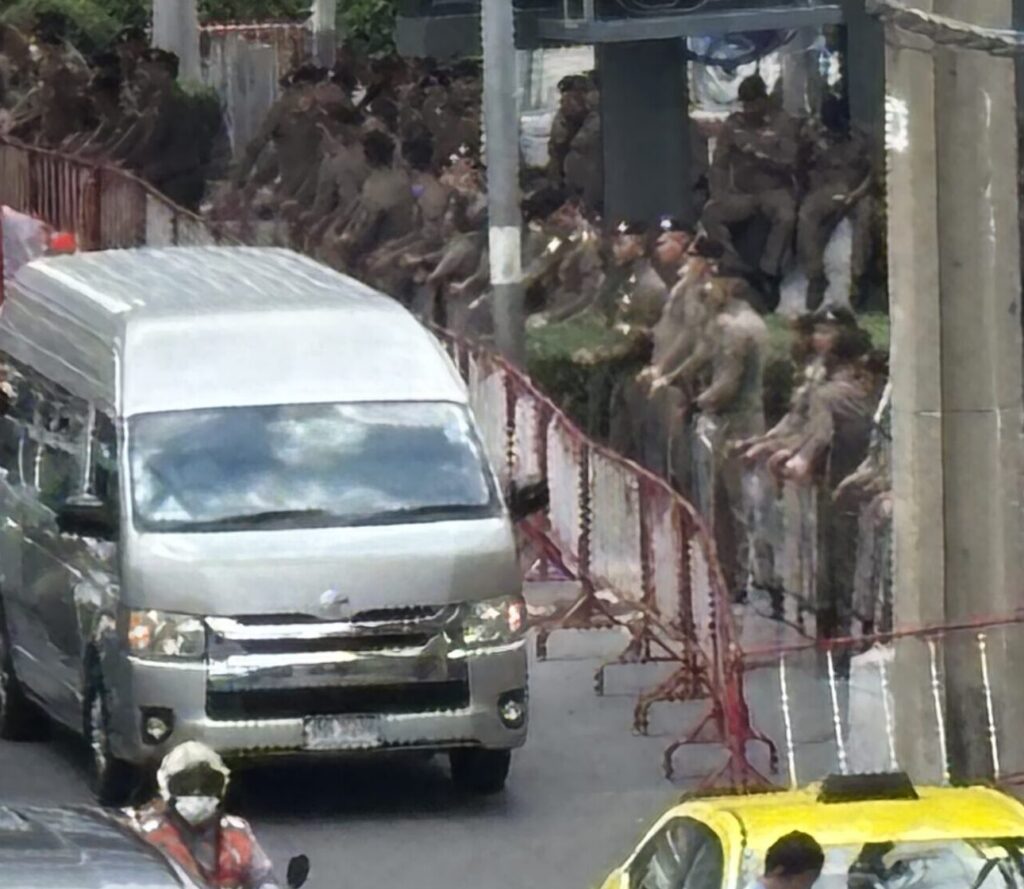
In the distance, I could hear voices over a loudspeaker. Then I saw lines of police setting up barricades, gearing up for riot control, and laying out shields in formation on the empty road.
Because Ratchadaphisek is more like a six-lane expressway than a road, pedestrian bridges are spaced at regular intervals. But the military had closed the bridges closest to the protest. A polite police officer guided me to one about 200 feet farther down the street, where I could cross the intersection and reach the market.
From the pedestrian bridge, the source of the commotion finally came into view.
Protesters in the Street
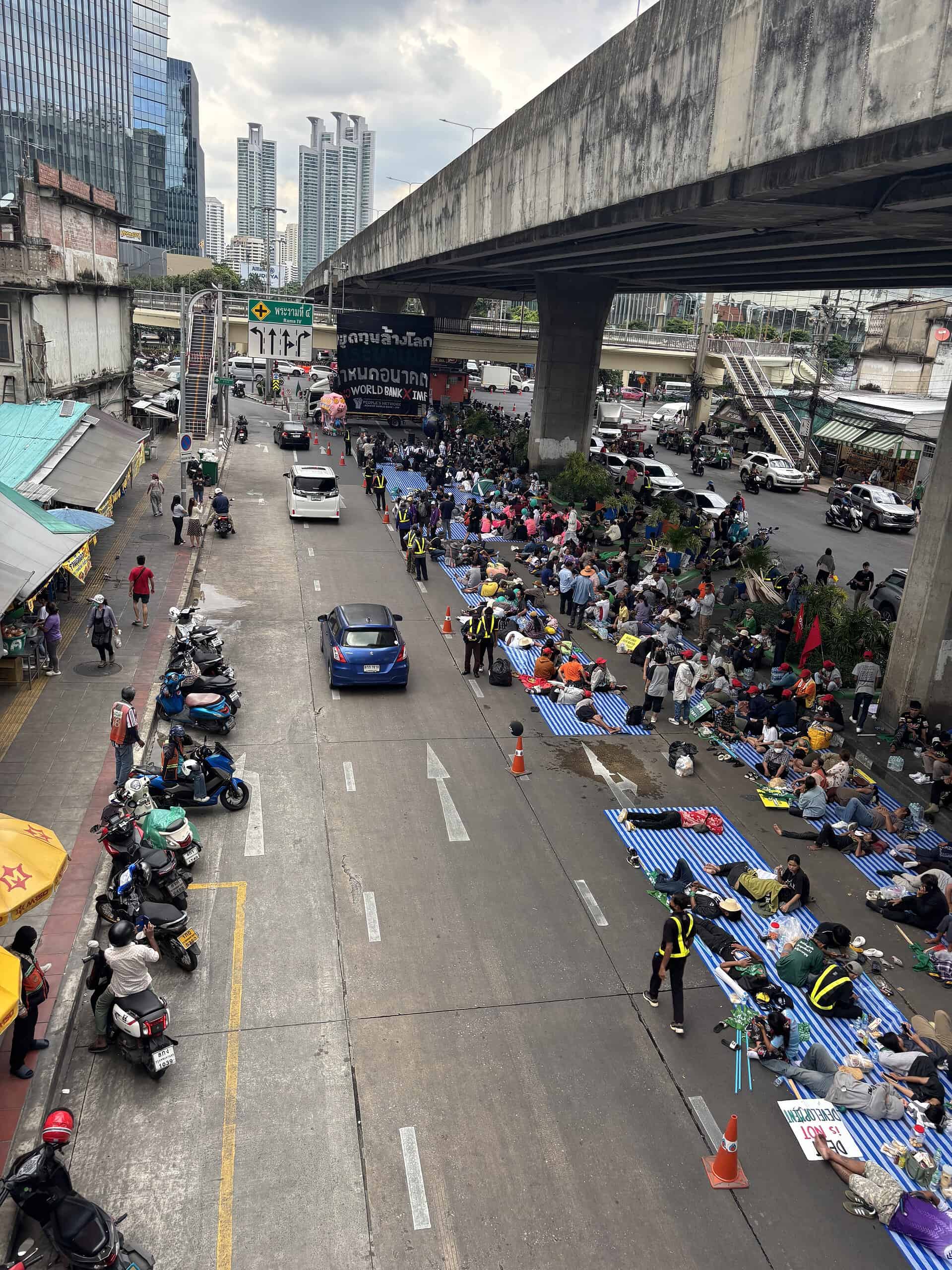
A good-sized crowd sat peacefully in the median strip under an elevated portion of Ratchadaphisek Road, on the other side of Rama Road. They looked as if they were waiting to see a popular musical act instead of trying to get the attention of the world’s most powerful and influential economists, bankers, and VIPs.
I crossed the median, and on my way, a few protesters saw me taking pictures. A young woman in a pickup truck with a banner draped over the side and a loudspeaker in the flatbed struck a pose and flashed a sign-language “I love you.”
Clearly, I had stumbled upon an organizer.
She tried to tell me something, but she didn’t speak English, so a young Thai man nearby translated. “We are protesting,” he said. When I asked why, he replied, “Because the IMF and World Bank are here.”
He told me that a thousand people came to this demonstration, with others taking place across the city. I asked whether they were concerned about anything in particular. He replied, “Land rights, carbon tax, and the World Bank coming here.”
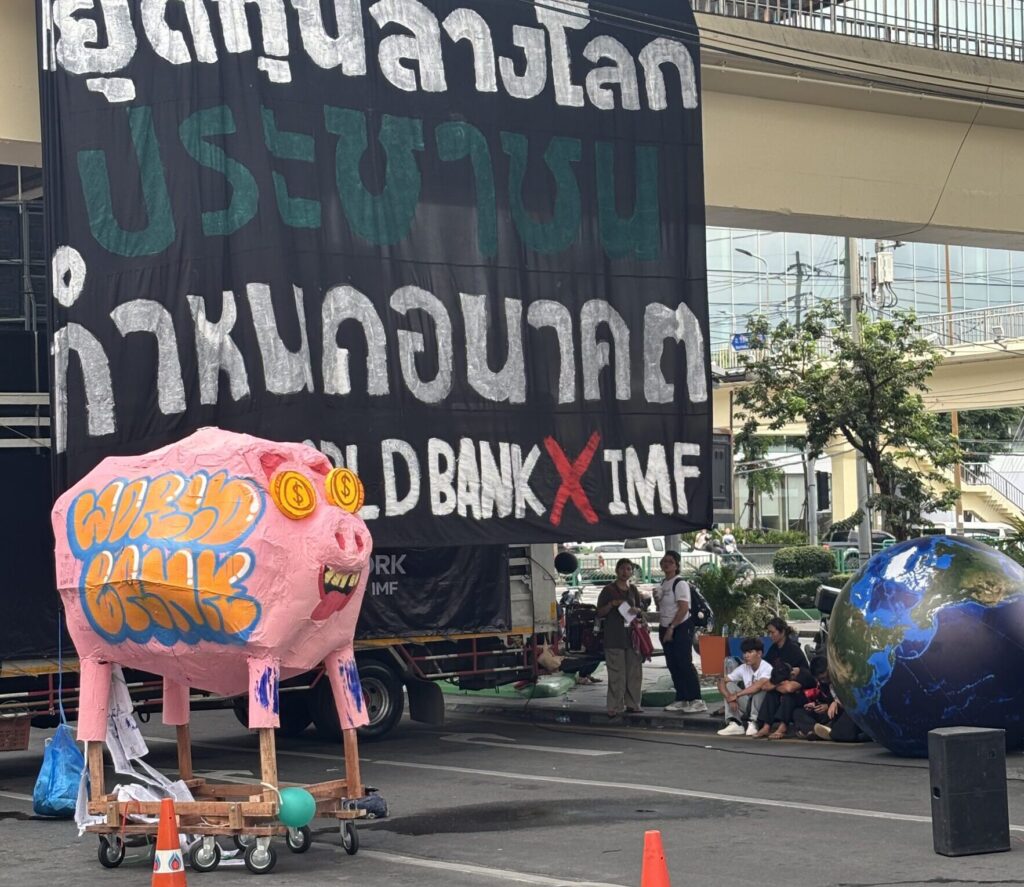
As I moved to the other side of the street, I saw people of all ages sitting or lying quietly on the median because the barricades kept them from approaching the QNSCC just beyond the intersection.
A large black banner, written in Thai, had been raised, with the names of the World Bank and IMF clearly visible at the bottom. Nearby stood a crudely crafted but attention-grabbing papier-mâché pig with gold coins and a dollar sign for eyes, and graffiti scrawled across its side read, “World Bank.”
Despite the heavy police presence, everything was calm. The officers looked almost bored, yet ready for any sign of trouble.
Still without lunch, I started back to the hotel but found the direct route along Ratchadaphisek blocked. An officer redirected me down a side street, which turned out to be faster and more convenient than the route I had been taking.
I returned to my hotel room, jotted down my notes, and hurried to the QNSCC security checkpoint to attend the debate on the global economy. As with my earlier quest for lunch, they turned me away again. The room was full.
Somewhere between the lunch I never found and the debate I never saw, I stumbled upon the story I didn’t know I was looking for.
Paul Curcio is the editor of Global Finance Magazine. Contact him at paul.curcio@gfmag.com