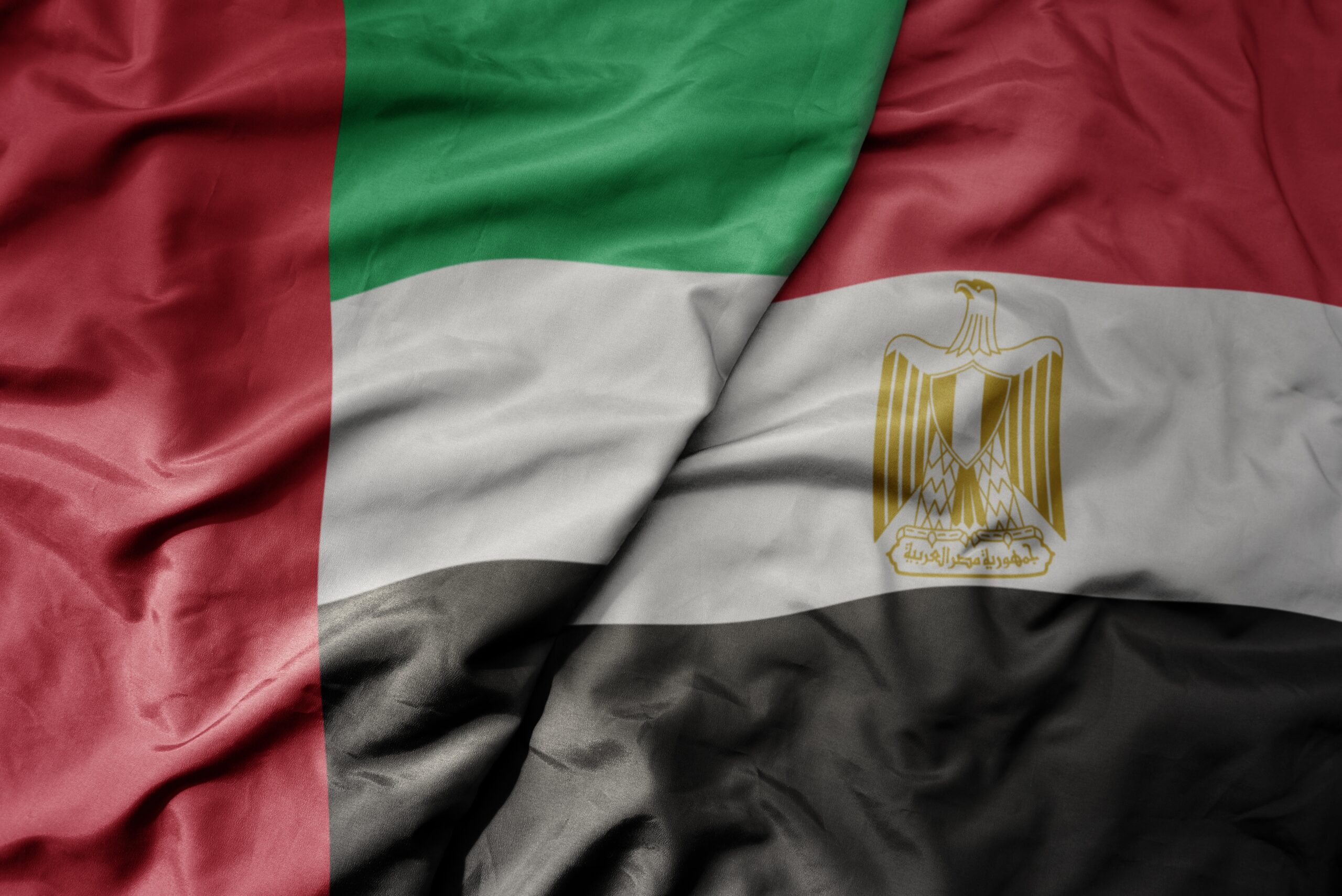


Banque Misr's planned sale of its UAE operations highlights the challenges of preserving vital Gulf financial ties.
Egypt likes to describe its relations with the Gulf Cooperation Council nations as those of brothers.
But those ties faced a test in August when the U.S. threatened sanctions against the United Arab Emirates subsidiary of Banque Misr, one of Egypt’s largest state-owned banks.
The stakes are high. Over the past decade, Egypt has consistently been the top destination for Gulf dollars. Cumulatively, GCC states have invested $106 billion in Egypt. Only the U.S. comes close, with $81 billion, according to the UN Trade and Investment GCC Investment Report released in October.
Given these deep-rooted investment, financial and trade ties, maintaining close relations with Gulf states is a priority for Cairo.
The U.S. Department of the Treasury said Banque Misr UAE had processed $1.8 billion for 103 companies linked to the Iranian regime between January 2024 and June 2026.
Owned by the Egyptian government, Banque Misr has operated in the UAE for more than five decades and maintains five branches.
The UAE is a major source of investment capital. Over the past five years, the country has invested $345 billion outside the GCC. For Egypt, the threat of sanctions on Banque Misr UAE could have significant implications for financial ties.
To avoid adverse impacts, Banque Misr has agreed to sell its UAE operations to the National Bank of Egypt (NBE), another state-owned lender.
Samriddhi Vij, Associate Fellow, Geopolitics, at the Observer Research Foundation Middle East, said that because both banks are state-owned, the deal aligns with Egypt’s broader financial sector priorities, with the core being a stable and vibrant sector.
“This does not necessarily mean the government directly initiated the deal,” she said, adding that the acquisition could be a commercial decision to consolidate operations and strengthen the international competitiveness of Egyptian banks.
Deep Financial Ties
For Egypt and the UAE, banking ties run deep. Half of the 10 GCC banks operating in Egypt are UAE lenders, serving as the central pillar of economic relations in terms of investment flows, trade settlements, and remittances. By facilitating efficient cross-border payments, businesses are also able to expand their operations.
Data show that last year, bilateral trade between Egypt and the UAE reached $9.7 billion, up 61.7% from $6 billion in 2024. With an estimated one million Egyptians living and working in the UAE, remittances from the Gulf state totaled $3.6 billion in 2025.
“For both countries, efficient cross-border payment systems are critical to reducing transaction costs,” noted Vij.
This is critical for the Central Bank of Egypt and the Central Bank of the UAE. In late September, the apex banks renewed a 5 billion dirhams ($1.3 billion) currency swap to promote greater use of local currencies in trade and financial settlements.
For NBE, the deal with Banque Misr is strategic, given that its presence in the UAE has been limited to a single branch inside the Dubai International Financial Center and a representative office in Dubai.
John Nijraini is a contributing writer based in Kenya.