




Advanced analytical and forecasting tools are changing the way CFOs work and the skill sets needed to excel.
CFOs and their teams are parlaying their unique perches in corporate organizational charts with the emergence of AI and other tools to lead the growing use of technology-enabled strategic foresight and planning.
The finance team has long stood alone with full access to all the data and all the people in any firm (human resources has access to employees but not the numbers). Now finance professionals also have a full toolkit to help them digest all that information and think like futurists—not only to manage risk but also to test potential opportunities. In addition to AI, new tools include robotic process automation (RPA), machine learning, predictive analytics, and other digital technologies.
This work is increasingly carried out by financial planning and analysis (FP&A) units that report to the CFO. “The technology can turn them into superheroes,” says Julio Martínez, co-founder and CEO of Abacum, a multinational FP&A software platform based in New York.
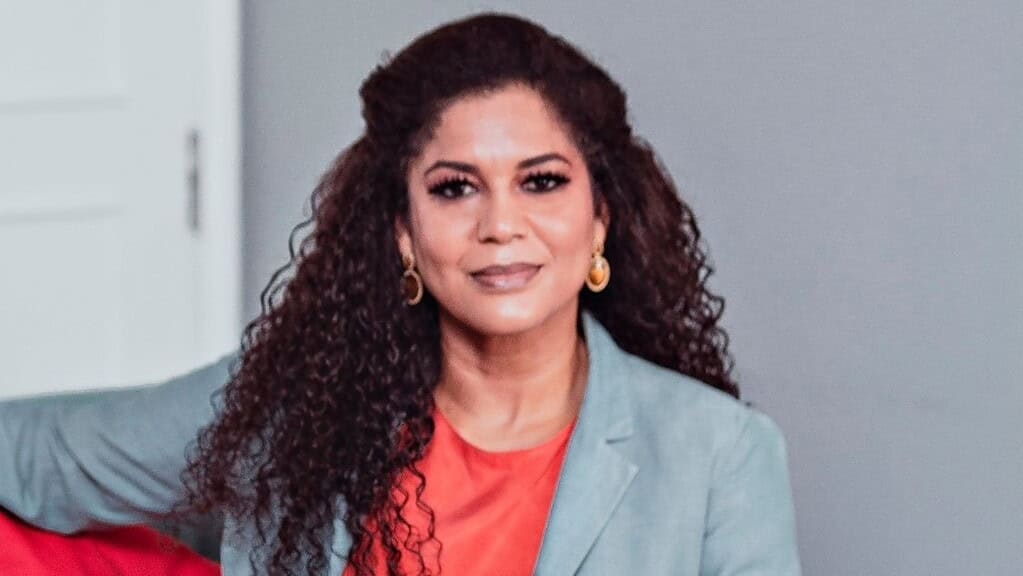
CFOs traditionally have played the role of “company security guard,” as noted by Elisangela Almeida, CFO and founder of Heyi Advisory, a global strategic finance firm based in São Paulo. Their main job was to guarantee that the numbers were trustworthy.
As they assume strategic forecasting and planning functions, “CFOs are answering business-critical questions,” Martinez says. “This is cool. It is what we nerds in finance want to do.”
Back To The 1970s
Businesspeople have been trying to predict the future for millennia, but corporate foresight as we would recognize it today probably dates to the 1970s. Royal Dutch Shell created scenarios that helped it improve risk management and better withstand the 1973 oil embargo than many firms.
General Electric established a full-fledged corporate planning position in the 1960s, and former executive Ian Wilson is considered a “future studies” guru in the business world. A few pioneering precursors notwithstanding, Future Studies as an academic discipline took root in the 1960s.
Wilson is credited with this oft-cited quote: “No amount of sophistication is going to allay the fact that all of your knowledge is about the past and all of your decisions are about the future.”
A classic turn-of-the-century example is how Netflix used projections to help it emerge as the leading distributor of films and related products—thereby condemning the once-mighty Blockbuster to oblivion, even after the video rental giant launched its own streaming service.
Next On Prime Time: You Got 20 Minutes
By last year, the concept had gone prime time. KPMG and Workday co-published a report called, “What Does It Take to Be a Financial Futurist?” about optimizing core finance processes to drive greater value creation. Recent developments, especially in AI, have “turbocharged” advances, notes Martinez.
Karen Schreiber, principal focused on finance transformation at the global consultancy KPMG in Chicago, helped put together that report. In an interview, she offered an example of how turbocharged scenario-building can work in the real world.
A global financial services institution (and KPMG client) learned of a Category 5 hurricane threatening the US Gulf region. The CEO asked the chief risk officer to specify how much of the company’s loan portfolio was tied up in regional oil refineries. “You have 20 minutes. Go,” she recalls the CEO saying. “With the advent of those technologies, of the AI technologies, the predictive capabilities, they’re able to do that,” she adds. “What would it have taken people to access, potentially, 15-20 different systems, and dump that data into Excel?”
While Abacum’s core business is to help other companies in this realm, it took some of its own medicine to help plan its reaction to the announcements of the Trump tariffs earlier this year. Executives at Abacum regularly “run a lot of scenarios on our own platform,” Martinez says. However, since the firm operates in dozens of markets and multiple currencies, issues such as cost structures and foreign exchange volatility suddenly loomed larger. “We ran scenarios based on what our customer base was doing,” he says. For example, “We imagined what would happen if they had to pay a fortune to import.”
Almeida provided a counterexample to show that crisis management was significantly more difficult as recently as 2018. She was working with the Brazilian subsidiary of a French automaker. The company “was very well-organized,” she recalls. “They made a business plan every five years and kept it updated.” Oscillating sales meant that the annual budget finalized in December was already out of whack by January. Then came a national truck drivers strike that ground the entire supply chain to a halt. “There was no way to predict that,” Almeida says. “For the rest of the year we had to do holding budgets.” Today, this “unpredictable scenario” could be more easily analyzed.

“Think back to when Covid-19 hit, most of the financial planning systems back then were built for either monthly or quarterly [projections],” says Schreiber.
Life Is Beautiful All The Time—Or Can Be
Forecasting doesn’t live by crisis management alone. Sundry companies use scenarios not only to ward off evil spirits but also to open room for nice ones. Abacum’s Martinez shared a few examples.
Strava, a San Francisco-based firm known for the exercise app of the same name, has used AI to complete a multiyear stress test that looks at elements such as inflation and links them to cost structures to analyze factors such as rising payroll costs. That gives them the chance to think about cutting costs before a crisis hits.
Clearlink, a digital marketing company in Salt Lake City, works with major telecommunications firms. “They effectively shifted from a reactive to a proactive approach,” says Martinez. One focus was on the company’s call center performance. “The CFO was able to make more meaningful decisions with AI clarification.”
Lodgify is a Barcelona-based global firm that makes short-term rental software. They have used what Martinez calls a “cool flight simulator” to analyze revenue from multiple sources, geographies and product lines.
Enter Stage Whatever
Not all companies are adopting new tools at the same pace. According to KPMG’s Schreiber, three stages have emerged. Stage 1 involves what she calls “enablement.” This is a baby step, such as supporting investor relations. “Stage 2 is about embedding AI into workflows and products and services and value streams to deliver more significant value. And Stage 3 is all about business models and industry ecosystems [and] redefining your company,” she says.
“People struggle to do strategic planning properly and at scale,” says Martinez. “They want to do scenarios, but they struggle to do scenarios.”
If applied properly, he believes that quarterly and six-month planning can be made continuous. This can include aspects such as revenue modeling and cost-structure stress tests. In his view, the three main vectors are: cleaning up the data; making scenarios more understandable to regular people; and improving algorithms.
“People have been doing strategic planning for decades,” he says. “Now AI is having a massive impact.”
The Human Touch
Yet people still need to make the final decisions.
And some people seem to be over-reliant on technology. Almeida is finishing her graduate studies at Tsinghua University in Beijing. She recalled an exercise in which the professor forced students to analyze data about a hypothetical. It took hours to come up with “the same decision that I had immediately come up with intuitively.”
CFOs and their FP&A teams will need to develop new skills. “Intellectual curiosity will become one of the most critical core skills that you need to have in this new technical world,” said Schreiber.