


Beyond regime change, the US operation raises immediate questions over Venezuela’s oil rebuild, proxy retaliation, and how far Washington will push compliance on migration, security, and trade.
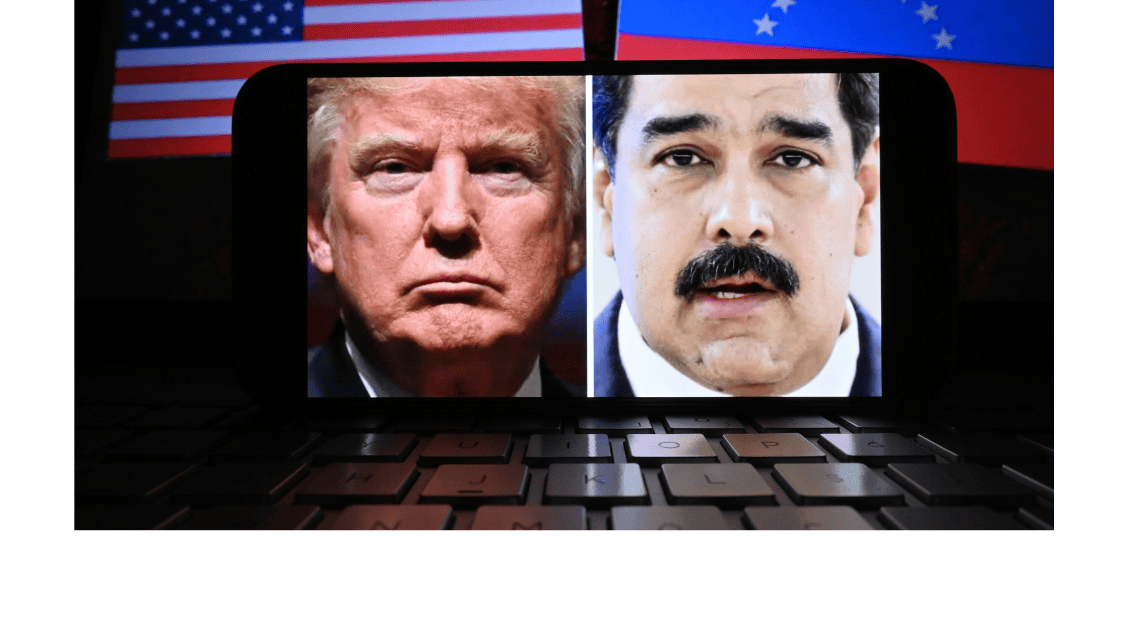
The US military arrest of Venezuelan President Nicolás Maduro, ordered by President Donald Trump, marks a dramatic escalation in Washington’s approach to Caracas and a seismic moment for the region.
The $100 billion investment to restore Venezuela’s oil production capacity is less than some experts estimate is required. Chatham House estimates the cost of tripling production at $183 billion. US oil executives are seeking state assurances that there will be assistance with this.
Stephanie Henaro Canales, an analyst with the Mexican Council on International Affairs, says, “This signals a doctrine: the U.S. asserting direct control over energy flows, sanctions architecture, and enforcement in the Caribbean basin, not just diplomacy. The region should be worried about precedent, spillover, and bargaining pressure.”
This could include the US taking national security measures to justify further action in the region, including border instability, maritime disruptions, sanctions whiplash, and retaliatory moves via proxies or criminal networks. Latin America should expect more tests of how much compliance Washington can extract on security, migration, and trade — especially from neighbors.
Within the region, Henaro believes Cuba, Colombia, and Mexico face the greatest difficulty negotiating the current situation. Cuba was reliant on Venezuelan oil. Mexico will face increased scrutiny in its USMCA trade talks this year and sent $3 billion in cheap fuel to Cuba from May to August 2025. Colombia has its own oil exports, which, together with coal, added up to 35.4% of total exports in 2025, according to the National Administrative Department of Statistics (DANE). However, this was a 17.8% year-over-year decline, as exports themselves fell 2.7%.
In response to potential threats to Colombian interests, President Gustavo Petro spoke by phone with Trump. Other countries that may face consequences include Nicaragua, which could face a similar regime change and has begun releasing political prisoners, or Panama, where control over the Canal and Chinese influence are major concerns for the US.
Should US interests extend into Venezuela’s gas and minerals, this could potentially place more South American countries on US Secretary of State Marco Rubio’s radar. Experts suggest that the way events have been handled points to Rubio as the one leading operations in the region.
Some regional observers are surprised that more has not been made of Peru’s Chancay port, which is majority owned by the Chinese state-owned company COSCO Shipping, or of Ecuador’s mining and possible oil sales to China. However, this is most likely due to Colombia and all countries to the north being deemed a greater potential security threat to the US.
Several Caribbean nations, which have historically relied on preferential oil agreements, are also affected.
Perhaps the biggest winner of Maduro’s removal is Guyana, as it stabilizes the country’s oil production, which could reach 1.7 million barrels per day. Maduro claimed two-thirds of Guyana’s territory, mainly the Esequibo region, and aimed to seize 11 billion barrels of onshore and offshore oil. This has the added benefit of protecting billions of dollars of US investment in Guyana.
Donald Zapata, an independent Venezuelan economist, says, “We could be experiencing an economic crisis in Venezuela because the short-term reality is one of uncertainty and political instability, which leads to a lack of production and investment. Therefore, until there is a transitional scenario in the country, we will continue to have this variable directly affecting us.”
Zapata points out that there are fluctuations in the exchange rate, with the Bolivar depreciating and hyperinflation increasing, which ended 2025 at 269.9%, according to the IMF.
Moody’s argues that the US being more interventionist and less constrained by international law is a regional risk, especially given elections in Brazil, Colombia, and Peru in 2026.
“Any plan in the oil sector must first guarantee investments in the country, meaning legal certainty and institutional transparency,” says Zapata. “This is precisely what the major oil companies expressed concern about during their meeting with Trump, questioning whether the conditions were right for a capital investment of that magnitude.”