


A Miami Uber ride and talks with BNY and PwC execs show how fast the battle for global money rails is shifting.
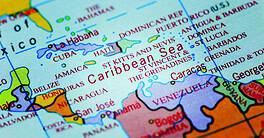
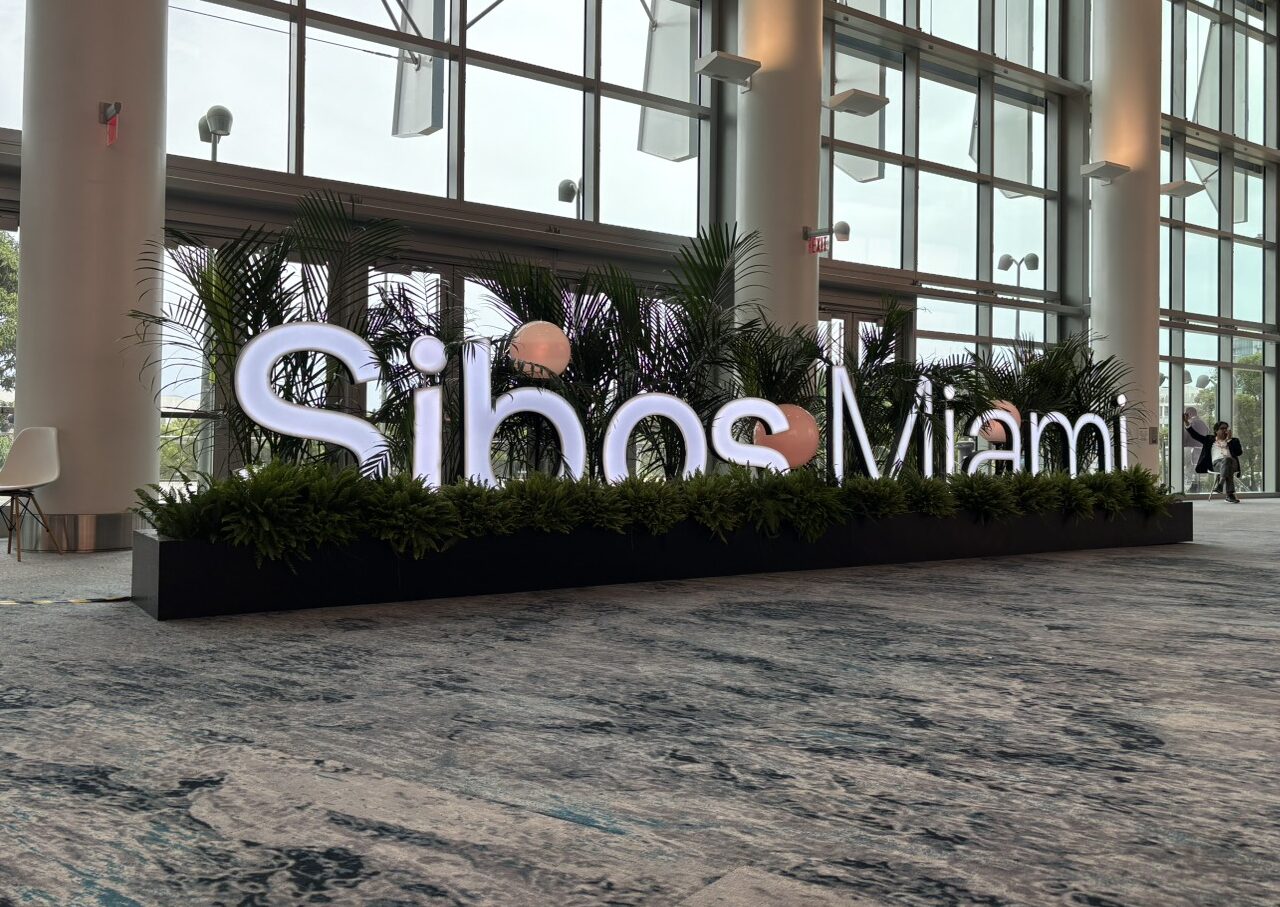
On my first day at Sibos 2026, on the way to our team dinner, I struck up a conversation with my Uber driver, a Venezuelan immigrant who moved his family to the U.S. eight years ago. As we chatted, I commented on the music—a smooth-voiced crooner performing classics from the American songbook. My driver was proud to say it was his 25-year-old son. He told me how he brought his family to the U.S. eight years ago, bought a home, and educated his children. Then he offered his own perspective on world events.
“The U.S. didn’t come to Venezuela for the oil,” he said. “They came for the gold.”
I can’t say whether that’s an accurate take on U.S. policy toward Venezuela, and I’m not offering it as one. What struck me was the certainty of his belief and the very different lens through which someone who’s lived through Venezuela’s economic upheaval could view the movement of money, commodities, and power across borders.
That conversation stayed with me throughout Sibos, where much of the discussion centered on another kind of transformation: Who controls the infrastructure for moving money and assets, and how rapidly that infrastructure is changing.
Artificial intelligence may be dominating the event, but my conversations with bankers and vendors suggest a much broader story. Tokenization, digitalization, programmable payments, and new operating models are moving beyond experimentation and toward utilization. The challenge is less about whether banks will adopt the technology than about how they will make it work at scale—and justify the investment.
Beyond the AI Hype: ROI & Practical Impact
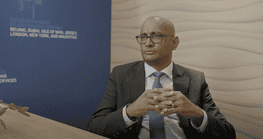
Banks are looking to innovate heavily in technology and AI, said Dan Goerlich, U.S. banking & capital markets leader at PwC. But clients are trying to do much of that work in-house and spend less on consultants. That spending has shifted away from traditional risk and regulatory programs, he explained, and toward engineering and technology, with projects increasingly requiring a clear ROI.
Goerlich sees a distinction between the technology attracting the most attention and the technology that could have the greatest impact on transaction banking.
“I haven’t seen an AI program in transaction banking that truly cracks the code yet,” he said.
Tokenization, on the other hand, could enable value to move without necessarily moving currencies across borders, while digital assets and tokenized infrastructure could signal a larger shift than AI alone.
Read more of Global Finance’s coverage of Sibos 2026.
At BNY, the transition from experimentation to implementation is underway, said Jennifer Barker, global head of payments & trade and depositary receipts.
“We have hundreds of AI applications and digital employees performing specific tasks,” Barker said. The goal, she explained, is not to replace people but to create capacity so employees can focus on higher-value work while AI handles routine tasks in payments, sanctions screening, KYC, and other functions.
The technology is already being used to solve straightforward problems. In payment repairs, for example, AI agents can correct missing or incomplete information, while more complex cases are escalated to humans.
This points to a broader shift in the conversation at Sibos. The question is no longer simply what AI can do but how it fits into a financial infrastructure being rebuilt around tokenization, digital assets, and faster payments.
Connecting Ecosystems and Interoperability
At BNY, tokenization is tied to digital-asset custody, tokenized deposits, tokenized money-market funds, and other digital assets. The goal is to connect fragmented systems so clients can move assets and liquidity more efficiently across ecosystems.
But that creates another problem: interoperability.
Barker said she does not expect a single tokenization system to become the industry standard. Instead, multiple systems are likely to emerge.
“The key challenge is ensuring that those systems can work together safely and efficiently,” she said.
The same trust issue runs through the AI conversation. Goerlich sees trust as a factor for both AI and blockchain—not simply whether the technology works, but whether customers and institutions trust its output enough to adopt it.
The existing financial infrastructure isn’t disappearing overnight, though. Barker said she does not expect blockchain to replace Swift anytime soon. The more interesting question may be what happens when these technologies begin to work together.
Barker said programmable payments remain an overlooked opportunity, particularly in trade finance, where funds can be released automatically when specific conditions are met.
“There is still enormous potential, particularly as AI and agentic commerce continue to develop,” Barker said.
PwC’s Goerlich also sees agentic commerce as a development that banks will have to address as AI agents increasingly dictate how customers interact with financial institutions.
For BNY, changing customer behavior is already creating new opportunities. “Demand for payments to digital wallets is growing rapidly, particularly in Asia, and we expect broader global demand,” Barker said.
Trust and the Infrastructure of Money
All told, the conversations suggest that the next phase of financial technology is less about finding a single technology that transforms banking and more about connecting technologies, systems, and institutions.
Which brings me back to my Uber driver.
His views on oil and gold are a reminder that people don’t necessarily see the global financial system from the same vantage point as bankers do. Nor do they see the mechanisms behind how their money and assets move, not just between accounts or even between countries.
At Sibos, the language may differ—tokenization, interoperability, AI agents, programmable payments, and digital assets—but the underlying issue is the same for the banker and the Uber driver.
In the end, trust is everything, and so is control of the infrastructure that carries it.
Paul Curcio is the editor of Global Finance Magazine. Contact him at paul.curcio@gfmag.com.