

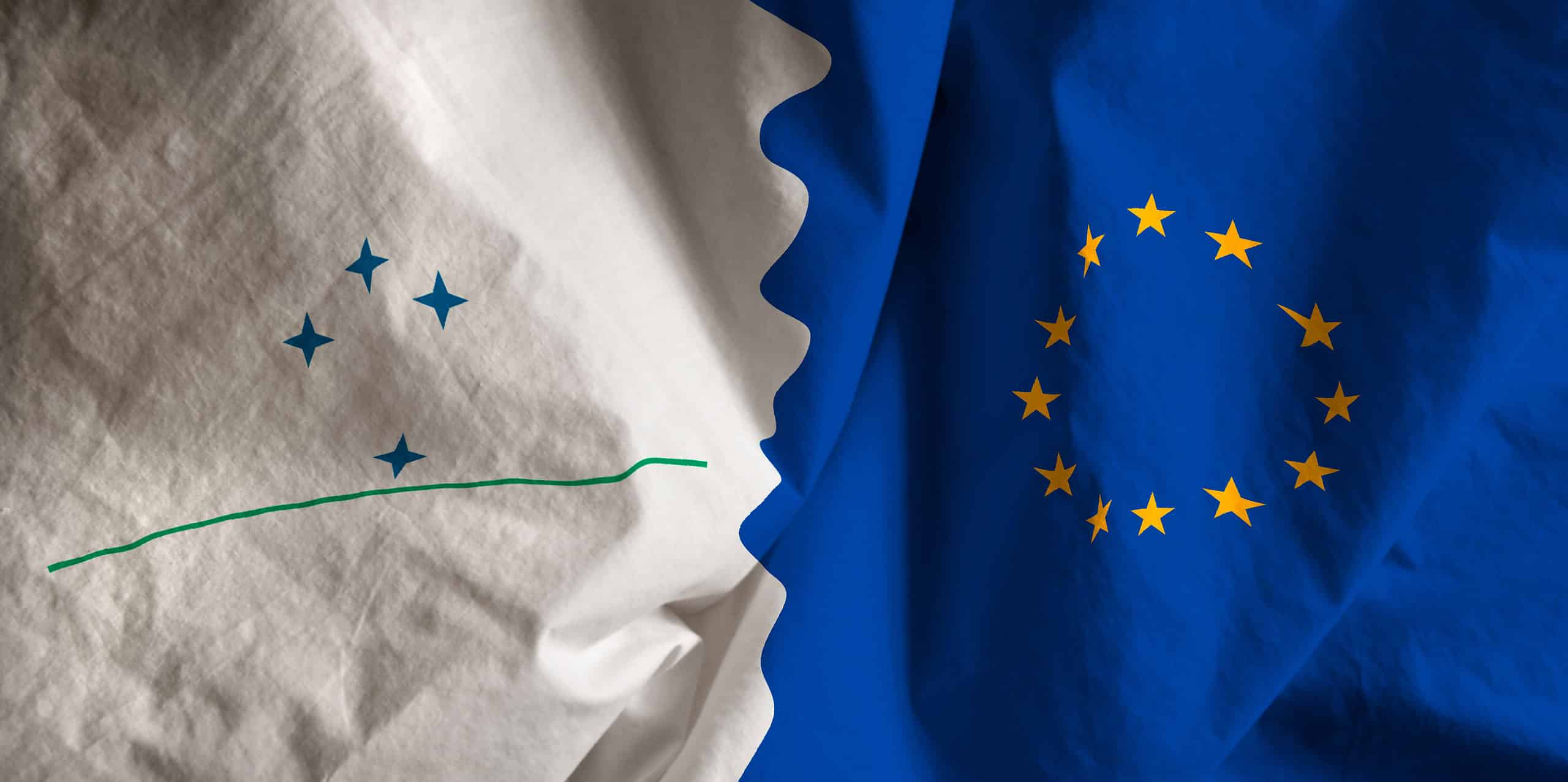


The EU and South America’s Mercosur bloc agreed to a trade deal last month, after 25 years of on-again, off-again negotiations. But the European Parliament has opted to wait on giving the final go-ahead.
By a 334-324 vote, the lawmakers asked the EU Court of Justice to first rule on the deal’s legality. It also needs to pass the respective assemblies of the five Mercosur states: Argentina, Bolivia, Brazil, Paraguay, and Uruguay.
European Commission (EC) negotiators are not happy. Speaking at a press conference, EC trade spokesman Olof Gill told reporters, “According to our analysis, the questions raised in the motion by the Parliament are not justified, because the commission has already addressed those questions and issues in a very detailed way.”
The agreement signed on January 17 would create a free-trade zone of some 700 million people, removing 91% of tariffs on goods between the two regions. EU farmers, however, have protested over concerns that they will be undercut by cheaper South American products and that the Amazon will suffer environmental damage. This despite promises to implement the Paris Agreement on climate change and tackle deforestation.
The wait for a decision by the EU Court means the deal could take another 18 to 24 months to finalize. That could potentially cost EU exporters €4 billion (about $4.8 billion) a year. Automobile, wine, and cheese producers stand to benefit particularly from the deal. Meat, sugar, and rice from the Mercosur countries would find easier access to the European market.
The EU could have approved the deal without first referring it to the Court of Justice, but this would potentially have split Parliament even further.
“The decision of the European Parliament on the Mercosur agreement is regrettable,” German Chancellor Friedrich Merz posted on X. “It misjudges the geopolitical situation. We are convinced of the legality of the agreement. No more delays. The agreement must now be provisionally applied.”
France and Poland, however, have remained steadfastly against the deal.
Said French Foreign Minister Jean-Noël Barrot, “France takes responsibility for saying no when it is necessary, and often history proves it right. The fight continues to protect our agriculture and ensure our food sovereignty.”