

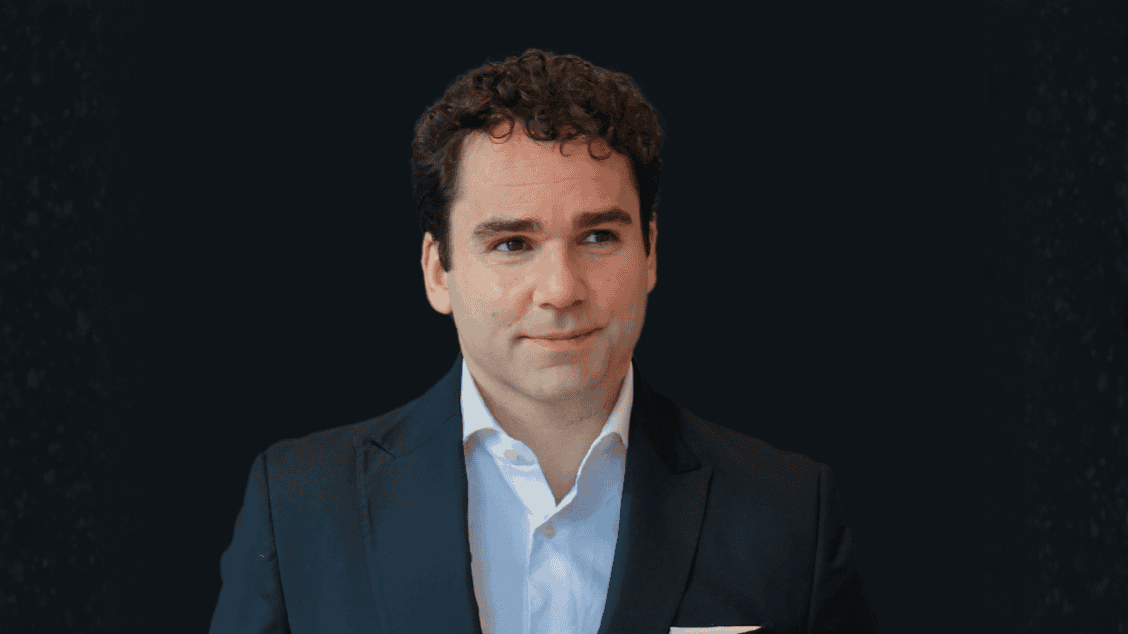


Edoardo Francesco Sabatino, CEO and founder of Hawkish Capital—a global winner in the Most Innovative Financial Technology Companies category—on using tokenization to expand the investor base for green assets.
Global Finance: What are some of the challenges with sustainable finance?
Edoardo Francesco Sabatino: I’ve been structuring sustainable finance deals for a large European investment bank, so solar and wind projects—anything related to green energy—and also circular-economy projects that reduce waste and pollution, avoid planned obsolescence of products, and regenerate the natural ecosystem. These projects are mostly managed by large banks and financial institutions, and family offices and midmarket investment funds have no way of accessing these investment opportunities. Institutional investors need significant capital to participate in a large-scale project; because these assets are not standardized, and it’s difficult to keep everyone informed about performance.
GF: How have you used tokenization to change this dynamic?
Sabatino: In 2025, we completed a proof of concept (POC) with one of the largest European investment banks to tokenize a portfolio of green assets. We selected the portfolio and created and developed a smart contract on the Avalanche blockchain. This use case has been very successful, and one of the benefits of having this on the blockchain is what I define as the composability of the assets—one of the greatest benefits of green asset organization. Within the same asset class, we can link financial assets to generate yields and returns for investors; and within the same contract, we can also offset carbon emissions by buying carbon credits. This is the first real case where an asset class can be 100% carbon neutral.
GF: Since you’re using tokenization to combine different assets, can you create your own sustainability key performance indicators (KPIs), for example, and achieve better results?
Sabatino: We are working to integrate Internet of Things (IoT) devices into greenfield sites, such as solar or wind farms. These IoT devices generate data daily, which is recorded in the blockchain. This helps combat greenwashing, one of the most challenging issues we face with climate assets. Assets are sometimes described as green, but they lack data to support the overall positive impact of these asset classes. With this project, we aim to demonstrate that integrating plant data from the source into the blockchain can show our investors that their dollars have a positive impact.
We are working on KPIs and have started this journey by looking at green taxonomies around the globe. As a reference, we kept the European Union green taxonomies because they’re the most advanced. Now, we are bridging the gap between different green taxonomies so we can be compliant across jurisdictions and build our own tracking and monitoring system. At this stage, we are mostly focusing on green energy; but we are also considering nature-based solutions and the circular economy—areas where we can measure progress and meet investor demand.
GF: How large is this market?
Sabatino: The opportunity is in asset tokenization—today, when we look at the data, it’s a $30 billion market. The opportunity by 2030 is to get to a $4 trillion market. That’s a big jump, and we need to understand how much can be placed in green assets. My assumption is that 20% to 25% of these assets could be placed in green spaces, which would be a major achievement.
GF: What specific technologies does Hawkish Capital use?
Sabatino: I have always been very interested in blockchain because of the integration with AI. AI and blockchain are perfect complements to each other because the blockchain is the perfect financial rail on which you can layer AI intelligence. We are working on integrating blockchain and AI to enable AI-powered tokenization, enabling transactions with minimal human intervention. With all the data structured in a smart contract, AI can easily execute transactions and monitor the environmental impact of the projects.