

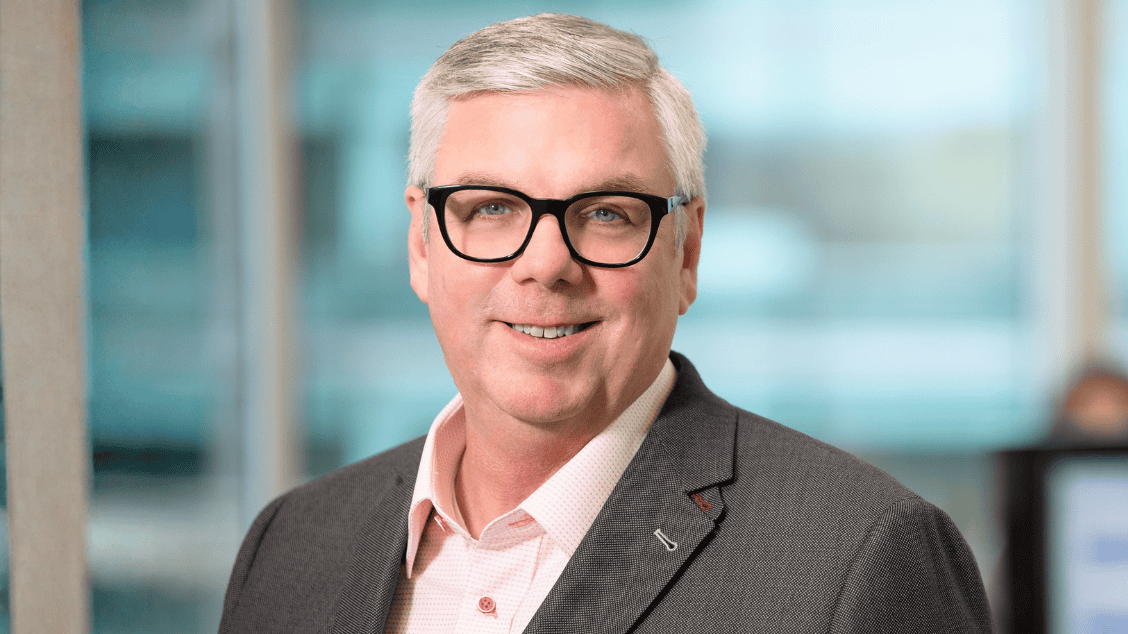


Mark Koziel, CEO of the American Institute of CPAs and the Association of International Certified Professional Accountants, discusses findings from a survey of more than 6,000 CPAs in 25 countries on the profession’s future—and what they mean for CPAs and CFOs.
Global Finance: What surprised you the most in your conversations?
Mark Koziel: There are three big trends: the change in the demographics, the significant regulatory impact on our businesses, and technology. In 2011, we were talking about the advent of the cloud. Now, we don’t talk about that anymore; today, it’s about AI. I don’t know that CPAs are full-on ready to embrace everything that’s coming at them, but they are very open to that conversation. They do believe that there is a strong future for the finance function. AI is a catalyst for transformation. That’s a big theme.
At the very core of who we are as a profession, there are two big things that really came out: trust and ethics. We need to embrace the fact that we are the trusted profession and that we have strong ethical standards behind us to be able to move forward. And that one, I guess, was a little bit of a surprise to me, that people still want that very much.
GF: As companies adopt AI, CFOs are being pulled into governance. Is that a good role for finance?
Koziel: I’m talking a lot with our CFOs about the idea that they need to own the controls over AI inside their organizations, much like they do the financial controls. If you think about the fact that between COSO—the internal control framework that is used all over the world—and now, ISO 42001 [the governance standard on AI use], there’s some level of assurance over AI. The finance function could be the true strategic business partner, helping the business lines navigate things like: Are we using the right prompts? Are we getting the result they need? How do we analyze it? How do we verify it?
A year ago, I was hearing a lot of people talking about the human in the loop. Well, it’s the human in the lead. The human has to be the one to lead it, judge it. We’re already seeing how AI gets used in a variety of different industries. Banking is a great example, especially in banking and loan decisions. But we know there could be hallucinations. How do you take it, from a leadership perspective, to be able to say that we have the controls in place to make sure we’re getting the business result?
Imagine a sales manager in an organization; they could have a finance person at their side, able to navigate how they’re going to make sales decisions. Whether it’s: Should we be selling in this geography? Should we be selling this product line? Should we eliminate this product line? All of that is going to have this finance partnership.
GF: How is the CFO role itself changing under these pressures?
Koziel: The demands on the C-suite and on the CFO are more as a strategic advisor than a historian. That’s been the key change, to be more strategic: the CFO who blocks decisions versus the one who provides knowledge, insight, and strategic counsel to the organization. Technology is going to come and go, but how do you strategically help the organization? That’s key.
GF: You’ve described an upskilling crisis at the entry level of the profession. What’s the impact for CFOs managing teams?
Koziel: I grew up as an auditor in Buffalo, New York. I look at what audit professionals must do today. Accounts receivable—95% of it is automated, whether it’s AI or robotic process automation—and this continues to evolve and get smarter. My standard of success as a new auditor back then was how fast can I make copies of stuff like accounts receivable confirmations. The skill set we’re asking the young professional for is now to immediately opine, yet they haven’t had the nuts and bolts to be able to figure things out.
They’re being asked to do financial analysis right out of university and they’re skipping what we consider to be an important training ground: on-the-job training in the debits and credits. How do I upskill my team when they’re not going to have those first two years to do that? The challenge of upskilling is common in all aspects of the business, whether it’s a CFO sitting in London or a CFO in Malaysia or a partner in a CPA firm in the US.
GF: Headlines suggest AI is driving layoffs in accounting. Is that what you’re seeing?
Koziel: When I speak privately to employers, AI has nothing to do with it; it’s more a Covid-19 hangover of people they held on to longer than they probably should have. And then you also have, with the softening economy, less people leaving. When less people leave, and when you didn’t do what you were supposed to do in those earlier years, all of a sudden you’ve built up a staffing level that’s the highest that it’s ever been, and the organizations are going to make a move. So it really hasn’t been an AI-driven layoff, but everybody immediately wants to go there.
GF: Where is the profession growing globally, and where is it under pressure?
Koziel: On the pipeline side, the numbers in the US are encouraging. We’ve seen 12% increases in accounting enrollment in both the fall of 2024 and the spring semester of 2025, and then a 7% increase in the fall of 2025. I think what’s driving it is the economy; accounting is stability. It is a stable career, and we’ve seen greater interest as the economy has softened a little bit. We have also seen an increase in exam takers. So for us, the pipeline has been good. The question will always be whether it’s full enough and whether there are going to be enough jobs based on how accounting is going to change into the future.
Africa has been a key focal point for us. In South Africa we’re doing great, but we continue to see tremendous growth there. We see the same in Ghana, in Zimbabwe, and a little bit in Nigeria. China continues to be a strong growth market for us as well, in addition to India. We have CGMAs and CPAs there with a strong US CPA presence through back-office operations for a lot of our US firms. That’s where some of the growth is. When you have a global talent shortage, you have to look at those markets where there’s global employment opportunity.
GF: It’s been estimated that 75% of all CPAs are baby boomers. Are they retiring and being replaced?
Koziel: We are never going to be able to replace retiring CPAs one-for-one with entrants into the profession; the numbers aren’t physically possible. And we’re not the only ones who suffer from this; it’s every profession, every industry. It’s the trades, all of them, because of the boomer generation. There are more retirements than there are entrants coming in. The decline is in what I would call all the post-war economies, and the growth is in the developing economies.
GF: Private equity has moved aggressively into accounting. What does this mean for the profession and audit quality?
Koziel: The large firms continue to get larger and the small firms continue to get smaller. We now have, I think, 12 firms that are over $1 billion in revenue; that number, 10, 15 years ago, was less than four. Private equity first started in the UK, and you have it in the Netherlands, peppered throughout Europe, Australia. Germany’s starting to see it, although they’re trying to regulate it a bit.
My ultimate concern, always, is quality. I worry about it when I wake up, I worry about it when I go to bed: to make sure that we have the quality that we need. The private equity firms have said directly that they are absolutely about quality. I always say there’s never an audit failure, per se, if they follow the standards. And for private equity firms, if they’re really going to turn over the business in five to seven years, they can’t have an accusation in year three. Their investment value goes down quickly, and so they are being incredibly cautious.
GF: The Trump administration has floated moving public companies from quarterly to semiannual reporting. You’ve reportedly had a window into that conversation.
Koziel: I was in [Securities and Exchange Commission] Chairman Paul Atkins’ office the next morning, and he had had a two-hour call with the president the night before, after the president sent out his Truth Social post on that exact topic. Is twice a year enough? Is the public still protected? Maybe some industries and maybe the market and investors are going to ask for something different, but it’s really trying to simplify this process. Whether it’s semiannual or quarterly, we’re going to support it. We’re going to support the market as it’s needed.