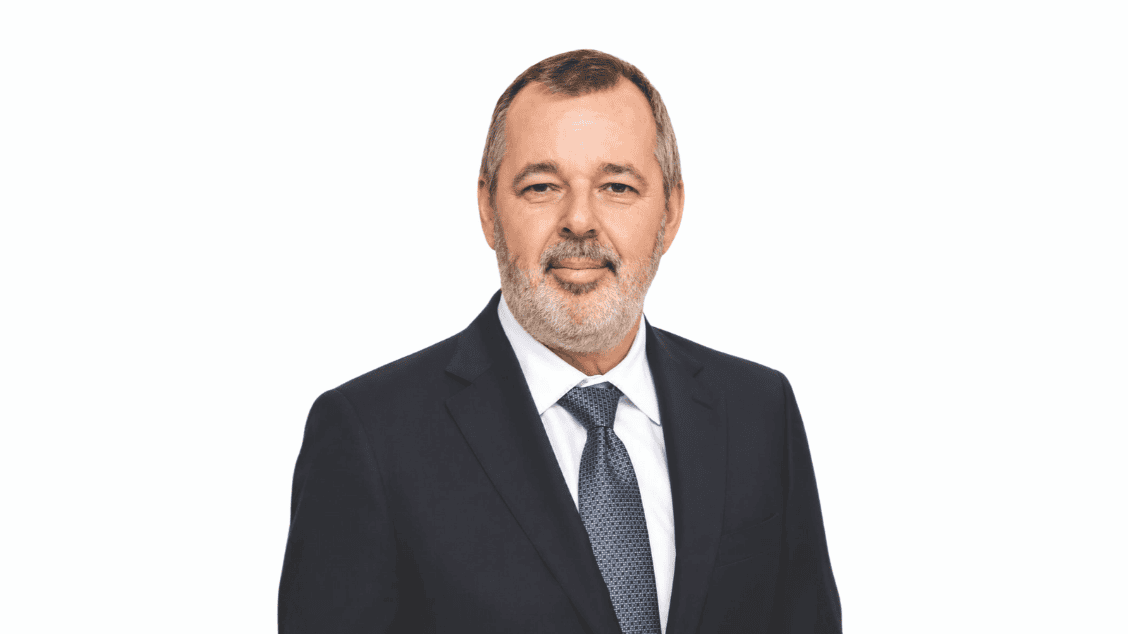


Carlos Carvallo Spalding, president of the Central Bank of Paraguay, discusses the country’s growth prospects and how the central bank aims to build on its record of monetary policy success.
Global Finance: Paraguay’s economic growth was particularly strong in 2025, but has eased this year. What are your expectations for the coming months?
Carlos Carvallo Spalding: Paraguay’s recent economic performance reflects the resilience and stability the country has built over the past two decades through prudent macroeconomic policies and greater productive diversification. In recent years, Paraguay has consistently ranked among the fastest growing economies in Latin America, recording average annual growth of around 5.5% between 2023 and 2025.
While growth is expected to moderate in 2026 as some of the exceptional drivers of 2025 normalize, the outlook remains highly favorable. Reflecting stronger-than-expected economic activity during the first months of the year and continued strength across virtually all sectors, the growth forecast for 2026 has been revised upward to 4.5%. This should also be viewed in a broader global context. Against a challenging external environment characterized by higher oil prices, increasing trade fragmentation, tighter international financial conditions, and softer global growth, an expansion of 4.5% would still be nearly twice the average annual growth expected for Latin America, placing Paraguay among the region’s fastest-growing economies.
GF: How do you assess the economy’s prospects going forward?
Carvallo: The underlying macroeconomic fundamentals remain exceptionally strong. Price stability has been preserved, inflation expectations remain firmly anchored around the central bank’s target, public debt remains at prudent and sustainable levels, international reserves continue to provide a solid external buffer, and the financial system is liquid, well capitalized, and resilient. Together, these factors provide a strong foundation for sustained economic growth. Looking ahead, Paraguay’s main challenge is to build on this foundation and further raise its long-term growth potential through higher productivity, investment in human capital, innovation, stronger institutions, and greater private investment.
GF: What measures has the central bank taken in the last 12 months to ensure monetary policy effectiveness?
Carvallo: Our mandate is clear: to preserve price stability, which is a necessary condition for sustainable economic growth.
Over the past 12 months, monetary policy decisions have continued to be firmly data-dependent, reflecting incoming information on inflation, inflation expectations, and developments in the domestic and global economies.
In December 2024, the Monetary Policy Committee decided to lower the inflation target from 4% to 3.5% for the monetary policy horizon. By the end of 2025, inflation had fallen below the new, more demanding target, closing the year at 3.1%. As inflation continued to decline during the first months of 2026 and expectations remained firmly anchored around the target, the committee reduced the monetary policy rate by 25 basis points at each of its first two meetings, bringing it to 5.5%.
Despite inflation continuing to moderate, reaching 1.6% year-on-year in July, the committee adopted a more cautious stance from March onward as uncertainty surrounding the global outlook increased. It is also worth emphasizing the role that Paraguay’s flexible exchange rate regime plays as a shock absorber. And the country’s electricity generation, based almost entirely on renewable sources, is a key factor in strengthening the economy’s resilience to external energy shocks.
GF: Paraguay obtained an investment-grade rating from Moody’s Ratings in 2024 and from S&P Global in 2025, but still has not experienced the level of foreign investment that many expected. How do you explain this?
Carvallo: Investment grade is a significant milestone for Paraguay and a structural improvement in the country’s risk profile. Its effects on foreign direct investment, however, naturally materialize over time. In fact, we are already seeing encouraging signs. Perhaps one of the most significant initial effects of investment grade is that Paraguay is increasingly on the radar of global investors. We are seeing growing interest in the country and a strong pipeline of investment projects in areas such as forestry, renewable energy, agribusiness, manufacturing, and infrastructure.
Investment grade, therefore, should be seen as a platform for a new stage in Paraguay’s integration into global capital markets: one whose benefits are beginning to emerge and can strengthen progressively over time.