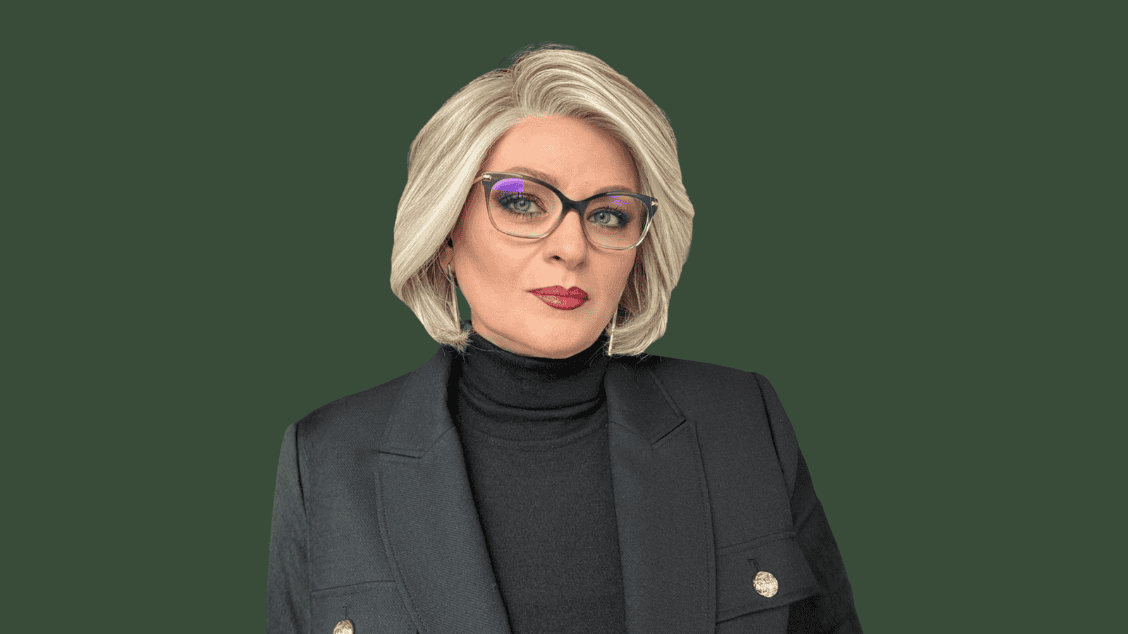


Jorgovanka Tabaković, governor of the National Bank of Serbia, discusses the central bank’s monetary and reserves policy and the prospects for Serbia joined the EU.
Global Finance: What are the National Bank of Serbia’s (NBS) priorities now?
Jorgovanka Tabaković: The priorities of the NBS remain the preservation of price and financial stability while supporting the government’s economic policy. These are the prerequisites for strong and sustainable economic growth and the foundation that best serves the long-term interests of businesses and citizens.
The positive results of our responsible policies are best reflected in the assessments of international credit rating agencies. They consistently highlight the adequacy of our monetary policy measures, a high level of foreign exchange reserves, the preservation of price, and overall macroeconomic stability, as well as a stable and sound financial system.
Through timely, prudent, and well-calibrated policy responses, we will continue to preserve this, even amid elevated inflationary pressures stemming from the global energy shock. At the same time, we maintain a sound and modern financial system, enhancing payment services and further strengthening the protection of consumers.
GF: Serbia has long been committed to building up its gold reserves, which now stand at around €6.9 billion, or almost 25% of foreign exchange reserves, and are still rising. Could you explain the strategy?
Tabaković: The NBS manages a record 54.7 tons of gold reserves, three and a half times more than when I became governor. We purchased gold abroad on three occasions amid favorable market conditions (17 tons) and have been regularly purchasing it in dinars from a domestic producer in Bor, thereby not only changing the composition of our FX reserves but increasing their level.
Gold has traditionally been regarded as a safe-haven asset, particularly during periods of uncertainty, and it often serves as a long-term hedge against inflation. In the current geopolitical environment, the importance of gold as a strategic asset in FX reserves has become particularly pronounced, as evidenced by the long-term growth in its value in periods of successive crises.
GF: There are currently DIN117 to the euro. Are there any plans for currency reform?
Tabaković: What citizens and visitors emphasize is the decade-long stability of the currency, and the certainty they have when exchanging foreign currency for the dinar. Serbia, with its strong macroeconomic fundamentals, price, financial and economic stability, cannot be considered a candidate for currency reform, nor is it necessary. The NBS has been successfully maintaining the relative stability of the dinar against the euro for more than a decade, enabling us to steadily build up our FX reserves.
During occasional depreciation episodes, we have been wisely investing these reserves to preserve stability. There are countries in the region, as well as major world currencies, whose exchange rates against the euro or the US dollar are at similar or even higher levels. Stability is what determines certainty and facilitates recalculation, not the level itself.
GF: Looking further ahead, do you anticipate Serbia ever joining the eurozone, assuming it first manages to join the EU?
Tabaković: Full EU membership is Serbia’s key strategic goal. Membership negotiations formally started in 2014 and currently we have 22 chapters open, with two of them provisionally closed. The current year is extremely important as we strive to fully harmonize domestic regulations with the EU acquis [the EU’s common laws, regulations, and court decisions]. The legal obligation of a country joining the EU is to adopt the euro when it meets the necessary criteria—with the exception of Denmark—so the ongoing alignment of Serbia’s legislation with the EU acquis is carried out with this objective in mind.
Last year, the Law Amending the Law on the National Bank of Serbia was adopted, further aligning our legal framework with the EU acquis under Negotiation Chapter 17 – Economic and monetary policy. This law introduced provisions recognizing the NBS as part of the euro system, which will enter into force upon the official adoption of the euro as Serbia’s currency.
Whether and when this will occur is a political and diplomatic issue as well. What is certain is that Serbia is already a country of European values, with a clear direction and strong economic indicators that enable it to align with the countries of the EU and the euro area.