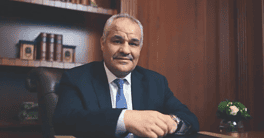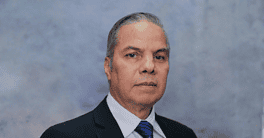


Ebson Uanguta, governor of the Bank of Namibia, explains how the central bank’s monetary and reserve policy is helping it respond to inflationary pressures and the need to boost economic growth.
Global Finance: What is the economic outlook for Namibia over the next 12 months, and what do you consider the main risks?
Ebson Uanguta: The Namibian economy is expected to grow by 2.6% in 2026 and 2.9% in 2027, an improvement from the 1.7% recorded last year. The outlook remains positive, but there are several risks. Among them is the outbreak of foot-and-mouth disease in neighboring countries, which poses a risk to livestock production and export earnings. Also, global geopolitical tensions and evolving trade policies could increase volatility in commodity prices, exchange rates, and the cost of key imported inputs, particularly fuel.
GF: What is the Bank of Namibia (BoN) doing to tackle the challenge of rising inflation?
Uanguta: In June, the BoN increased the repo rate by 25 basis points to 6.75%. The decision was driven by rising inflationary pressures, the need to preserve the one-to-one exchange-rate peg with the South African rand, and to mitigate potential second-round effects arising from higher global energy prices.
For the BoN, every monetary policy decision is informed by a comprehensive assessment of prevailing global and domestic economic conditions. Following the June decision, inflation has remained relatively contained at 4.4%. As part of its efforts to respond to the oil price shock, the government suspended certain fuel levies and utilized the National Energy Fund to cushion consumers.
GF: What is the BoN doing to shore up foreign reserves following its US$750 million eurobond repayment last year?
Uanguta: Namibia’s U.S.$750 million eurobond repayment reduced reserves from N$63 billion (U.S.$3.8 billion) at the end of 2024 to N$51.58 billion by the end of 2025. Reserves are expected to recover moderately in 2026, supported by fiscal consolidation, revenue inflows, oil and gas investments, and our gold acquisition program. As of June 30, reserves stood at N$55 billion, providing 3.5 months of import cover.
GF: How stable is Namibia’s banking sector?
Uanguta: The banking sector is well capitalized, profitable, liquid, and is recording notable improvement in asset quality. During the first quarter of this year, total assets increased by 3.8% to N$195.1 billion. The increase was driven mainly by growth in net loans and advances, supported by higher holdings of short-term securities. While profitability remained strong, the sector’s return on assets declined from 2.8% to 2.3% and its return on equity decreased from 21.8% to 18.1%.
Credit risk continued to improve with a decline in the non-performing loan ratio. Capital levels also remained strong, with the capital adequacy ratio broadly stable at 17.2%. Moreover, the latest macro-stress testing results confirmed the sector’s resilience under severe scenarios, with capital adequacy remaining above the prudential requirement.
GF: What keeps you awake at night?
Uanguta: The BoN operates in an environment that is increasingly uncertain and fast-changing. Economic shocks have become more frequent and less predictable while geopolitical developments, climate-related risks, and rapid technological advancements continue to reshape the global economy.
As governor, my focus is on ensuring the bank remains agile, forward-looking, and well-prepared to anticipate changes, understand their implications, and respond appropriately. I inherited an institution built on a strong foundation; my responsibility is not to reinvent the bank but to ensure it remains relevant and fit for the future.
GF: What are your aspirations for the BoN?
Uanguta: My aspiration is captured in our strategic direction, “marching with a clear purpose while aligning the central bank for the new economy.” I want the BoN to remain a trusted, credible, and accessible institution that delivers sound policy advice, safeguards price and financial stability, and communicates in a meaningful way to ordinary Namibians.
While global uncertainty remains a key consideration, Namibia’s economy continues to grow below its potential. Thus, as Namibia’s economy evolves—particularly with opportunities emerging in oil and gas, green hydrogen, and digital finance—the bank must evolve too.